Ukraine Russia End First Abu Dhabi Talks
The US says the first face-to-face negotiations since February were productive, but Moscow has not relaxed its hard-line demands.
By Evelyn Adeyemi ·

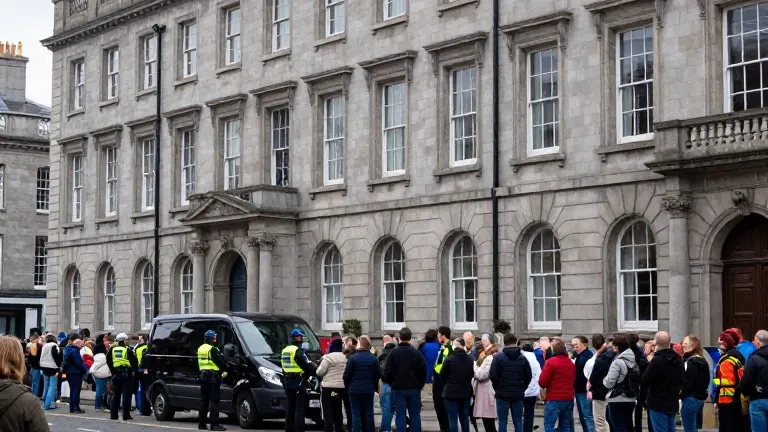
Ukrainian and Russian delegations finished the first of two days of negotiations in Abu Dhabi on Monday, November 10. These are the first direct talks between officials from both sides since February. The US government is pressing for a resolution to the conflict that has lasted nearly five years.
US Secretary of State Marco Rubio described the sessions as "very productive." He spoke to reporters after meeting his Ukrainian counterpart in Paris during a G7 meeting. Rubio said the trilateral format should eventually include European partners because they play a long-term role in solving the problem.
White House envoy Steve Witkoff said the talks would likely build on existing European security institutions. Jared Kushner, another key US envoy, stated at the start of the session that Washington had "narrowed the gaps" toward a solution. Kushner did not provide specific details on the concessions offered.
Vladimir Medinsky, a former culture minister and historian, led the Russian delegation. The group included high-ranking officers from Russia's main intelligence agencies. One officer is accused by Ukrainian authorities of plotting the assassination of a Ukrainian military official. Rustem Umerov headed the Ukrainian side. He said Kyiv's priority is securing guarantees for a lasting peace.
Moscow has not signaled a shift from its hard-line demands. One key demand is blocking Ukraine from ever joining NATO. The alliance maintains that no country should veto another country's desire to join. Russian Foreign Minister Sergei Lavrov called defining clear parameters for a future security architecture a reasonable step before resolving the conflict.
Germany, France, and Britain are participating in the process along with Italy, NATO, and the European Union. Their initial consultations with US representatives were held separately from the trilateral talks with Russia. Washington asked Moscow to accept security guarantees modeled on NATO clauses, including the principle that an attack on one member is an attack on all.
The war has claimed an estimated 1.5 million dead and wounded Russian soldiers. The Kremlin continues to seek control of the entire eastern Donbas region. Russian forces maintain a near-daily aerial barrage on Ukrainian cities, destroying energy and heating infrastructure as winter approaches.