TAPI Pipeline Reaches Herat Perimeter
Turkmenistan declares the 1,800-kilometer gas line operational by year-end as satellite imagery confirms construction 22 kilometers from the Afghan city.
By Evelyn Adeyemi ·
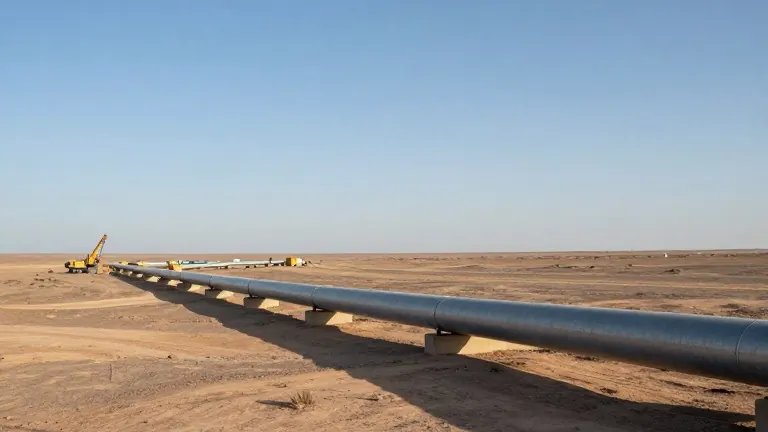
The Turkmenistan-Afghanistan-Pakistan-India gas pipeline has reached the western edge of Herat, marking a physical milestone for the 1,800-kilometer infrastructure project. Turkmenian officials announced this progress at an energy forum in Ashgabat in late October, stating that the line would be commissioned by the end of 2026.
Satellite images captured on November 7 verify the physical location of the pipeline. The infrastructure extends from the southern border of Turkmenistan to a construction zone situated approximately 22 kilometers west of the industrial district in Herat. This placement aligns with the government's claim that the line has reached the city's outskirts.
The project, first conceived in the 1990s, connects Turkmenistan's Galkynysh gas fields to consumers in Afghanistan, Pakistan, and India. Previous delays caused by regional conflict and waning interest from India and Pakistan had led some analysts to doubt the project's viability. The total cost was projected at up to $10 billion, with the section extending to Herat reportedly costing Ashgabat $600 million.
John M. Roberts, a senior fellow at the Atlantic Council, noted that Turkmenistan has invested heavily to maintain the project's momentum. He observed that the state's fixation on TAPI has driven it to demonstrate active progress. The recent closure of the Strait of Hormuz due to the Iran war has altered the energy landscape, potentially restoring Pakistan's interest in the pipeline.
Faryal Leghari, the Pakistani ambassador to Turkmenistan, stated that Islamabad is committed to advancing the project. Roberts suggested that Turkmenistan's initial investment may open the door for partnerships to extend the line to Kandahar and Pakistan. He emphasized that securing Chinese financial support is critical, as the project scale exceeds Turkmenistan's independent capacity.
Afghan sources indicate that construction has faced challenges, including the management of unexploded ordnance along the route. Work is conducted exclusively by Turkmen engineers using their own equipment, while Afghan personnel provide armed security. One resident near the Torghundi border crossing described a routine where Turkmen buses transport workers to the site each morning and return them in the evening.
In Herat, residents are watching the project with mixed expectations. Abu Ali described the pipeline's approach as a sign of hope, citing potential job creation. However, software engineer Abdul Saboor Rahmani expressed concern over pricing, urging for transparent access to the gas at a small markup on the global market price rather than current high rates.
Afghanistan is scheduled to receive only 5 percent of the pipeline's total gas flow, with Pakistan and India splitting the remaining 95 percent equally. Roberts pointed out that while the pipeline serves a local market in Herat, its extension to larger energy markets remains the key to long-term success. The future of the project depends on navigating geopolitical uncertainties and securing external investment.