US hits Iran in Strait of Hormuz just before Americans vote
The limited attack occurred hours before voting began, intensifying pressure on President Trump to decide the next steps of the conflict.
By Lorenzo Evans ·
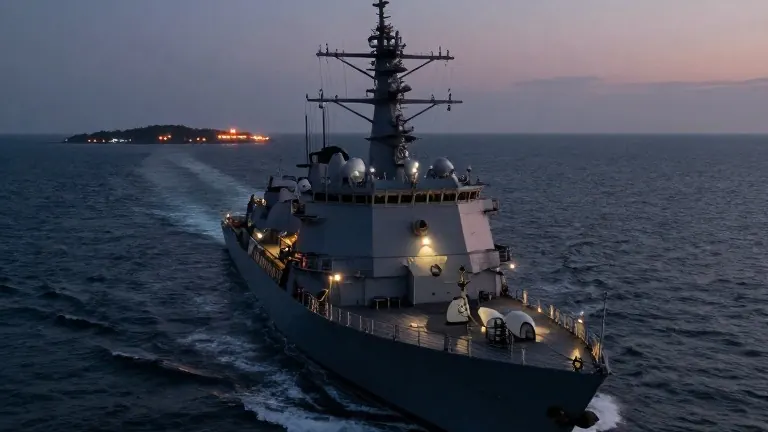
The United States and Iran exchanged sharp warnings on Tuesday following a limited U.S. strike on Iranian positions in the Strait of Hormuz. The attack took place hours before American voters cast their ballots in the midterm elections, a timing that has raised immediate questions about the trajectory of the war. Iranian state media reported explosions on the islands of Qeshm and Hengam, as well as in the mainland area of Bandar Abbas. A U.S. official, speaking on condition of anonymity, stated that the strikes targeted Iranian forces using surface-to-air missiles against American assets in the strait.
The conflict has continued for more than eight months, disrupting global economies and rattling the region. Thousands of U.S. troops remain stationed in the waters off Iran to enforce a naval blockade that prevents oil tankers from reaching the global market. Additional forces are en route to the Middle East, including another aircraft carrier and thousands more personnel. The last known U.S. attacks occurred in early September, making this new wave of strikes a significant escalation in recent weeks.
President Donald Trump has recently indicated he is considering a new series of strikes following the elections. Israeli Prime Minister Benjamin Netanyahu pressed for renewed military action during a weekend call with the U.S. leader, according to two regional officials and a third person familiar with the matter. Those officials, who spoke anonymously due to the classified nature of their briefings, said diplomatic efforts have made progress. Mediators are currently working on a framework where Iran ceases attacks in the strait in exchange for the U.S. lifting its blockade.
Iranian leadership maintains that the United States must meet specific demands before the strait reopens. Maj. Gen. Mohsen Rezaei, head of Iran’s Supreme National Security Council, wrote on social media that the U.S. response to Tehran’s conditions was not convincing. Iran has proposed reopening the strait and resuming nuclear talks if the U.S. lifts its naval blockade, waives sanctions on Iranian oil sales, and observes a ceasefire that includes Lebanon. Qalibaf, the country’s chief negotiator and parliament speaker, warned that Iran’s armed forces are at the highest level of defensive readiness. He stated that if Washington makes another strategic miscalculation, it will face a new battlefield.
Vice President JD Vance expressed optimism about a diplomatic resolution before the strikes were confirmed. He said that he and the president both feel good about the prospects for a negotiated settlement. Egyptian President Abdel-Fattah el-Sissi has also called for dialogue between the two nations, warning against further military escalation. In Tehran, some citizens hoped the midterms would bring a shift in U.S. policy, while others remained skeptical that a change in leadership would alter American behavior toward Iran.
Source: WRTV