Votel: New Iran Strikes Weaken Tehran, Not End War
The former CENTCOM commander argues that military action alone cannot force a conclusion without a defined end state regarding oil flows and nuclear enrichment.
By Evelyn Adeyemi ·
Retired Army General Joseph Votel stated that a new wave of U.S. and Israeli attacks on Iran will likely degrade Tehran's military capabilities, but he does not expect these strikes to conclude the conflict. Votel, who led U.S. Central Command from 2016 to 2019, now chairs the Combating Terrorism Center at West Point. In an interview with NPR's Leila Fadel, he assessed the potential outcomes of a post-election bombing campaign.
Votel noted that many likely targets have already been hit and that Iran has demonstrated the ability to rebuild them. He described the primary benefits of new strikes as buying time, punishing Tehran, and degrading specific capabilities. However, he observed that previous attacks have not altered Tehran's strategic calculations regarding the war's trajectory. He argued that the Iranian government has become more hard-line and more willing to execute bold counterattacks.
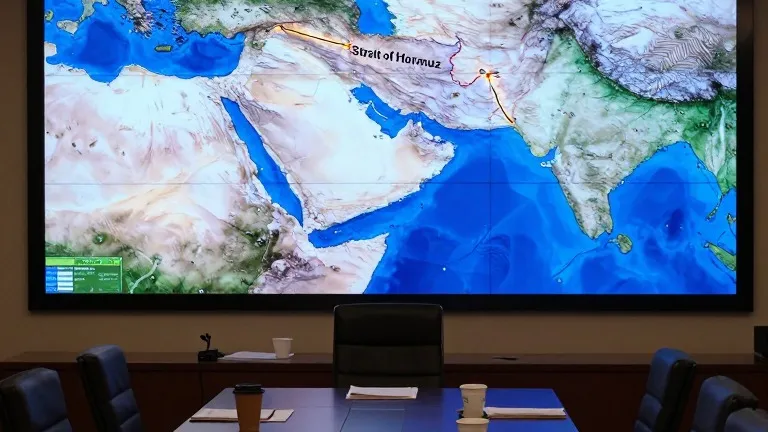
According to Votel, the first requirement for success is a clear objective. He said Washington must define the desired end state and determine how it will declare the war finished. In his view, this definition centers on resolving the nuclear enrichment issue and reopening the Strait of Hormuz. Once that goal is set, he argued that military, economic, diplomatic, and information pressure must all target that specific outcome.
Votel identified the financial front as the area with the most visible progress. He cited reporting that Iran's so-called ghost fleet has run out of oil, a result of the blockade and various sanctions. While he noted this approach takes time, he said there is definite movement in that direction. He described the U.S. aim of reopening Hormuz as a way to help bring down gas and diesel prices at home.
The general acknowledged that U.S. aims have been difficult to read, though he identified the Strait of Hormuz and the nuclear program as the principal worries. He also noted that Iran uses proxies to create regional instability, including a link to the Houthis across the Arabian Peninsula. To bring Iran to the negotiating table, Votel stressed the need for a clear statement of objectives and the patience to sustain a coordinated approach using all elements of national power.
On military readiness, Votel said American offensive power in the region is substantial and the ability to strike is not in question. He identified missile defense as the potential constraint. Earlier reporting has described heavy pressure on defensive interceptors that protect U.S. forces, regional partners, and critical infrastructure. In his assessment, offensive capability is sufficient, while defense faces a slight constraint.
Source: NPR