New Zealand mudsnails detected in Kent County stream
Volunteers found the invasive species in Bear Creek, marking the first confirmed presence in the southern Lower Peninsula and raising concerns for native fish and water systems.
By Khalid Khalil ·
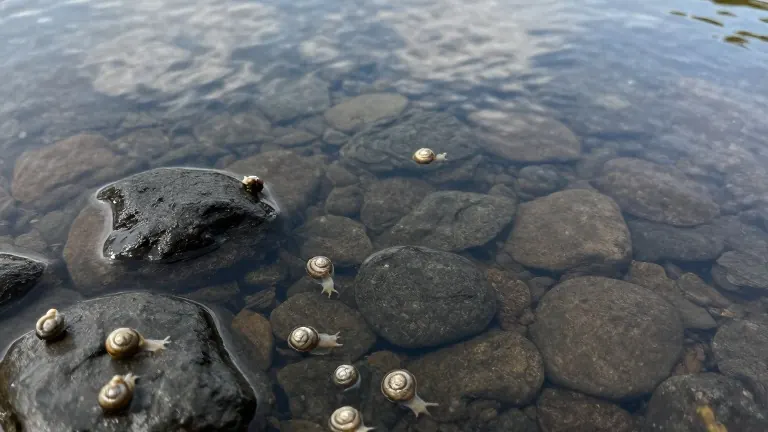
300,000 New Zealand mudsnails can occupy a single square meter of streambed, a density recorded in western states that illustrates the sheer volume of this invasive species. In Michigan, the threat has reached a new geographic point. During a volunteer monitoring event, the Coldwater River Watershed Council discovered the tiny snails in Bear Creek, a tributary of the Thornapple River in Kent County.
This discovery represents the first confirmed expansion of the species into the southern Lower Peninsula. While the snails have been present in the Great Lakes and several Michigan rivers since their arrival in 1991, likely via ballast water, this specific find marks a new frontier for the invasion in the state.
Jen Koop, an invasive species biologist and professor at Northern Illinois University, noted that the size of the snails makes them difficult to detect until they have established themselves. "Once they are in an aquatic system, they are here to stay," Koop said. She added that scientists currently lack methods to eradicate the species or fully mitigate its effects once a population takes hold.
The biological makeup of the Michigan populations presents a unique challenge. Donna Kashian, the Director of Environmental Science at Wayne State University, stated that the individuals recorded in Michigan appear to be all female. This allows the snails to reproduce asexually, meaning a single transported individual can establish a new colony without a mate. The Michigan Invasive Species Program reports that one snail can clone itself into 200 new snails per year.
The ecological impact extends beyond simple competition for food. The mudsnails outcompete native snail species and can clog pipes and drainage systems due to their high densities. Kashian described a positive feedback loop involving other invasive species, specifically zebra and quagga mussels. She explained that the mussels deposit nutrient-rich waste on the streambed, creating an ideal habitat for the mudsnails.
This dynamic adds pressure to Great Lakes fisheries, which are already concerned about reduced nutrients in the water column and lower populations of zooplankton. By outcompeting native organisms, the mudsnails affect the entire food web, including sport fish such as trout. Kashian emphasized that the snails act as an additional stressor on water systems already burdened by other environmental changes.
The physical characteristics of the snail further complicate control efforts. They possess a classic shell shape with a tiny trapdoor for protection. This adaptation is so effective that the snails can sometimes pass through the digestive system of a fish alive. In such cases, the fish gains no nutritional benefit from the meal, while the snail survives to continue its spread.
In response to the discovery, the Michigan Invasive Species Program recommends that anglers and boaters clean, drain, and dry all equipment between water bodies. This includes waders, boots, and any gear that contacted water or mud. Because the snails are extremely small and easy to miss among debris, thorough inspection is necessary.
The New Zealand Mud Snail Collaborative offers additional guidance for the public. The group suggests using separate gear for watersheds known to harbor the snails. They also recommend freezing, using hot water, or allowing long periods of air exposure to kill any snails riding on equipment, thereby preventing transport to new water bodies.
Source: Michigan Public