Brent crude jumps 60 percent as Iran and Qatar rush talks before U.S. vote
Qatari mediators have spent the last 72 hours in Tehran and Doha attempting to secure a two-day pause in hostilities before the U.S. midterm elections conclude.
By Evelyn Adeyemi ·
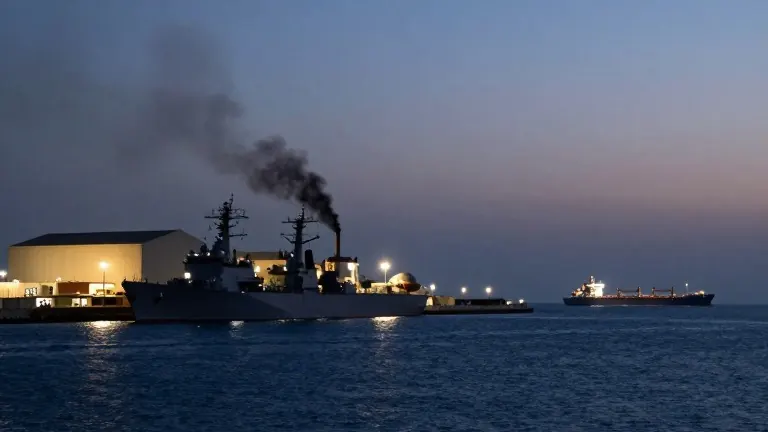
For the tens of millions of people living in the Gulf, the next few days will determine whether the conflict with Iran resumes or pauses. The region holds its breath as U.S. and Israeli forces prepare for potential strikes following Tuesday's midterm elections. Qatar has stepped in to lead intense mediation efforts over the past 72 hours to prevent a new wave of attacks. The uncertainty has left diplomatic and military leaders across the area on high alert, unsure of the immediate future.
The financial strain is already visible in global markets. Brent crude oil prices are 60 percent higher today than they were before the war began eight months ago. This spike reflects the disruption to energy flows and the ongoing closure of the Strait of Hormuz. As a result, economies across the Gulf, which are major producers of oil and gas, are suffering from the conflict's ripple effects.
Qatar has kept the details of its diplomatic mission close to the chest. However, Qatari mediators visited Tehran, and an Iranian delegation traveled to Doha. Abbas Araghchi, Iran's foreign minister, told state media that there is still no definitive conclusion to these talks. He noted that negotiators are discussing a two-day plan. Under this proposal, Iran would refrain from attacking ships in the Strait of Hormuz to allow direct talks between Washington and Tehran to restart.
President Donald Trump addressed the situation from a Halloween party at Mar-a-Lago. He stated that the U.S. is not in a hurry to restart the war. Trump claimed that the U.S. has knocked out almost every piece of military equipment in Iran, along with many manufacturing capabilities and nuclear sites. He estimated that only one or two sites remain and that the U.S. could handle them in ten minutes. Despite his comments, senior European diplomats and Arab military generals say they do not know what Trump will decide after the elections.
Iran has signaled its readiness to respond aggressively. Mojtaba Khamenei, Iran's supreme leader, told senior commanders this weekend that any threat to the country must be met with an immediate response without geographical limitations. Iranian state media reported that this means new U.S. or Israeli attacks would inflict greater damage than previously seen. The Revolutionary Guard has also threatened to target undersea internet cables carrying data through the Strait of Hormuz.
The physical impact of the war is evident in Bahrain, a small island nation in the Persian Gulf. Aya Batrawy, an international correspondent, reported from the Manama Dialogue security forum in the country. She observed charred warehouses and damaged radar equipment at the U.S. Navy 5th Fleet logistics hub. The base, visible from the highway, has been hit by Iranian missiles and drones. Military personnel stationed there have dropped from 8,000 before the war to fewer than 100 now.
Abdullatif Al Zayani, Bahrain's foreign minister, spoke about the damage to civilian infrastructure and U.S. military sites. He described the use of shared maritime arteries as a tool of pressure. Anwar Gargash, a senior Emirati diplomat, emphasized the need for political tools over military solutions. He argued that military options would only complicate the current situation and would not provide a quick exit strategy. The Gulf states view Iran as a primary threat but remain eager to avoid further direct conflict.
Source: WEVO