3,171 Hebron residents displaced as Israel scales military crackdown
Israeli forces have expelled over 3,000 Palestinians from Hebron in a four-day operation that officials say mirrors the tactics used in Jenin and aims to reshape the city's demographic balance ahead of Tuesday's election.
By Evelyn Adeyemi ·
Israeli military forces have expelled 3,171 Palestinians from the occupied West Bank city of Hebron since Friday. The figure was provided by Hebron Governor Khaled Dudin on Monday, representing 488 families across the wider governorate. Mayor Yousef al-Jabari of Hebron stated that 3,043 of those displaced reside within the city limits.
The displacement is part of a sweeping operation that began after two Israeli soldiers were killed in a shooting near the city. Prime Minister Benjamin Netanyahu described the campaign as an operation "unseen" since the 1967 war. The Israeli army has imposed a lockdown across Hebron and detained at least 71 people in the past four days, according to the Palestinian Prisoner’s Society.
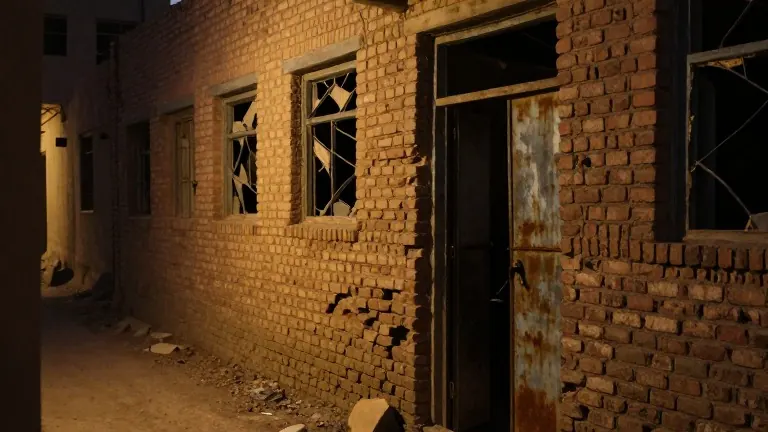
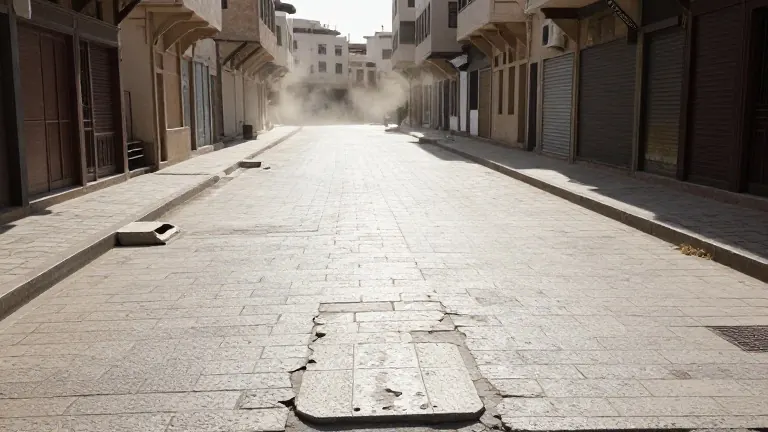
Military actions include the demolition of residential buildings, factories, and roads. Soldiers have also raided homes and assaulted residents. Municipal authorities in Hebron reported that the majority of those forced from their homes are women, children, and elderly individuals. Israeli troops have converted dozens of evacuated homes into military barracks and field interrogation centers.
Noman Amr, a professor of contemporary history at al-Quds Open University in Hebron, described the measures as surpassing temporary evacuation. He categorized the expulsions into three groups: evacuation for demolition, evacuation for collective punishment, and evacuation for military use. Amr stated that the goal is to impose a new reality defined by "more land, fewer Arabs."
Israeli officials explicitly linked the current operation to previous campaigns. Netanyahu and Defence Minister Israel Katz announced their intent to apply the "Jenin camp model" to Hebron. This model involves forced evacuation, home inspections, weapons confiscation, and road bulldozing. Rights groups have compared the Hebron crackdown to the "Iron Wall" operation in early 2025 in the Jenin, Nur Shams, and Tulkarem refugee camps.
The earlier Iron Wall operation killed at least 102 people and displaced more than 33,000 residents. It destroyed over half of the residential buildings in those camps. UNRWA described the Jenin camp as "nearly uninhabitable" following the destruction. A UN Human Rights Office report from last month warned that the military actions in those camps raised concerns of ethnic cleansing and collective punishment.
Analysts point to the systematic destruction of infrastructure in Hebron as a method to make displacement permanent. Amr noted that targeting water wells relates to existence and stability, not just material value. He also highlighted the collaboration between the Israeli army and armed settler groups. Amr estimated the settler militia consists of more than 150,000 people heavily armed with modern automatic weapons.
The Colonization and Wall Resistance Commission reported on Sunday that the Israeli military established 220 barriers across Hebron. These barriers sever Palestinian communities from their lands while maintaining connectivity for settlements. The military stated on Sunday that it would bar Palestinian workers from entering most areas of the West Bank through Monday. It will enforce a full closure of crossings into and out of the territory on Tuesday, the day of Israel's parliamentary election.
Al-Jabari accused Netanyahu's government of exploiting the military operation to secure settler votes. Amr agreed, stating that Palestinians pay the price as electoral propaganda for the right wing. He said the military actions aim to correct the history that allowed Palestinians to remain after the 1967 war or the 1948 Nakba.
Source: Al Jazeera