French Jews Move to Israel at Record Pace as Capital Rules Tighten
More than 4,000 people arrived in 2026, up from 3,400 in 2025, prompting Israeli officials to coordinate with major employers before migrants land.
By Khalid Khalil ·
The Israeli Ministry of Aliyah and Integration is preparing for potential new restrictions on money transfers from France. Director-General Dganit Sankar-Langa explained on Monday that political instability in Paris could lead to capital controls after upcoming elections. These rules would make it harder for French residents to move savings to Israel. Officials are weighing this financial risk against an economic crisis in France that is driving more people to consider emigration.
Arrivals from France have accelerated sharply this year. Approximately 3,400 Jews immigrated to Israel in 2025. In contrast, more than 4,000 have already arrived in 2026. This represents a nearly 50 percent increase over the same period last year. For comparison, North America, which has a Jewish population of nearly eight million, is projected to send only about 4,000 immigrants this year. France currently hosts a Jewish community of roughly 440,000 people.
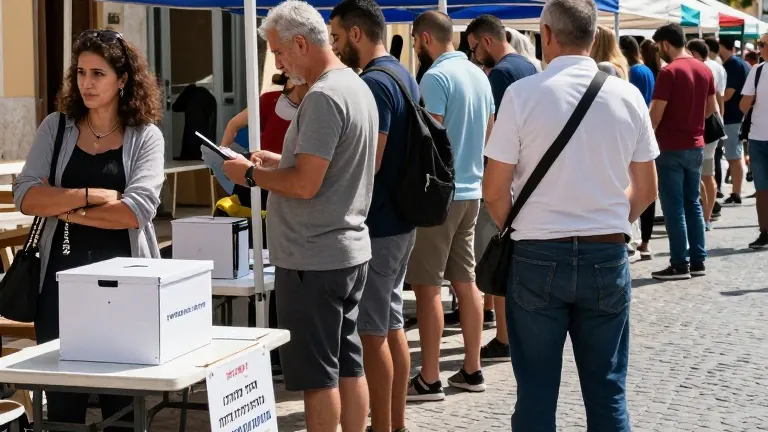
Interest in moving has been evident at recent fairs in Paris, Marseille, and Lyon. Over 600 households, representing about 2,000 individuals, attended the Paris event this month. Ministry data shows that about 90 percent of attendees expressed a desire to immigrate immediately or by 2027. Sankar-Langa noted that many attendees arrived with clear timelines and specific questions about schooling and logistics. She described the level of determination among these prospective immigrants as unprecedented.
Personal accounts reflect a shifting social climate in France. Roni, a 75-year-old Paris resident, described a change in how his identity is perceived. He explained that speaking Hebrew or mentioning Israeli military service was once a source of pride but is now often met with negativity. He noted that many Jews are becoming more cautious in public, with some avoiding kippahs even on religious holidays. This unease is pronounced among younger Jews in their 30s and 40s, many of whom are reevaluating their futures despite successful careers in high-tech sectors.
To address logistical challenges, the ministry has coordinated with major Israeli employers. Representatives from Israel Aerospace Industries, Elbit Systems, and Bank Mizrahi-Tefahot participated in the Paris fair. They met with approximately 200 prospective immigrants and identified over 50 as suitable for available positions. Advanced interviews were conducted with some candidates the day after the event. The goal is to secure employment before immigrants arrive in Israel.
New communities are forming in various Israeli cities. While Netanya, Tel Aviv, and Ashdod have historically been primary destinations, new clusters have emerged in Nahariya, Afula, Hadera, and Haifa. In Or Akiva, approximately 200 immigrants from France have settled in recent years. These groups provide social networks that help newcomers integrate. Officials distinguish this planned process from emergency absorption efforts seen during previous crises.
Prime Minister has instructed officials to formulate a dedicated government plan to support this immigration wave. Aliyah and Integration Minister Ofir Sofer stated that immigration from France is at its highest level in years. He emphasized that bringing major companies to France is based on the understanding that quality employment is key to successful integration. Sankar-Langa added that the ministry aims to fill shortages in fields such as engineering, medicine, education, and artificial intelligence.
Source: The Jerusalem Post