Trump backs Iraq oil crackdown as Baghdad moves against smuggling
Washington’s support for Baghdad’s campaign comes ahead of talks with Kurdish leaders and amid efforts to restrict Iran’s economic outlets.
By Lorenzo Evans ·
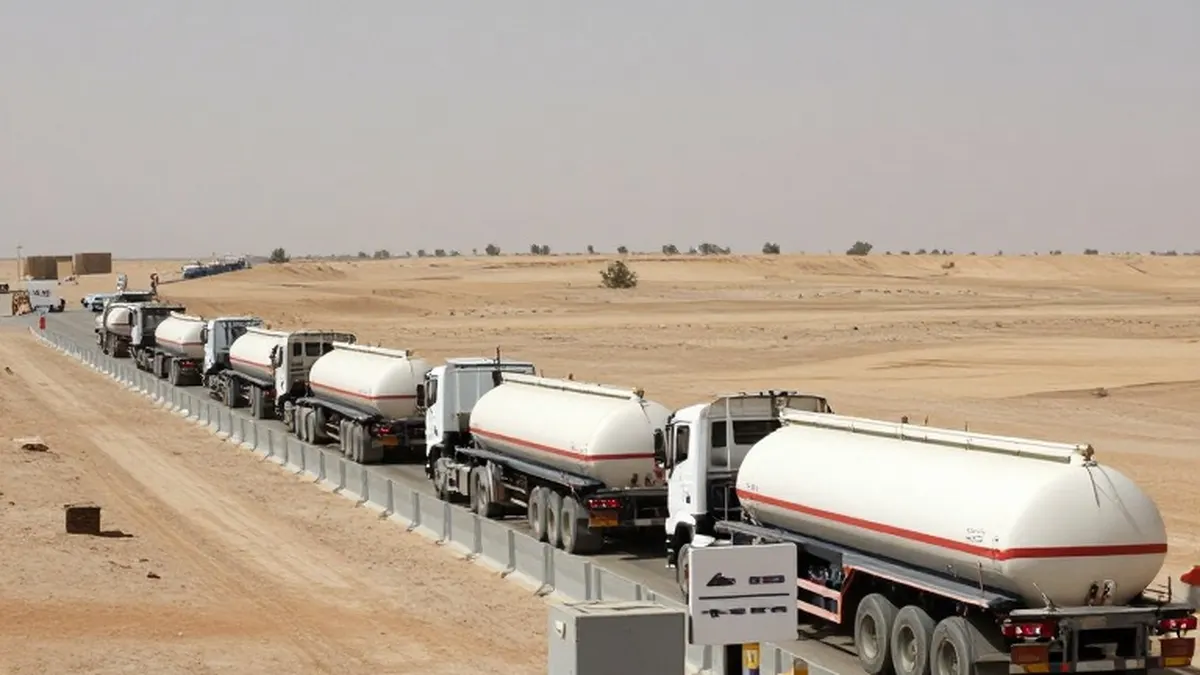
United States President Donald Trump has endorsed Iraqi Prime Minister Ali al-Zaidi’s campaign against oil smuggling as Baghdad seeks greater control over Kurdish border crossings and oilfields. The backing, announced on Friday, precedes December 1 talks between Baghdad and Erbil sponsored by the head of Iraq’s Supreme Judicial Council.
Trump’s Truth Social statement supported efforts to strengthen state authority, combat corruption and place weapons exclusively under government control. It was Washington’s first public response to the latest Baghdad-Erbil tensions. Al-Zaidi moved on Tuesday to bring Kurdish crossings and several oilfields under federal authority. Iraq’s top court ruled the following day that federal forces could deploy along every international border, including in the Kurdish region. On Thursday, authorities shut two regional crossings, one connecting to Syria and another to Iran.
The campaign initially focused on Jurf al-Sakhar, a town south of Baghdad controlled by Kataib Hezbollah since 2014. Senior Iraqi officials told Reuters that the Iran-backed group had diverted state crude worth hundreds of millions of dollars since 2021. The group denies the allegations. Nine senior security and oil officials have been dismissed and referred to the courts.
A compromise reached a day before al-Zaidi’s November 20 withdrawal deadline allowed government forces into Jurf al-Sakhar, where they established a joint operations centre. The agreement reportedly followed intervention by Iranian Quds Force chief Esmail Qaani. Kataib Hezbollah is expected to withdraw gradually while army, police and Popular Mobilisation Forces units deploy in stages. Researcher Liqaa Makki told Al Jazeera that promised reconstruction, residents’ return and the group’s departure had yet to materialise.
Baghdad subsequently expanded its campaign into the Kurdish region. Government spokesperson Haider al-Aboudi said oil smuggling through the region had cost Iraq an estimated $100bn from 2008 to 2025, although Reuters said the calculation was unclear. Kurdish Prime Minister Masrour Barzani rejected the measures as unconstitutional. Thousands demonstrated on Thursday, while Kurdish officials said they wanted to avoid confrontation and remained open to negotiations.
The crackdown also intersects with Washington’s effort to constrain Iran. Muhanad Seloom, a senior non-resident fellow at the Middle East Council on Global Affairs, described Iraq as a key land outlet for Tehran under blockade. Iraqi official figures put bilateral trade above $10bn in 2025. Iranian gas also supplies plants generating 30 to 40 percent of Iraqi electricity, according to US Energy Information Administration data. Reuters reported in late 2024 that an Iraqi fuel oil smuggling network generated at least $1bn annually for Iran and its allies.
US authorities have accused networks of blending Iranian and Iraqi oil and selling the mixture as Iraqi. In May, the Treasury sanctioned Iraqi Deputy Oil Minister Ali Maarij al-Bahadly over alleged oil diversion benefiting Iran and allied armed groups. A separate claim that crude from Kirkuk and Sulaimaniyah is trucked into Iran remains disputed. Seloom said it rests on an intelligence document AFP viewed but could not verify, and Erbil rejects it.
Seloom said the campaign supports Washington’s economic blockade strategy while restricting militia funding and strengthening al-Zaidi. Constitutional researcher Salim Zakhour told Al Jazeera that Trump’s endorsement signals strong American support for Baghdad’s measures ahead of negotiations. He also argued that Washington increasingly favours centralised decisions on oil and investment.
The dispute unfolds amid continued US-Iran hostilities and Baghdad’s efforts to avoid further involvement. During a November 5 call with Trump, al-Zaidi said Iraqi territory would not be used to attack neighbouring countries. The Kurdish talks carry substantial financial stakes as well: Zakhour warned that centralising oil control would leave the region’s budget entirely dependent on transfers from Baghdad.