Lebanese Shiites Prefer State Control
A September survey indicates a majority of the sect supports transferring Hezbollah's arsenal to the government, a shift from earlier polling data.
By Lorenzo Evans ·
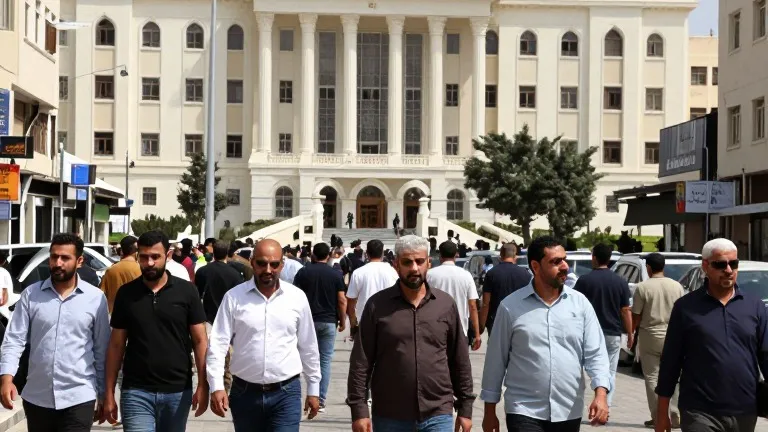
For millions of Lebanese residents, the question of who controls the guns in the country is no longer settled. A new survey suggests that a majority within the Shi'ite community, historically the base of Hezbollah, now favors handing the group's weapons to the state. This marks a potential shift in the balance of power that has defined Lebanese politics for decades.
Statistics Lebanon conducted the poll in September among 800 Shi'ite respondents. The results showed that 66.4% supported transferring Hezbollah's arms to the Lebanese state, while 29.6% wanted the group to retain them. The findings were reported by Israel's public broadcaster KAN and the Lebanese website Kataeb.org in mid-October.
The data points to a strong preference for state authority over war and peace decisions. Specifically, 71.1% of respondents said these decisions should rest solely with the Lebanese government. Only 5.9% believed Hezbollah's leadership should play a larger role in shaping the country's future. Confidence in the Lebanese Armed Forces was also high, with 78.5% expressing trust in the army and 51.1% naming it as the best institution to guarantee long-term security.
These numbers contrast sharply with a May 2026 survey by Lebanon's Information International. In that earlier poll, 87.5% of Shi'ite respondents opposed disarming Hezbollah, and only 7.9% supported giving up its weapons. Researchers Orna Mizrahi and Moran Levanoni, who analyzed the May data for Israel's Institute for National Security Studies, noted that differences in wording or agenda could explain the gap between the two surveys.
Hezbollah continues to maintain social and economic influence despite recent setbacks. Approximately 59.5% of respondents in the September poll still expressed some trust in the group, with 37.1% reporting a great deal of trust. However, 67.4% said the group had failed to meet its goals or achieved only some of them in the war with Israel. The group has also announced aid of up to $14,000 for families in Beirut whose homes were destroyed in the March 2026 conflict, and up to $12,000 for those in other areas.
The context for these findings includes the killing of Hezbollah leader Hassan Nasrallah in September 2024 and the heavy destruction caused by a new war in March 2026. In the southern city of Tyre, property owners opposed opening a branch of the Hezbollah-linked financial institution Al-Qard Al-Hassan, fearing it might become a target in future Israeli strikes. Such branches have been hit in previous conflicts.
Source: The Jerusalem Post