Hebron Evacuations Become Standing IDF Policy
Defense Minister Israel Katz has ordered the division of Hebron into quarters, allowing for extended civilian removals following terrorist attacks.
By Khalid Khalil ·
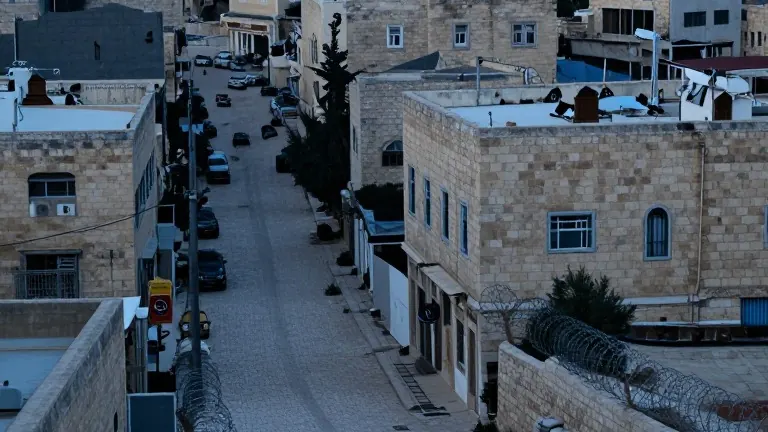
Defense Minister Israel Katz has instructed the Israel Defense Forces to institutionalize the temporary removal of civilians from specific sectors of Hebron. This new directive converts a tactical maneuver into a standard operational tool for countering terrorism in the city.
Under the order, Hebron is to be divided into distinct quarters. When an attack occurs, the IDF will evacuate the entire quarter from which the terrorists emerged. These removals are intended to last for an extended period while military units conduct arrests, interrogations, and searches. This measure supplements existing punitive actions, such as the demolition of suspects' homes.
The shift in policy follows a security assessment submitted by Shin Bet officials on Saturday. The intelligence agency determined that seizing control of Palestinian neighborhoods, even for short durations, improved intelligence gathering and established a deterrent effect against future attacks.
A security official noted that Katz emphasized the evacuation serves to protect the population during military operations. The official added that the Shin Bet report carries legal weight and supports the division of the city into zones for targeted action.
The directive stems from the aftermath of a shooting attack at Judea Junction on October 23, 2026. During that incident, two IDF soldiers were killed: Staff Sgt. Ron Yonatan Roitman and Sgt. Yuval Shai Suilam. The IDF subsequently launched a broader operation in Hebron.
These developments occur as the IDF validates warning models across all operational arenas. Military Intelligence is assessing the threat of a surprise Iranian strike on US interests in the Middle East, which includes 50,000 troops, bases, and advanced weapons systems. The goal is to ensure the IDF has sufficient time to prepare or launch a preemptive strike if necessary.
To support these efforts, the US Army has deployed thousands of troops to bases throughout Israel. American personnel are staffing a joint war room with the IDF at the Kirya headquarters in Tel Aviv. A separate, restricted war room is also active. This coordination uses Zulu time to synchronize actions between CENTCOM, IDF command, and regional partners. American cargo planes have recently landed at Israeli Air Force bases, delivering equipment for these forces.