Trump Seeks Bipartisan Path as Democrats Take Control of Both House and Senate
Following Democratic midterm victories, President Trump signals willingness to negotiate with Congress while retaining his veto power.
By Lorenzo Evans ·
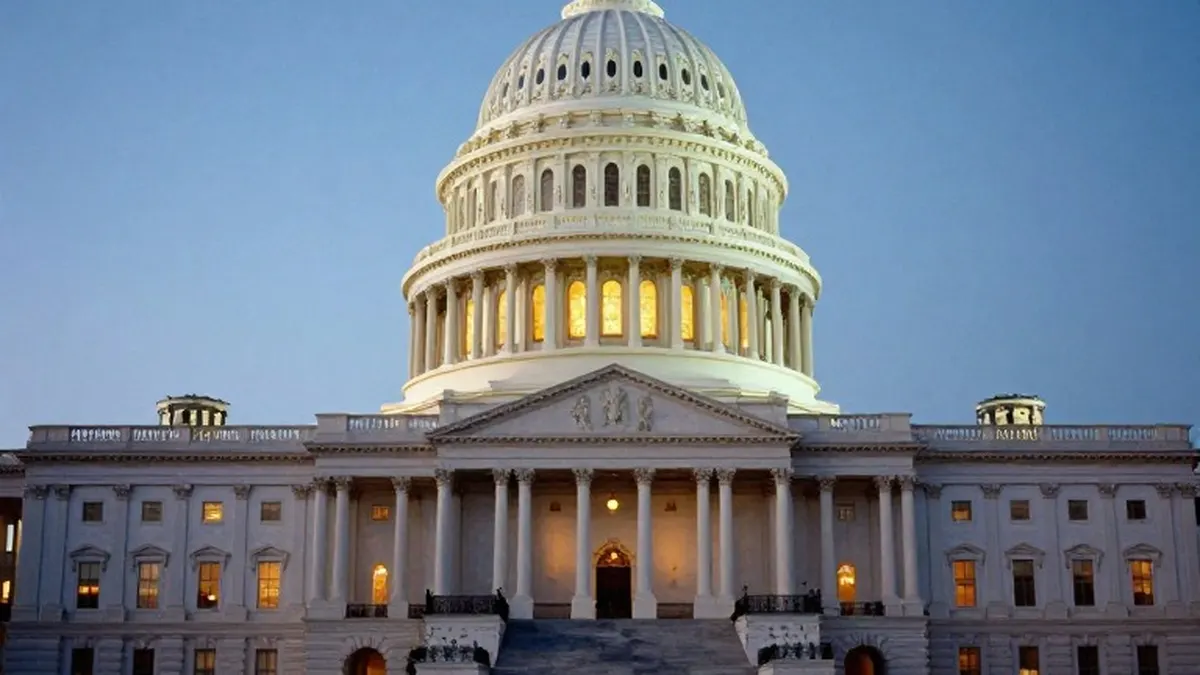
President Donald Trump signaled a willingness to collaborate with the Democratic Party following the midterm election results that were finalized late on Tuesday night. In an interview with the news outlet Politico, the president acknowledged that his Republican Party had lost control of both chambers of Congress for the first time during his two terms in office. Despite this significant political shift, Trump presented a composed demeanor and extended an olive branch to his political opponents.
During the call, the president stated that Democratic leaders had already reached out to him with a desire to work together. He noted that while he possesses the constitutional right to veto all legislation, he did not wish to spend the next two years solely rejecting bills. This comment highlighted a potential strategy where the president might selectively use his veto power or engage in negotiations to pass specific measures.
The Democratic Party secured comfortable majorities in both houses of Congress, with a few seats still being counted. In the House of Representatives, Democrats have claimed at least 253 of the 435 seats. In the Senate, they have won at least 54 of the 100 seats. Although the president can reject legislation passed by Congress, Congress can override a veto if it achieves a two-thirds majority in both chambers, a threshold the Democrats currently do not meet.
Andrew Proctor, a lecturer in US politics at University College London, suggested that the president has less leverage than before due to the new congressional balance. Proctor predicted a period of gridlock, noting that Democrats would attempt to pass policies that the president could veto, but they lack the supermajority needed to override those vetoes. He expressed skepticism about the likelihood of extensive bipartisan cooperation based on recent historical trends.
Despite the potential for conflict, some Democratic senators have expressed openness to working with the administration. Abdul El-Sayed, the first Muslim elected to the US Senate from Michigan, stated his willingness to collaborate on key campaign promises such as healthcare reform and ending tariffs. He emphasized that if the president was interested in advancing these issues, he was prepared to engage in discussions to deliver results for the public.
Progressive Senator Bernie Sanders has also indicated that he would not rule out the possibility of the president signing a Medicare for All bill if it passed both chambers. Sanders described Trump as a politician who is not overly ideological. Proctor agreed that common ground could be found on healthcare subsidies, which would make care more affordable, but he considered a full Medicare for All passage unlikely within the next two years.
The president has historically used the veto power sparingly, having employed it twice in his current term and ten times in his first term. This is lower than the usage rates of his predecessors, such as Ronald Reagan and Bill Clinton. However, Proctor pointed out that Senate Republicans could still use the filibuster to delay or block legislation before it reaches the president's desk, a tactic previously used against President Barack Obama.
Calls for investigations into the administration have emerged since the Democratic sweep. Robert Garcia, who is set to chair the House Oversight Committee, posted a message on social media urging officials to prepare for scrutiny. Senator Ron Wyden, expected to lead the Senate Finance Committee, indicated an intention to issue subpoenas. The White House has responded by stating that if Democrats pursue investigations and radical policies, they are working against the American people.
Speculation has also grown regarding potential impeachment proceedings against Defence Secretary Pete Hegseth. This potential action is linked to the Iran war, which Trump and other Republicans have cited as a factor in the party's electoral losses. As the new congressional session approaches, the dynamic between the executive and legislative branches will be closely watched for signs of either cooperation or conflict.