Filmmaker Returns to Columbia for New Documentary on Campus Politics
Two decades after her initial film on bias in Middle East studies, Daniella Kahane is producing a new documentary exploring the evolution of anti-Israel activism at elite US universities.
By Evelyn Adeyemi ·
In 2004, a short documentary titled “Columbia Unbecoming” brought attention to allegations of bias and intimidation within the Middle East studies department at Columbia University. Produced by the pro-Israel campus group the David Project, the film featured students who claimed that professors presented misleading information about Israel and stifled dissent. Daniella Kahane, an undergraduate at the time, voiced these concerns in the footage, which was initially shown to administrators with the hope of sparking change.
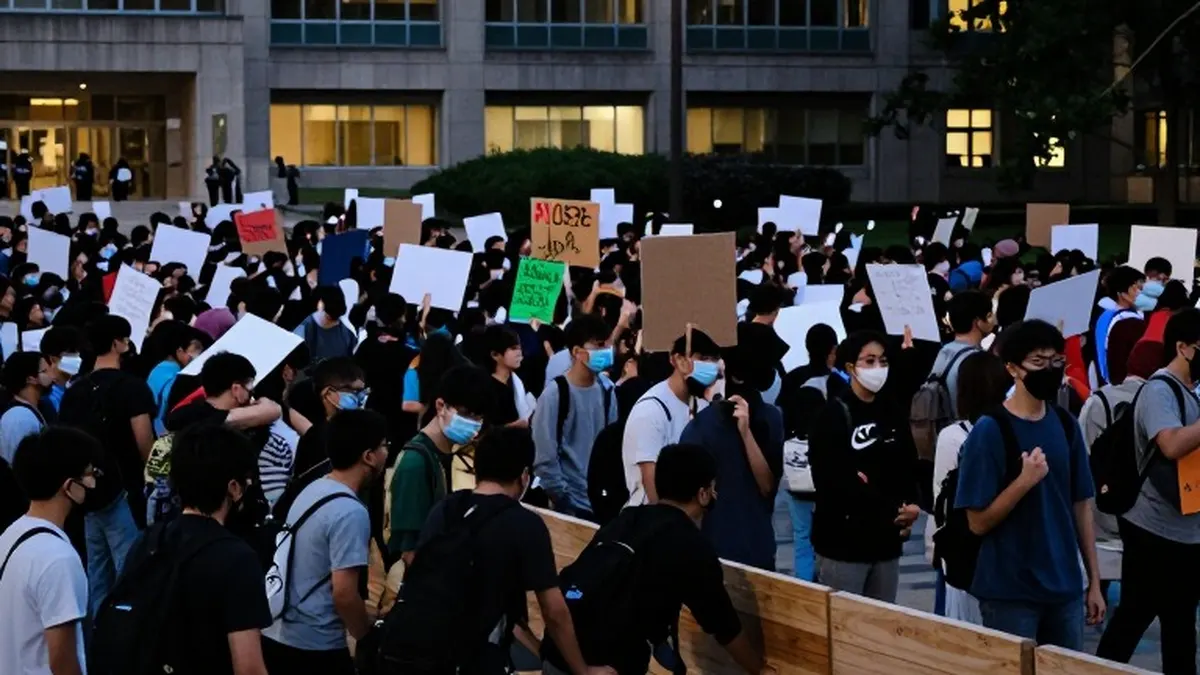
Nearly twenty years later, Kahane, now an established filmmaker, returned to the Columbia campus in the wake of the Hamas invasion of Israel in October 2023. She was struck by the intensity of the protests that erupted days after the conflict began. Hundreds of students gathered, holding signs with slogans such as “Resistance by any means necessary” and accusing Israel of genocide. Kahane described the atmosphere as one of palpable hate, a volume of emotion she had not experienced during her own time as a student there.
Motivated by this shift, Kahane began producing a follow-up documentary called “Inside the Gates.” This new project examines a broader range of factors, including foreign funding, social trends, and university structures at Columbia and other elite US institutions. The film aims to understand how the current climate of campus activism developed, questioning whether universities are teaching students what to think rather than how to think.
The documentary features interviews with affiliates from Columbia, Stanford, and Harvard, alongside footage of campus protests. One sequence captures protesters at Columbia using a hammer to break into an administrative building, while another shows students chanting for an intifada and displaying images of Hamas spokespersons. Taryn Thomas, a Stanford student who joined an anti-Zionist encampment before becoming disillusioned, provides an insider perspective on the movement, stating that the goal was to tear down the existing system rather than reform it.
Kahane notes that while bias existed in specific departments during her undergraduate years, the issue has since spread across the student body and into unrelated fields such as liberal arts, social sciences, and medicine. She argues that the movement is not entirely organic, citing the significant influx of foreign funding from states like Qatar. The film also explores the role of the tenure system and the impact of the pandemic, which isolated students and increased their desire for belonging, thereby encouraging ideological conformity.
The production process has been personal for Kahane, whose great-grandmother graduated from Barnard College in 1915. After returning to Columbia for a Master of Fine Arts degree and establishing her own production company, Riverside Pictures, she was prompted to act by a fellow alumna who reminded her of her earlier work. That alumna apologized for not taking the 2004 film seriously, urging Kahane to document the current explosion of issues on campus.
“Inside the Gates” is currently in post-production as Kahane seeks funding to complete editing and secure distribution. The film includes commentary from media figures such as Bari Weiss and Van Jones, as well as Iranian dissident Masih Alinejad. Jones notes that attacking Israel often serves as a gateway to broader anti-American sentiment, while Alinejad expresses disbelief at educating teenagers to hate their own country.
Kahane acknowledges the challenge of reaching audiences who may not already align with the film’s perspective, noting that other documentaries on campus antisemitism have faced disruptions and rejections from major festivals. Despite these hurdles, she maintains that the film is not solely about antisemitism but is intended for anyone interested in how the next generation is being educated and whether students retain the freedom to question what they are taught.