US tightens controls on Chinese access to overseas AI computing
New US restrictions target remote access to advanced chips as Malaysia's expanding data center industry provides computing capacity to Chinese technology companies.
By Lorenzo Evans ·
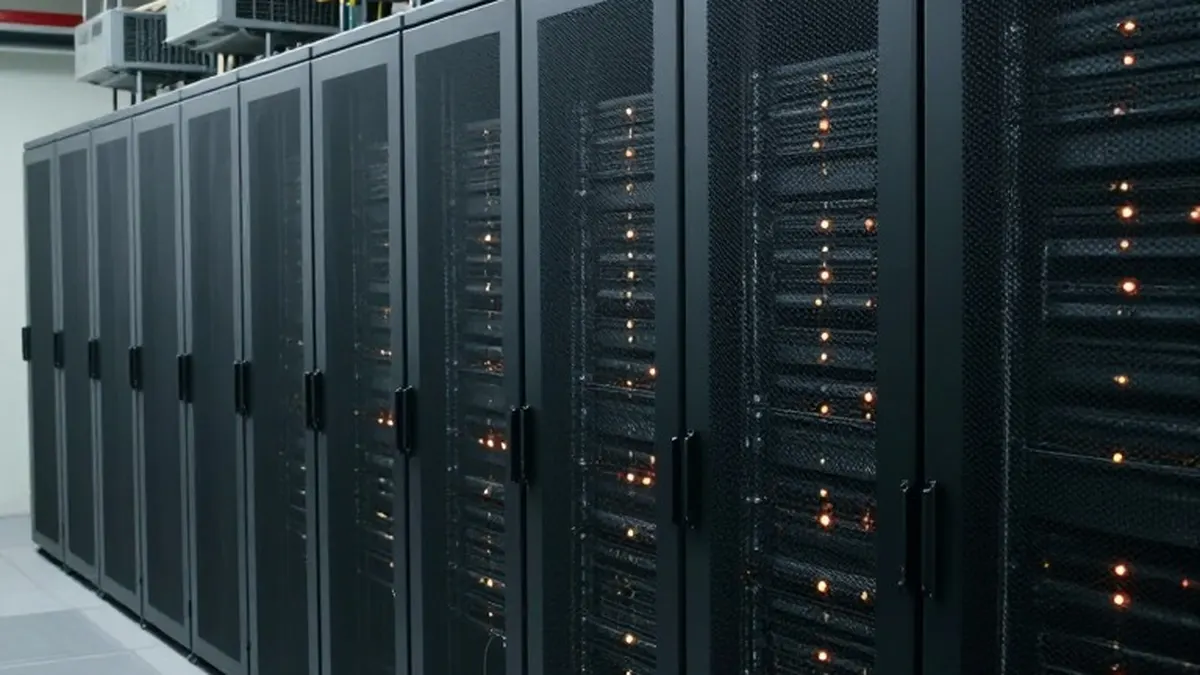
Washington is tightening restrictions on access to American AI technology through overseas data centers, targeting a route that Chinese companies use to obtain computing power. The measures come as Malaysia attracts major infrastructure investments from US and Chinese technology groups seeking capacity to develop artificial intelligence.
The US Commerce Department's Bureau of Industry and Security issued rules on remote access to advanced AI chips and servers last week, on the day President Donald Trump met Chinese President Xi Jinping at the APEC meeting in Shenzhen. The agency said the measures aim to prevent foreign actors from using American computing technology in ways that threaten US national security and foreign policy interests.
The restrictions cover data centers supplying substantial computing capacity to companies linked to Macau or countries in the US export regulation category known as Country Group D:5. That group includes China, Russia, Iran and North Korea. Companies will face more detailed checks on their customers' ownership and control structures. Washington has also introduced licensing requirements for advanced semiconductors going to Indonesia, Malaysia, Singapore, Thailand and Brazil, with exemptions for subsidiaries of US companies.
The measures address an alternative available to Chinese businesses facing restrictions on high-performance chip exports. With Chinese chips still behind competing technology, some companies legally buy or lease computing capacity abroad, gaining remote access to American chips installed in countries such as Malaysia. The US has also sought to prevent China from obtaining advanced chipmaking lithography equipment produced by the Dutch manufacturer ASML.
In October, the Washington-based independent think tank Institute for Progress warned that Southeast Asia was developing into an offshore base for Chinese AI computing. It estimated that overseas remote access would account for roughly 24% of China's total computing power by the end of 2026, rising to 31% by the end of 2027. Three-quarters of that overseas capacity was in Southeast Asia. The institute cautioned that the scale is difficult to measure because providers seldom identify customers or disclose their usage, while Chinese companies release little information.
Malaysia has received about €510 billion, or $559 billion, in AI infrastructure investment since February 2025. Its Digital Ministry says Johor accounts for 16 of 27 new data centers. Low electricity prices and connections to international submarine cables make the country attractive for energy-intensive computing. The government hopes the investments will generate numerous jobs, with local workers expected to fill as many as 90% of them.
Amazon and Oracle have each invested $6 billion along the Strait of Malacca, while Microsoft and Google have committed $2 billion each. Google's parent company, Alphabet, announced another $15 billion in investment in early November. Alibaba Cloud operates six Malaysian data centers, split equally between Johor and the greater Kuala Lumpur region. Its latest facility opened on November 19. TikTok's parent company also operates computing capacity in Johor.
Access arrangements have already encountered obstacles. In early October, Tencent signed a five-year, $7 billion agreement with Oracle for AI training capacity equivalent to 100,000 modern AI chips, with 30% due upfront. The agreement collapsed weeks later. Neither company explained why, but media reports cited pressure from Beijing and Washington, including US officials' security concerns and China's ambition to develop its domestic chip industry.
Malaysia previously responded to US pressure in mid-2025. According to Chinese consultancy Equal Ocean, Washington threatened an additional 25% tariff over chip export-control circumvention. Malaysia subsequently opposed illegal resales and introduced licensing requirements for the transshipment of certain high-end chips.