
Strait of Hormuz insurance costs surge amid ongoing naval tensions
A US Navy official cited a $64 million insurance cost for shipping through the Strait of Hormuz, raising questions about the waterway's true accessibility and the economic impact of the conflict with Iran.
By Evelyn Adeyemi ·
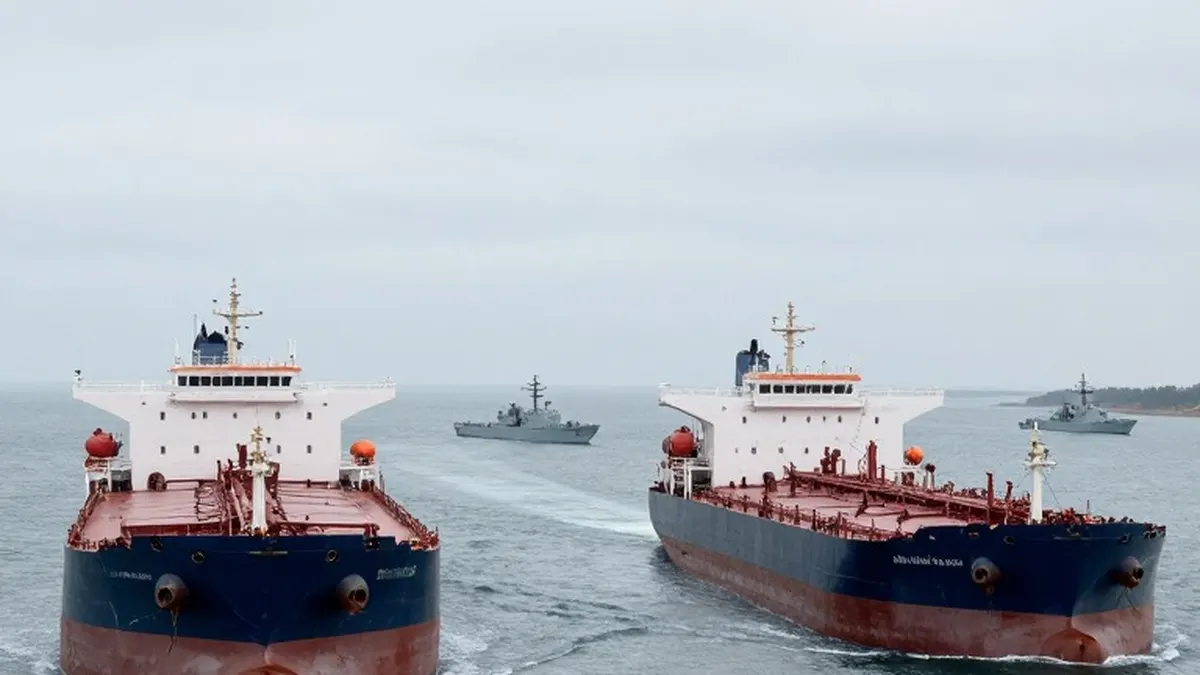
Acting US Navy Secretary Hung Cao stated during a Senate hearing that the cost of insuring a single commercial transit through the Strait of Hormuz has reached $64 million. He made these remarks on Tuesday before the Senate Armed Services Committee, where lawmakers questioned the economic consequences of the US-Israeli war on Iran and the status of freedom of navigation.
The conflict, which began with strikes on February 28, has led Iran to effectively close the strait to unauthorized vessels. This restriction has significantly increased risks for shipping and caused shortages of essential products such as oil, gas, and fertiliser from Gulf producers. While President Donald Trump maintains that the military campaign is ending and that the US Navy is successfully escorting ships, new attacks and continued restrictions have fueled debate over whether the critical energy route is truly open.
During his testimony, Cao clarified that the $64 million figure represents the current cost, a sharp increase from the previous rate of $54,000. Democratic Senator Elissa Slotkin attributed the rise to the war, arguing that commercial vessels have lost their previous freedom of navigation. Cao also described the strain on the US Navy, citing prolonged deployments and deteriorating conditions for sailors.
The hearing also featured a tense exchange regarding the mental health of service members. Senator Kirsten Gillibrand questioned a sailor who went overboard, leading Cao to state that the sailor admitted he was not attempting suicide. Gillibrand challenged this account, asking rhetorically what the sailor was trying to do, and described Cao's response as minimizing the mental health strain on troops.
Maritime analysts noted that the $64 million figure is unusually high without specific context. Michelle Bockmann of Windward explained that war-risk insurance premiums are typically calculated as a percentage of a ship's hull value. A July report by S&P Global estimated that such premiums had climbed to 7.5 to 10 percent of hull value, implying an insurance cost of approximately $21 million for a large crude oil tanker. Reuters reported in September that moving an oil cargo through the strait cost between $10 million and $20 million.
The surge in premiums reflects the heightened risk of ships being struck by missiles, drones, or naval mines. These costs can influence global freight rates and the price of goods. According to the United Kingdom Maritime Trade Operations, shipping traffic remains about 65 percent below pre-war levels. The organization recorded 308 vessel crossings in the week ending November 11.
While the US claims to have secured the route through naval escorts and a blockade of Iranian ports, Tehran insists it controls passage. Iran has required vessels to use approved routes closer to its coastline and has granted exemptions to ships from India, China, Iraq, and Qatar. Recent incidents, including tanker attacks and mine strikes, have further complicated the situation.
On Tuesday, the US targeted locations on Iran's Qeshm island following an Iranian drone attack on US installations in Bahrain. Chris Beauchamp of IG described the strait as not open by any pre-war definition, noting that it remains a miracle that a full energy crisis has been avoided. He suggested that resolving the crisis would require Washington to acknowledge the limits of its influence in the Middle East.