'Aarigaa': Mary Peltola becomes first Alaska Native to win a seat in the US Senate
The Democrat's defeat of Republican incumbent Dan Sullivan, confirmed on Tuesday after a two-week count, secures Democratic control of the Senate and marks a breakthrough for Indigenous representation.
By Lorenzo Evans ·
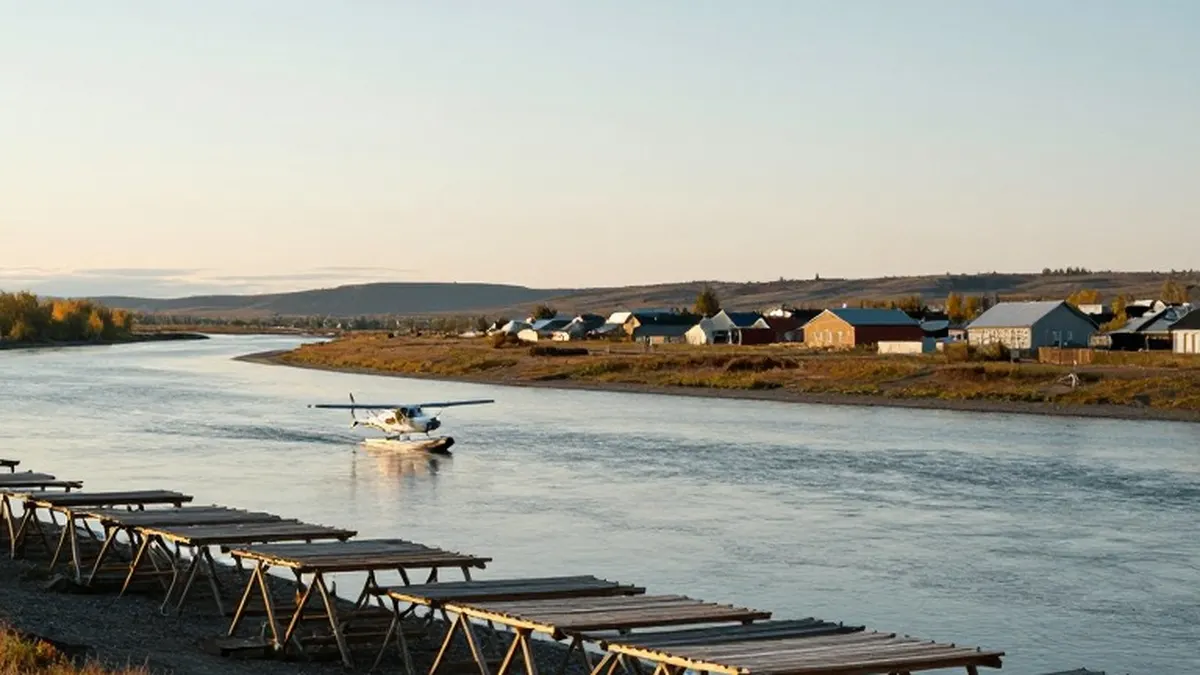
Mary Peltola was declared the winner of Alaska's US Senate race on Tuesday, two weeks after the 3 November midterm elections, when the state's marathon count finally ended. Her defeat of the Republican incumbent, Dan Sullivan, makes her the first Alaska Native to serve in the Senate, in the last race of the 2026 cycle to be called.
The result resonates far beyond Alaska. It gives Democrats comfortable control of the Senate, 56 seats to the Republicans' 44, and it means seven Native Americans will serve in Congress simultaneously for the first time: representatives Josh Brecheen and Tom Cole of Oklahoma, Sharice Davids of Kansas, Sean McCann of Michigan and Claire Valdez of New York, and senators Peggy Flanagan of Minnesota and Peltola.
For Alaska Natives, the milestone is singular. Of the more than 20,000 House and Senate seats filled since Congress first convened 237 years ago, only 29 have been held by Native Americans, and Peltola is the only Alaska Native among them. She won the state's lone House seat in 2022, lost it to Republican Nick Begich two years later, and will take her Senate seat in January.
On election night, a volunteer shouted "Aarigaa!" from the back of the Sheraton ballroom in Anchorage, and Peltola led the crowd in chanting it back. The Iñupiaq word, roughly "Way to go!", is widely understood across Alaska's 229 federally recognized tribes. "It demonstrated through language what her campaign is all about: inclusion, representation, identity," said Ana Hoffman, a lifelong friend.
Hoffman, president of the Native Corporation in Bethel, said the victory would uplift a people "who have been marginalized and underrepresented throughout generations. 'Alaska Native' will no longer be a concept in the Senate, it will be a colleague." Alaska holds about 40% of the nation's federally recognized tribes, and one in five voters is Indigenous, the largest share of any state electorate.
Peltola is a Yup'ik Alaskan from Bethel, a town of fewer than 7,000 people that anchors 56 villages along the Yukon and Kuskokwim rivers. Her Yup'ik name is Akalleq, "the one who rolled"; her mother was from nearby Kwethluk and her father, a German American, came from Nebraska to work as a pilot. She began fishing the Kuskokwim with him at six.
She put that heritage at the center of her campaign, traveling by floatplane, four-wheeler and snowmachine to more than 50 communities, some home to fewer than 300 people, in a state larger than California and Texas combined, wearing mukluk boots and Indigenous kuspuk shirts.
Her mantra, "Fish, family, freedom", reached beyond tribal voters. Fish make up about 80% of the traditional Yup'ik diet, and the collapse of the chinook salmon catch on the Kuskokwim, blamed partly on the climate crisis and over-trawling in the Bering Sea, threatens villages along the salmon run. Fishing also drives Alaska's wider economy, supplying about 60% of the nation's wild seafood. By framing Sullivan as a sellout to big trawler companies and hammering affordability, with milk costing up to $21 a gallon, she won over the independent and wavering Republican voters she needed.
The race turned rough late. The New York Times revealed weeks before the vote that a second Dan Sullivan on the ballot was a ruse cooked up by Democratic operatives aligned with Peltola's campaign, while a Republican-linked Pac aired an ad titled "Who is Mary Peltola?" that played on Alaska Native otherness. Anecdotal evidence suggests a surge in Native turnout contributed to Sullivan's defeat, though detailed figures are not yet available.
In Bethel, Susan Murphy, 85, recalled passing the crowded polling place on election day. It echoed 26 August 1958, when she was a 17-year-old high school student in a town of about 500 people and residents turned out in force to vote for statehood. Of Peltola's Senate arrival, she said: "It is important, of course it is. It is a start."