US says it disabled ship attempting to breach Iran blockade
The reported strike in the Gulf of Oman comes as Qatar pursues a proposal to ease the US-Iran standoff and prepare for nuclear negotiations.
By Lorenzo Evans ·
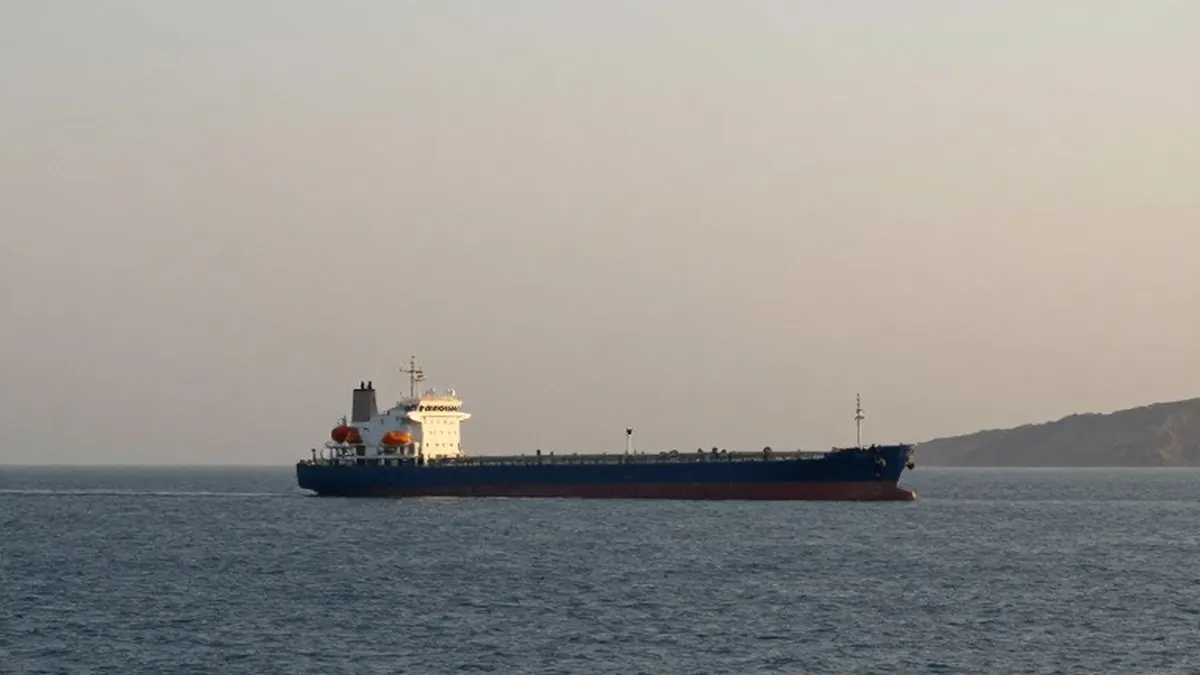
The US military said late Saturday that it had disabled a commercial ship flying the flag of St. Kitts after its civilian crew repeatedly disregarded warnings and tried to breach the naval blockade on Iran. The vessel was attempting to leave the region after calling at an Iranian port. US Central Command said a military aircraft fired precision munitions at the ship’s stern in the Gulf of Oman on November 7.
US forces have maintained the blockade for months around the Strait of Hormuz, a major passage for international shipping and oil shipments. The previous confirmed US strike on a cargo ship occurred nearly a month earlier in the Gulf of Oman. Saturday’s announcement followed at least two instances in which Central Command did not disclose regional strikes and declined to confirm them when questioned about reports of explosions.
Iranian state media separately reported explosions Saturday evening on Qeshm Island in the Strait of Hormuz and at the port of Jask. Their cause was not immediately established, and the US military did not immediately answer an Associated Press request for comment. Iran’s military also said two tankers struck mines and caught fire in the Hormuz area, without specifying their flags or destinations.
President Donald Trump said Friday that US forces had conducted limited strikes targeting an Iranian air defense system, describing the action as “minor.” Central Command did not comment even after his confirmation. Trump has said for weeks that he was weighing another wave of attacks after the November 3 US midterm elections, raising concern about a return to full-scale operations after almost two months.
Meanwhile, two Middle East government officials said Friday that Iran was examining proposals from Qatar, the chief mediator, to address disagreements with Washington over its nuclear program. The officials spoke anonymously because they were not authorized to discuss the negotiations publicly. One said Tehran remained unwilling to negotiate over its nuclear activities until Washington accepted several conditions Iran wants included in a ceasefire.
Those demands include ending the blockade of Iranian ports, lifting sanctions, releasing frozen assets, compensating Iran for wartime damage and halting regional hostilities, including Israeli operations in Lebanon. Trump has previously rejected those concessions. He insists that any agreement ending the war, now more than eight months old, must resolve the nuclear dispute.
Regional officials described a proposed interim arrangement involving two days of confidence-building steps. The United States would lift its blockade and release some frozen Iranian funds. Iran, in exchange, would admit International Atomic Energy Agency inspectors to facilities bombed by US and Israeli forces. On the second day, Tehran would reopen the Strait of Hormuz under a modified agreement with Oman that Washington has not approved.
That arrangement for the waterway would remain temporary pending a permanent agreement developed with other Gulf countries, the officials said. Broader negotiations would then address Iran’s highly enriched uranium stockpile and other nuclear activities. Iran says its program is peaceful. According to the IAEA, it holds 440.9 kilograms of uranium enriched to as much as 60 percent, close to weapons-grade purity of 90 percent.
The United States and Israel began the war on February 28, seeking to destabilize Iran’s regime and destroy its ballistic missile and nuclear programs. A June memorandum outlining a route toward a permanent settlement quickly collapsed amid mutual accusations of violations. Intermittent fighting and stalemate followed. October recorded the most attacks on commercial vessels in the Strait of Hormuz since March as Iran sought to pressure Washington economically to end the blockade.