Tesla Establishes 'Optimus Academy' to Accelerate Robot Learning
The automaker is deploying thousands of units to generate training data, addressing the lack of a large fleet for real-world AI feedback.
By Xiaoyu Wang ·
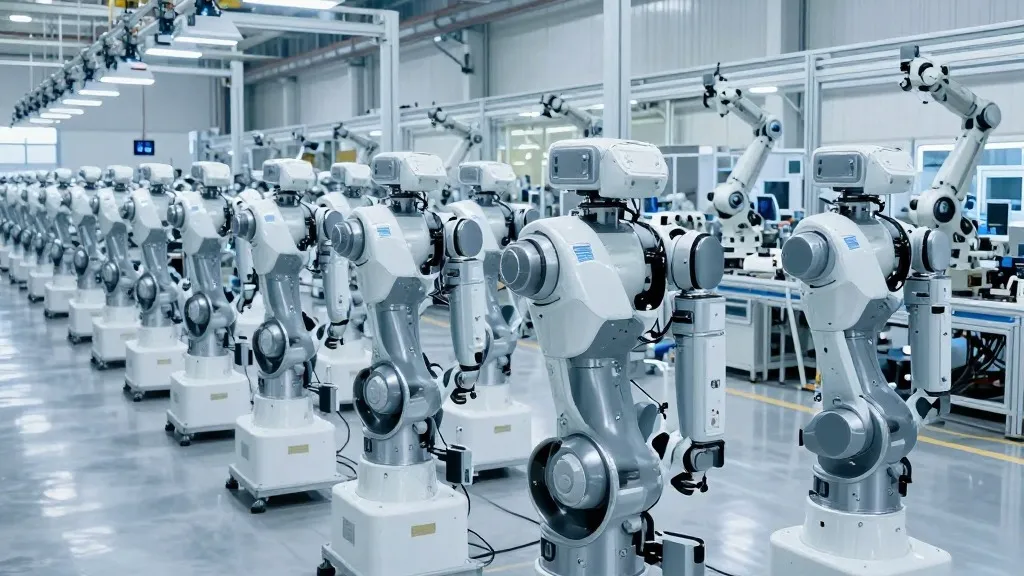
Autonomous vehicle manufacturers have long relied on massive fleets of cars to gather data for improving artificial intelligence, but humanoid robotics companies lack that same built-in feedback loop. Tesla has now announced a dedicated program to solve this specific challenge by creating an environment where its Optimus robots can learn from one another at scale. This initiative, dubbed the Optimus Academy, represents a significant shift in how the company plans to train its next-generation hardware.
The core of this new strategy involves deploying between 10,000 and 20,000 Optimus units within the academy to perform a wide variety of tasks. Unlike Tesla’s vehicles, which send driving data back to engineers from millions of active cars, the robots do not yet have a comparable global fleet. By concentrating these units in a single location, the company ensures that every robot coming off the production line contributes directly to the training dataset. This continuous feedback loop allows the AI models to refine their capabilities more rapidly than they could through isolated testing.
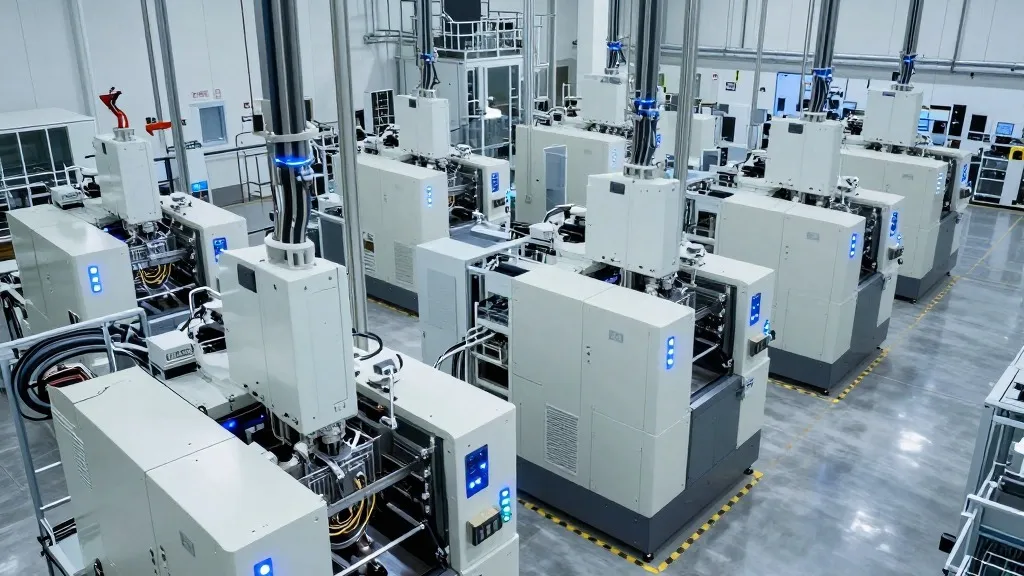
This educational approach is currently taking place within the Fremont factory, where a new high-volume production line has been established. The space was previously used for manufacturing the Model S and Model X, but Tesla cleared the old vehicle equipment in just 46 days to make room for robot assembly. The company states that the robots produced on this line are the first to meet production-quality standards, confirming that the current manufacturing process is suitable for a commercial product. Elon Musk described the expected growth trajectory as a classic S-curve, noting that while the initial increase in output will be slow, it is set to accelerate significantly over time.
Musk indicated that the majority of the equipment needed to reach a capacity of one million units per year is already installed in Fremont. As the line ramps up, output is expected to climb toward roughly 20,000 robots per week. The team is currently focused on refining the robot’s AI, electromechanical design, reliability, and service life. These engineering efforts are targeted for completion by the end of next year, at which point Tesla plans to begin delivering Optimus units to outside companies for dangerous, repetitive, and around-the-clock jobs.
Hardware improvements are also part of the roadmap, with the AI5 chip scheduled for integration into Optimus next year. Musk expects a new video demonstration to be released within one or two months, showing the robot completing tasks driven by AI rather than preprogrammed motions. He distinguished this approach from rival humanoid demos that rely on scripted routines, arguing that those methods would not hold up in real-world conditions. The hands remain the most difficult component of the design, and that area is where much of the current engineering effort is concentrated.
The supply chain is also preparing for this expansion. In September, Tesla certified Tuopu, Joyson, and Sanhua as mass production partners for Optimus components. Additionally, a much larger factory for Optimus is under construction at Giga Texas, where drone footage shows the steel frame nearing completion. The long-term target for that plant is set at 10 million robots per year. Executives noted that production costs are trending toward the expected manufacturing cost of the Cybercab, indicating that the robot is being engineered for volume from the start.
Source: Teslarati