Musk Claims Suppliers Rushing Gear for Terafab Before 2028 Deadline
Tesla and SpaceX executives assert that critical chip-making equipment is arriving faster than expected, aiming to begin mass production in under two years despite significant technical hurdles.
By Tariq Mahmoud ·
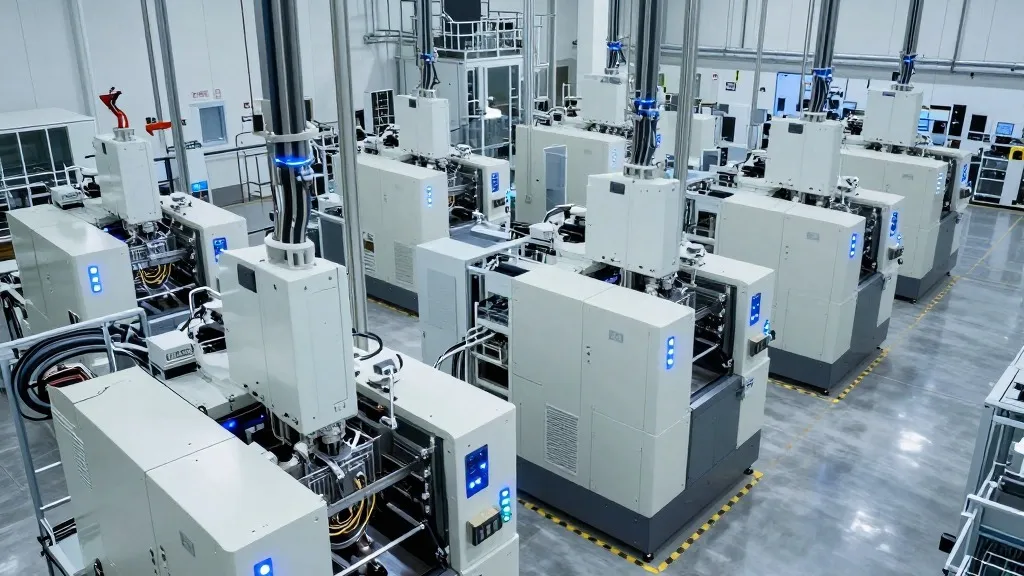
Elon Musk announced on October 20 that major semiconductor equipment manufacturers, including ASML, are accelerating deliveries to support the Terafab project, a joint venture between Tesla and SpaceX intended to produce one terawatt of AI computing power annually. The revelation comes as the companies attempt to compress a multi-year construction and ramp-up schedule into a window that industry analysts describe as extraordinarily tight, targeting volume chip production in the third or fourth quarter of 2028.
The timeline for Terafab has evolved rapidly since its inception. Intel officially joined the venture in April 2026 to co-develop silicon fabrication technology, specifically leveraging its 14A manufacturing node. The project relies heavily on extreme ultraviolet (EUV) lithography systems, with the first tool reportedly slated for delivery in mid-2027 according to unofficial sources. It remains unclear whether this specific date reflects the expedited schedule Musk referenced during his recent earnings call.
Musk described the 2028 target as "highly aspirational" with "big error bars," acknowledging the aggressive nature of the dates. He stated during a live broadcast of SpaceX’s Q3 2026 earnings call on X that the company is grateful to ASML and other suppliers for moving equipment ahead of standard timelines. This acceleration is critical because Terafab aims to be a vertically integrated factory in Gibbons Creek, Texas, capable of fabricating logic, memory, and advanced packaging in a single location to reduce reliance on external foundries like TSMC.
The supply chain for Terafab extends far beyond ASML, the sole commercial provider of the $400 million EUV systems required for leading-edge production. American firms Applied Materials, Lam Research, and KLA Corporation, along with Japan’s Tokyo Electron, are providing front-end processing, metrology, and control machinery. Additionally, Tesla and SpaceX are in negotiations with approximately 10 South Korean equipment makers, including Hanmi Semiconductor and HPSP, for specialized components such as piping and process valves.
Beyond the physical factory, Musk outlined near-term computing goals for his AI ventures. He expects xAI and SpaceX to have 2.5 to 3 gigawatts of active computing capacity by the end of 2026. By the end of 2027, he aims to bring an additional 10 gigawatts online, totaling 13 gigawatts. To achieve this, the companies are procuring next-generation NVIDIA hardware, including a 440,000-GPU "Vera Rubin" training cluster planned for deployment by the end of the second quarter of 2027.
The scale of Terafab’s ambition is underscored by its projected economic output. Musk suggested that once fully operational, the facility’s commercial value could rival the GDP of the 20th largest national economy, a benchmark currently held by Switzerland at approximately $1.14 trillion. The chips produced will serve multiple internal divisions, including xAI’s data centers, Tesla’s self-driving vehicles, Optimus robots, and SpaceX’s planned orbital AI data center.
Despite the enthusiasm, skepticism persists regarding the feasibility of the one-terawatt target. Gartner estimates the total global AI-optimized data center capacity at roughly 44 gigawatts as of late 2026, which is less than 5% of Terafab’s planned annual output. While global AI computing capacity has grown by roughly 3.3 to 3.4 times per year since 2022, according to EpochAI, scaling a single facility to such a magnitude within three years remains a significant challenge for the industry.
The project also includes a smaller experimental component. SpaceX plans to manufacture its first test chip at a research facility in Austin, Texas, around the second quarter of 2027. This step serves as a preliminary validation of the manufacturing process before the full-scale production begins in Gibbons Creek. The success of this pilot will be closely watched as a indicator of whether the broader 2028 timeline can be maintained.
As the industry watches for the first EUV tools to arrive, the focus remains on whether the supply chain can sustain the pace required for Terafab. While suppliers have signaled flexibility, the capacity constraints across the semiconductor sector continue to pose risks. The next few quarters will determine if the expedited deliveries can translate into tangible progress toward the 2028 volume production goal.
Source: Tom's Hardware