Spain's Rail Chief Cites Central Command Error in Second Fatal Crash of Year
The 68 deaths near Urda expose systemic vulnerabilities in the world's second-largest high-speed network just weeks before a national vote.
By Khalid Khalil ·
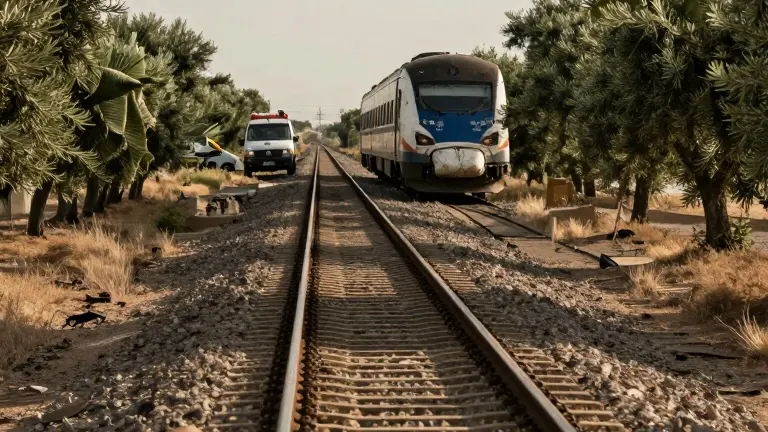
A central command center issued a flawed instruction that led to a rear-end collision, killing 68 people on Spain's high-speed rail network this Wednesday.
Transport Minister Óscar Puente identified a specific procedural failure as the root cause of the disaster near Urda in the province of Toledo. A computer malfunction disabled the safety system across a 63-kilometer stretch of track at 8:30 a.m., forcing all trains to a halt. An IRYO train stopped near Urda while a RENFE train remained 25 kilometers behind. Minutes later, the central command told the RENFE driver to resume travel without speed restrictions, despite an active stop signal. The moving train struck the stationary one at 8:53 a.m.
Puente stated that the train engineers were not at fault and described the command order as inexplicable. He argued that the moving train should have been held or sent at a reduced speed. This second fatal accident in 2026 has intensified scrutiny of a network that ranks second only to China in global track mileage. The system had avoided a deadly crash for over three decades until January, when 46 people died in southern Spain after one train jumped the tracks and hit another side-on.
The timing of the crash complicates the political landscape for Prime Minister Pedro Sánchez, who has four weeks until the country votes in its first national election since 2023. Sánchez visited the site after regional authorities confirmed the death toll. He declared three days of national mourning starting Thursday and pledged improvements to rebuild public trust in a system that carried 45 million travelers last year. He noted that it is not acceptable for Spain to endure two high-speed accidents in a single year. Polls indicate Sánchez faces an uphill battle against his opponents, and the disaster adds to existing pressures regarding housing costs and migration policies.
Political rivals have used the tragedy to pressure the government. Alberto Núñez Feijóo, leader of the Popular Party, demanded a full investigation and canceled his party's campaign events for the day to respect the victims. He stated that Spaniards are asking tough questions that require answers. Santiago Abascal, leader of the far-right Vox party, adopted a sharper tone, calling the government a criminal organization and promising to work until it faces a courtroom. Abascal’s party aims to form a coalition with the conservatives, and he expressed deep frustration over what he described as a sense of betrayal among the public.
The incident involves both state-owned and private operators, reflecting the market changes in Spain's rail sector. Both fatal crashes this year included a RENFE train and an IRYO train. Spain liberalized its high-speed rail service in 2021, allowing the Italian company IRYO to begin service the following year. This shift introduced new operators to a network previously dominated by the state. The collision occurred on a stretch of rail lined by olive groves, which was described as a sleepy area before emergency crews arrived.
Rescue operations continued late into the evening as workers used cranes to move damaged sections of the trains. Hundreds of firefighters, police officers, and soldiers assisted in rescuing survivors and recovering bodies. The event has forced Sánchez to address rail safety alongside other governance challenges, including corruption accusations against his party and his wife, which both deny. The government is now tasked with explaining how a modern, extensive rail network failed to prevent two major tragedies within twelve months.
The next step in the process is a formal investigation into the command center's decision-making. The findings will determine whether software updates or protocol changes are required for the 63-kilometer stretch and the wider network. For now, the focus remains on the victims and the families of the 68 dead, as Spain prepares to cast ballots in four weeks.
Source: WCBE