Lula's Fourth-Term Win Brings Relief to BRICS Allies in the Global South
Analysts say Brazil's election result removes a threat to the BRICS bloc's cohesion, though deep differences among its members remain.
By Lorenzo Evans ·
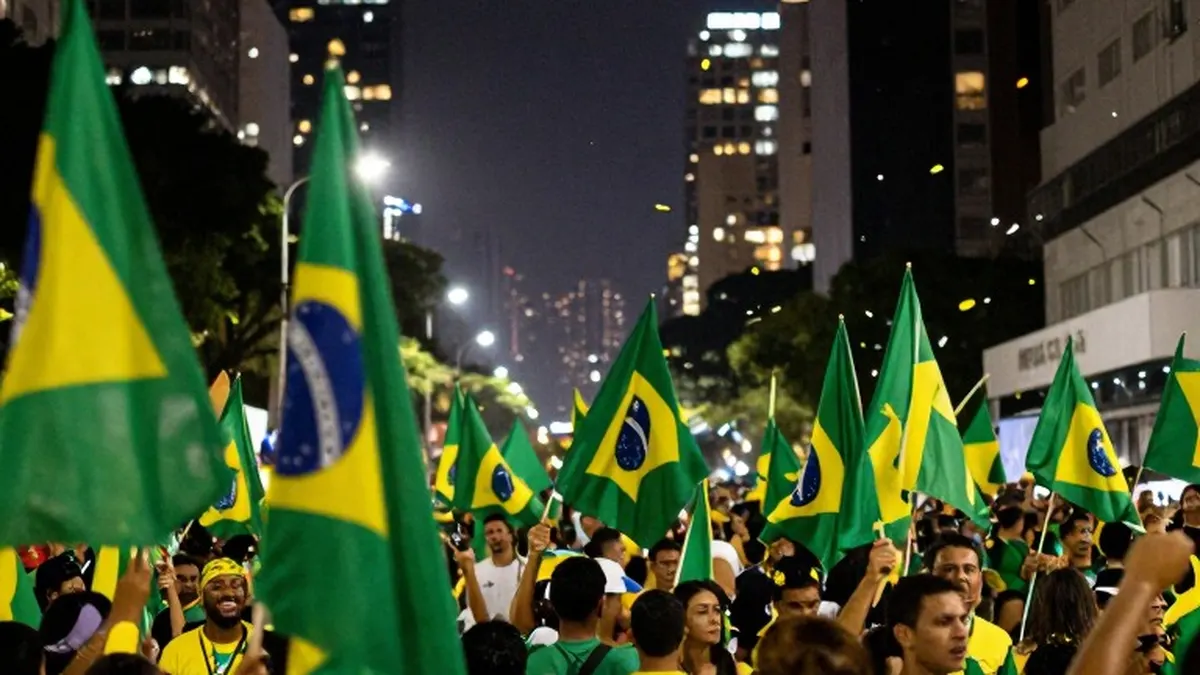
Luiz Inacio Lula da Silva's surprise win in Brazil's presidential election on Sunday, which gives him an unprecedented fourth term, has drawn celebration from his supporters and relief across large parts of the Global South. Experts say the result also offers political reassurance to the BRICS alliance, which aims to give emerging countries a bigger voice in world affairs.
The timing matters. United States President Donald Trump is trying to reassert American power and has portrayed BRICS as a threat to US interests. His Brazilian ally Flavio Bolsonaro, Lula's rival, had links to Trump and had called for a rethink of Brazil's place in the bloc.
Esmat Zaidan, a professor of public policy at Qatar's Hamad Bin Khalifa University, told Al Jazeera that Lula's victory is important for BRICS' political continuation as it tries to strengthen its role in global governance. Lula helped found the bloc nearly two decades ago and has worked to raise its profile internationally.
Zaidan said that a Bolsonaro government favoring closer alignment with Washington would have weakened the group's cohesion and could have slowed cooperation on trade and financial reform. Imran Khalid, a geostrategic analyst and senior fellow at Foreign Policy in Focus, said Bolsonaro had reportedly promised the US Trade Representative that Brazil's Pix instant payment system would stay out of non-Western payment schemes. He added that because BRICS decides by consensus, one unwilling founding member could slow everything from within. In his view, that was a bigger risk than Brazil leaving.
Analysts stressed that the result does not erase divisions. Zaidan noted that members have distinctly different economic interests and geopolitical goals. Guy Burton, a geopolitical and policy analyst, said BRICS represents a large share of the world's population, economy and trade but has never acted as a political unit. He pointed out that the bloc now includes both Iran and the UAE, which sit on opposite sides of the current war.
Zaidan said relief over Lula's win reflects wider concern among emerging economies about their exposure to Washington's decisions on trade, tariffs and international economic relations. For these countries, he said, the goal is not opposing the US but having more room for independent decisions. Khalid said China and Russia backed Lula, with Xi Jinping supporting him against outside interference and the Kremlin praising his work for BRICS. "Most of these countries do not want a fight with the United States; they want the freedom to say no to Washington without being punished for it," he said.
Burton said even Europe is working to reduce its reliance on Washington, and he described the world as moving into a genuinely multipolar era. Still, experts said BRICS has never been a coherent counterweight to the West, since many members keep strong economic and security ties with the US. Zaidan said Lula's win strengthens the case for strategic autonomy rather than confrontation.
One of the bloc's ambitions is to boost trade in local currencies instead of the dollar. Khalid said that after BRICS dropped the idea of a common currency at its September summit in New Delhi, local-currency trade has become far more viable. He cited the New Development Bank's goal of 30 percent of lending in member currencies and a 2023 agreement between Brazil and China to settle more trade in reais and yuan.
Zaidan cautioned that political will is not enough, since payment infrastructure, currency liquidity, suitable regulation and willing businesses are also needed. Burton said the dollar may not face a tipping point for another decade or so. Zaidan expects the shift to be gradual and uneven, driven as much by economic feasibility as by geopolitics.
Source: Al Jazeera