Liberman Backs 'Painful' Compromise on Haredi Draft to Oust Netanyahu
The Yisrael Beytenu chief said unseating Benjamin Netanyahu will require concessions to ultra-Orthodox parties on military enlistment, abandoning his years-long veto on governing with them.
By Khalid Khalil ·
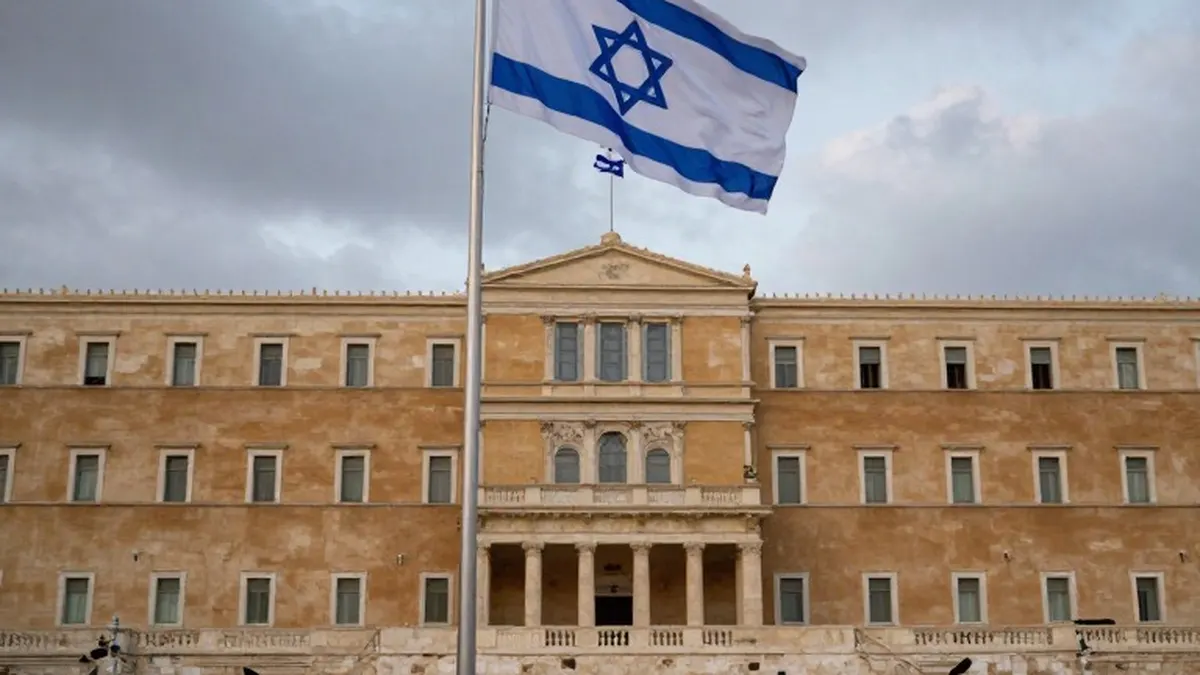
Yisrael Beytenu chief Avigdor Liberman said Friday that unseating Prime Minister Benjamin Netanyahu after last week's election would require "painful" compromises with ultra-Orthodox parties on drafting Haredi men into the military, a major reversal for the hawkish secularist.
Writing on X, Liberman confirmed Thursday reports that he had dropped his years-long veto on joining a government with Haredi parties seeking to codify their constituents' exemption from military service. He also rejected the bloc's apparent alternative: a minority government reliant on outside support from the Arab parties Ra'am and the Joint List.
Voters on October 27 gave Ra'am and the Joint List a combined 19 of the Knesset's 120 seats, the Zionist anti-Netanyahu bloc 48 and Netanyahu's coalition 53. The Haredi parties in that coalition, Shas and United Torah Judaism, hold 13 seats, just enough to hand the majority to Netanyahu's Zionist opponents, who had made ending the Haredi draft exemption a centerpiece of their campaign.
President Isaac Herzog is expected to give Yashar chief Gadi Eisenkot, head of the largest anti-Netanyahu party, the first chance to form a government, after 67 incoming MKs from the four Zionist opposition parties and two Arab parties backed him in consultations this week.
Liberman stressed that his party would vote against any government relying on outside support from Ra'am and the Joint List. He pointed to the 2021 and 2022 change government, where he served as finance minister, which briefly unseated Netanyahu with a narrow majority including Ra'am; after it fell, Netanyahu returned in November 2022 with 64 seats. "A minority government will last much less time, and when it ends we'll have Netanyahu back with 70 seats for another four years, and from there it's a short road to annihilation," Liberman said.
Rejecting new elections, Liberman insisted that "the Netanyahu era must end" and said compromise on other issues was "permissible and desirable," including on the enlistment law. "It's painful for me, and I know it's painful for many others," he wrote. "We need to make the maximum effort to form a coalition of 61 lawmakers, without the Joint List and Ra'am. After it's formed, there's a high likelihood we'll be able to add three or four MKs from the Likud." He called that "the only strategy that reflects the interest of the State of Israel and of the Jewish people."
United Torah Judaism leader Ya'akov Asher welcomed "the flexibility of all political actors on the enlistment issue," but called it painful to think "how much incitement and brotherly hatred could have been spared from us" had that flexibility appeared earlier. He said no "political matchmaking" has yet been proposed to UTJ, whose rabbis would have the final word. UTJ held steady at seven seats and declined to endorse Netanyahu, having broken with him over the failure to pass the exemption legislation. Shas, down from 11 seats to six, recommended Netanyahu after he vowed to pass the legislation next term.
Not all of Liberman's allies agreed. Dan Illouz, a former Likud MK who bolted the party over the Haredi draft issue and ran with Yisrael Beytenu, said on X he would "fight against an exemption law even if it comes from the other side," and urged a "Zionist unity government that will win wars and draft Haredim." Illouz was 10th on the slate and missed the Knesset after the party won just seven seats.
Separately, Democrats chief Yair Golan said "substantial progress" had been made toward forming a "national emergency government," posting minutes after Liberman without mentioning his statement. Golan, whose left-leaning party is the only Zionist faction supporting an Arab-backed government, said he was "more optimistic than I was on the Wednesday morning after the election results" and that Zionist anti-Netanyahu parties were "preparing to take control of the Knesset already on Tuesday." He also accused Netanyahu of "trying to carry out a coup" and of damaging ties with the United States.