Palestinian voters target 15 seats in tight Israel race
Polls show neither major bloc will secure a majority, making the 12 to 15 seats held by Arab parties decisive for the next Knesset.
By Lorenzo Evans ·
Palestinian citizens of Israel are positioning themselves as the deciding factor in next week's election, with polls projecting they will secure between 12 and 15 seats in the 120-member Knesset. Current data indicates that Benjamin Netanyahu's far-right coalition will lose its majority, while the Jewish Israeli opposition will also fall short of the 61 seats required to form a government. This arithmetic places the Islamist Ra'am party and the Joint List alliance in a position to determine which side gains power.
The political landscape has shifted over recent weeks as both main blocs struggle to find partners. The Joint List, which includes the Ta'al party, is expected to split these seats with Ra'am. Ahmad Tibi, who has served in the Knesset for more than 20 years, stated that high turnout among the Arab community is a key tool to remove the current government. He said, "We are determined to do everything in order to bring this government down."
The opposition bloc has historically resisted alliances with Arab politicians, a stance Netanyahu and his allies have exploited to make such partnerships politically difficult. Campaign posters in the lead-up to the vote have used slogans such as "It's the right or Palestine" and "Bibi or Tibi." Despite these messages, promises to avoid Palestinian parties have been broken in the past. In 2021, Ra'am leader Mansour Abbas joined a coalition with Naftali Bennett, who is now in the opposition. Netanyahu also previously opened coalition talks with Abbas.
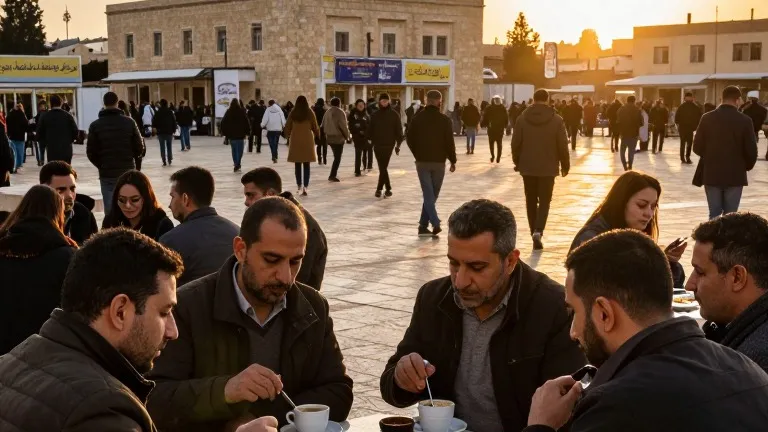
Voters in Kfar Qasim and other communities are weighing the options with a focus on mitigation. Mohammed, a hi-tech manager who employs both Jewish and Arab staff, believes the opposition will eventually accept an alliance once the results are known. He described the decision as simple mathematics, urging friends of all backgrounds to vote. He noted, "At the end of the day, everything is mathematics, right? One plus one is two."
For Palestinian politicians, the choice is complicated by the positions of their potential partners. None of the opposition parties currently call for a two-state solution, and most oppose a Palestinian state while supporting settlements in the West Bank. Tibi characterized the decision as a choice between the current far-right figures and the opposition. He said, "It's between bad and worse."
Fear is driving voter motivation, according to party leaders. Sami Abu Shehadeh, head of the Balad party, cited the situation in Gaza and the West Bank, as well as rising discrimination inside Israel, as primary reasons for voting. He said voters understand the danger if the current ministers return. "The biggest motivation is fear," Abu Shehadeh stated. He added that voters are aware of the risk if "these criminals come back to rule again."
Distrust of the political system has previously suppressed turnout. Last month, Israel's supreme court forced Abu Shehadeh out of the race over an article regarding the 7 October Hamas-led attacks. A similar motion to disqualify national security minister Itamar Ben Gvir over his use of racist language was not upheld. Some citizens, like Haaretz journalist Nagham Zbeedat, abstain on principle to avoid legitimizing a system they feel treats their rights as favors. Amjed Iraqi of the International Crisis Group noted that a returning far-right coalition would have a mandate to accelerate policies of ethnic cleansing. He described the vote as a way to mitigate that risk.
The election takes place two days before Kfar Qasim marks the 1956 massacre in which border police killed 49 residents. The community gathered at sunset on Tuesday to hear candidates speak. Iraqi observed that while there is no clarity about the outcome, the vote offers a chance to limit the power of the far right.
Source: The Guardian