Kherson Residents Brace for Return of Fighting as Localized Truce Expires
Ukraine and Russia agreed to a pause in hostilities that enabled the evacuation of Oleshky, but aerial strikes on energy grids continue as the agreement ends.
By Evelyn Adeyemi ·
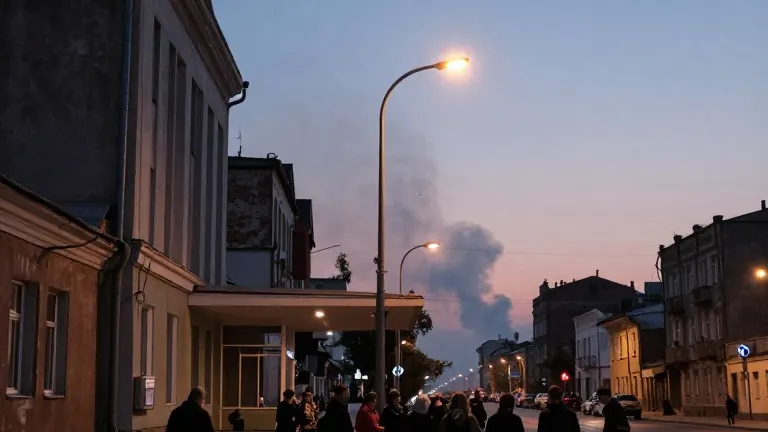
The localized ceasefire between Ukraine and Russia is set to expire on Sunday evening, marking the end of the longest pause in hostilities since Moscow’s full-scale invasion began four and a half years ago. As the agreement nears its conclusion, civilians in Kherson region prepare for a potential resumption of combat operations. The White House stated that U.S. First Lady Melania Trump assisted in brokering the limited truce, which commenced early Tuesday.
The temporary halt in fighting allowed for a joint evacuation operation in the besieged front-line city of Oleshky, concluding on Saturday. An estimated 2,000 civilians were present in Oleshky when the truce took effect. Residents were offered the option to move to territory controlled by either Ukraine or Russia, or to remain in the city with replenished food and medical supplies. Officials did not release specific figures regarding the number of people who stayed, citing safety concerns for those remaining.
At the Ukrainian border on Saturday, family members gathered to see returning relatives. Residents of nearby villages lined the highway, waving flags and flashlights to welcome the humanitarian convoy. However, fighting continued in other areas. Ukrainian President Volodymyr Zelenskyy reported on Sunday that Russian forces are targeting Ukraine’s energy systems ahead of winter. In a post on the social media platform X, Zelenskyy noted that hundreds of thousands of families were without power overnight.
“The intensity of the strikes is extremely high, and the Russians are trying to take maximum advantage of the shortage of ballistic missile interceptors,” Zelenskyy wrote. The Ukrainian air force reported that Russian forces launched 433 drones overnight, of which 371 were destroyed or suppressed. In return, Ukrainian drones struck targets inside Russia, including an industrial building in the town of Kstovo in the Nizhny Novgorod region. Local Governor Gleb Nikitin said more than 100 Ukrainian drones were shot down over the region, and Russian media reported a fire at the Kstovo oil refinery.
Zelenskyy stated that Kyiv also hit a factory producing missile components and air defense facilities in Russia’s Rostov region. “We are justly defending ourselves against Russian aggression and doing everything to reduce Russia’s capability to continue it,” the president added. In Kherson, the atmosphere remained calm on Sunday despite the impending end of the quiet period. Oleksandr Knyha, head of the Mykola Kulish Kherson Regional Academic Music and Drama Theater, told his audience, “Don’t be afraid, keep holding on.”
The theater has performed every weekend for four years and plans to continue, even as local officials warn that Russian forces have increased weapons and personnel in the area. Knyha, who is from Oleshky on the occupied left bank, said the company has never canceled a performance. “Whatever happens, the show is not canceled,” he said. The troupe now performs in a basement and is outfitting an additional bomb shelter. Approximately 100 of the theater’s 120 staff members remain in Kherson, with none having evacuated.
Alla Vasylenko, a costume maker, said the silence of the truce still frightens her. “Nothing will change. Everything will go back to how it was before the ceasefire, because believing the Russians means not believing yourself,” she said. She has no plans to leave because of her ten dogs and the travel costs, which she estimated at 30,000 to 50,000 hryvnias. “Until we liberate the left bank, we have no certainty this will end,” she said.
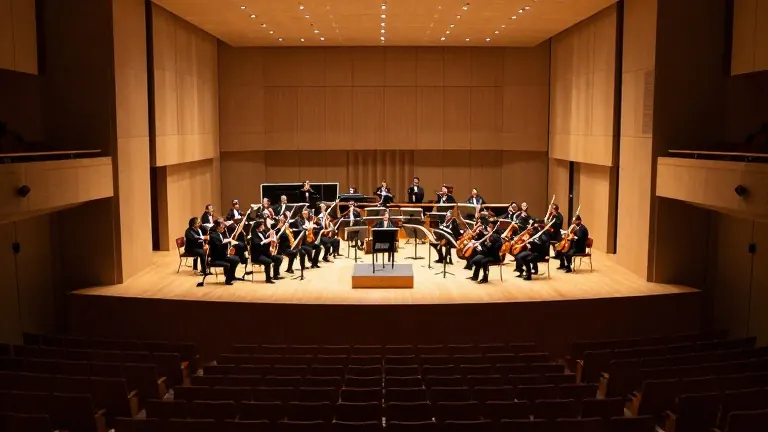
On the final day of the ceasefire, the theater presented a concert featuring songs from the Ukrainian peninsula of Crimea to the Carpathian mountains. Knyha described the performance as a way to unite people and provide hope. The localized agreement ends Sunday evening, after which standard combat operations are expected to resume in the region.