European Air Disruption: Hoax Bomb Threats Force Diversions
Aer Lingus and Ryanair flights were impacted as part of a second consecutive day of coordinated threats across 16 nations.
By Khalid Khalil ·
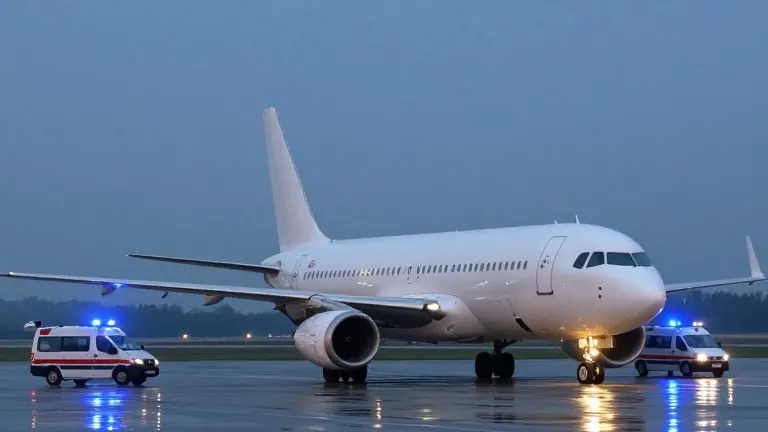
Aer Lingus Flight 984 diverted to a military airfield in Normandy on Thursday after an anonymous phone call claimed a bomb was aboard. The aircraft, carrying 151 passengers and six crew members, landed at the Évreux-Fauville airbase following a pilot’s report of a "problem with plane." French authorities confirmed that bomb disposal teams examined the aircraft, and all occupants were brought to safety without incident.
The diversion was part of a widespread disruption that affected at least 27 flights across Europe on Thursday. This marked the second consecutive day of such incidents, following seven planes that were searched or diverted on Tuesday. Airlines impacted included Ryanair, Wizz Air, Finnair, EasyJet, Aegean Airlines, Iberia, Sky Express, Air Serbia, and LOT. All affected aircraft landed safely, and subsequent searches found no suspicious items.
In Ireland, the disruptions caused specific delays for travelers. A Ryanair flight from London Stansted to Cork was held for 90 minutes after Cork Airport received an anonymous threat at 6am. Gardaí waited on standby as the Boeing 738 landed before 8am. Investigators evacuated the aircraft, which held up to 180 passengers, and removed all luggage for examination. Police later declared the threat a hoax. A separate Ryanair route from Dublin to Prague was also affected by the same wave of threats.
Katie McAteer, a passenger on the diverted Aer Lingus flight, described the experience as terrifying. She recounted seeing a fighter jet flying alongside her plane shortly after takeoff. The pilot initially told passengers they were being directed to an airbase but later stated he believed the threat was not credible. McAteer noted that the initial uncertainty was frightening, though the pilot's subsequent update provided relief.
Helen McEntee, the Irish Minister for Defence, described the rapid succession of events as extremely concerning. She emphasized the need to identify the responsible parties quickly due to the resulting fear and logistical chaos. McEntee noted that 55 heads of state are scheduled to meet in Ireland the following week, and her team is working to ensure their security. She indicated that the EU transport commissioner is coordinating with national ministers to determine if the incidents are connected.
Apostolos Tzitzikostas, the EU’s transport commissioner, stated that threats against civilians are unacceptable. Speaking at a tourism ministers’ summit in Mullingar, he said the commission is closely monitoring the situation. While he acknowledged the disruption, he noted it was too early to draw a definitive link between the threats made to different airlines across the continent.
The incidents occurred amid ongoing tensions between European officials and Eastern powers. European leaders have recently attributed various acts of sabotage to Russia and Iran, describing them as hybrid attacks. Both Moscow and Tehran have denied involvement. This week also saw unidentified hackers shut down supermarket refrigerators in several countries. Some experts suggest the bomb threats fit a pattern of low-cost, deniable disruption efforts designed to create widespread uncertainty.