Serbian Election: 500,000 Voters Lacking Addresses Ahead of October 25 Vote
Aleksandar Vucic faces his toughest challenge yet as student-led opposition questions the integrity of the voter register and international observers deploy for the high-stakes parliamentary contest.
By Khalid Khalil ·
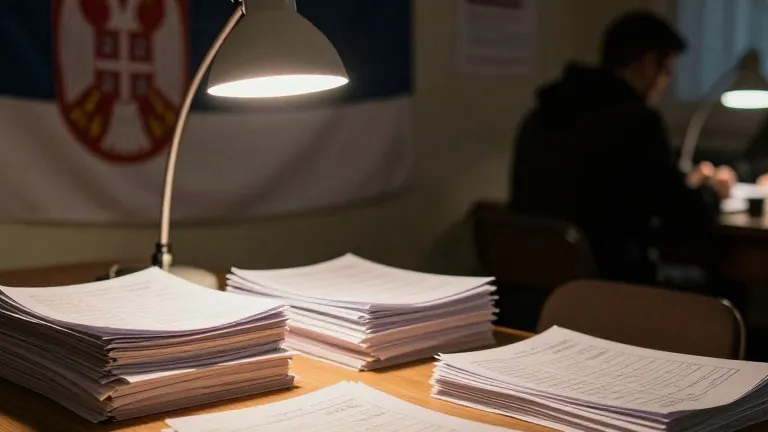
Approximately 500,000 individuals on Serbia's electoral roll lack complete addresses, a finding that has intensified scrutiny of the parliamentary elections scheduled for October 25. These records often omit specific street names or house numbers, creating uncertainty about the validity of the voting population. The upcoming vote marks the first time in over a decade that the outcome appears genuinely uncertain, according to Vladimir Bilcik, a former European Parliament rapporteur for Serbia.
Aleksandar Vucic has dominated Serbian politics for fourteen years. He resigned as president in late September to avoid a third term but is now seeking the premiership, a post he held from 2014 to 2017. His main rival is a student movement that emerged from widespread protests. This opposition group lacks formal leaders and features a candidate list composed largely of nonpartisan figures, including university professors. The list is headed by cardiologist Ilija Srdanovic, though the movement has stated this position does not guarantee a premiership.
The political tension dates back to November 1, 2024, when a renovated canopy at the Novi Sad railway station collapsed, killing sixteen people. The disaster, linked to a Chinese-led construction project, sparked nationwide demonstrations over alleged corruption. Authorities responded with police force and arrests. A severe incident occurred on March 15, 2025, when officials allegedly used an unlawful sonic weapon against peaceful protesters. Following further student unrest in June, Vucic announced his resignation and the scheduling of early elections.
Concerns about fraud have deepened with new findings. Investigations identified hundreds of voters registered at public facilities, such as social welfare centers, or at residential addresses that could not logically house so many people. These issues echo suspicions from the 2023 election, where international observers reported voters being transported from neighboring Bosnia-Hercegovina and instances of intimidation. The government claims it has implemented all recommendations from the OSCE's previous mission. However, an interim OSCE report contradicted this assertion, with 300 observers currently deployed in Serbia.
Regional dynamics add complexity to the vote. The number of eligible voters in Bosnia and Kosovo increased ahead of the election. These regions are considered key sources of support for Vucic's Progressive Party among ethnic Serbs. Four employees of Serbia-funded institutions in Kosovo reported facing pressure to vote for the ruling party. This practice has also been documented in several Serbian municipalities. Current polling indicates the electorate is deeply divided between the ruling coalition and the student movement.
Allegations of illegal surveillance further complicate the climate. Research by the Serbian nonprofit SHARE and Toronto University researchers found at least sixteen cases of Pegasus surveillance software, which is illegal in Serbia, used in 2026. A statement from the US Senate's Foreign Relations Committee on October 21 cited reports of illegal monitoring of opposition members. While the opposition blames the authorities, government officials have denied targeting rivals. The US Senate noted that Moscow may play an active role, with Russian President Vladimir Putin expressing personal support for Vucic.
During the campaign, Vucic pledged to maintain his foreign policy course, including his refusal to follow EU calls for sanctions against Russia over its invasion of Ukraine. The student movement has focused on fighting corruption while also opposing sanctions. The opposition has reiterated support for Belgrade's stance of not recognizing Kosovo's independence. Serbia's progress in EU integration has stalled, with no new accession chapter opened since late 2021. Democratic backsliding, unresolved relations with Kosovo, and the refusal to sanction Russia are cited as the main reasons for this impasse.
Source: RFE/RL