40% of North Koreans go hungry as the state opens a wave of luxury BBQ spots
State media has announced over a dozen new upscale meat restaurants this year, a move analysts say projects prosperity to a population where more than two in five are undernourished.
By Khalid Khalil ·
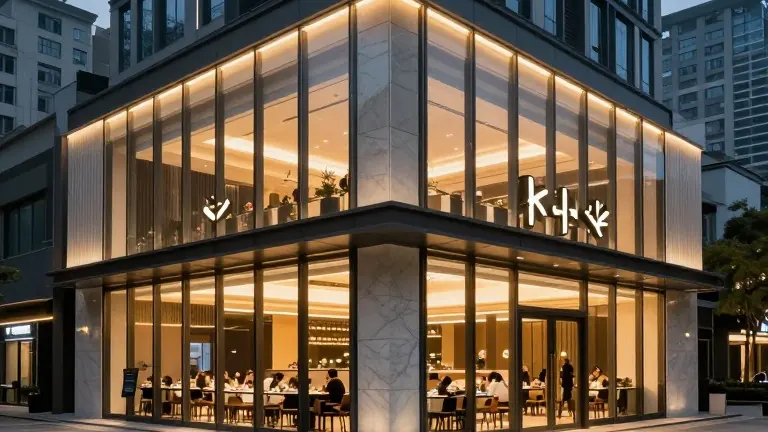
North Korea has long struggled to feed its people, yet state media is currently touting a boom in high-end dining. Since September, the government has announced the opening of more than a dozen new barbecue restaurants across the country. These establishments feature multi-story structures, marble tabletops with inlaid grills, and menus that include beef, pork, and ostrich.
The new venues are designed to impress. In Sinuiju, a city on the border with China, one restaurant spans three stories. In northern Kanggye, diners can drink draft beer next to a fish tank. An opening ceremony in the west coast city of Nampo included a fireworks display. Many of these new locations boast large floor plans capable of seating hundreds of guests at once.
Benjamin Katzeff Silberstein, head of Korean Studies at the Hebrew University of Jerusalem, notes that meat serves as an important symbol for the regime. He points to the promise made by the late Kim Il Sung, the grandfather of current leader Kim Jong Un, to give the people white rice with meat soup. Silberstein suggests the openings show that nice things are reaching people outside of the capital, Pyongyang. He stated, “I think it’s a way of showing all these nice things … they’re coming to people outside of Pyongyang, too.”
However, skeptics argue the trend is a calculated display of wealth rather than an indicator of a healthy economy. Hazel Smith, a professorial research associate at the University of London’s School of Oriental and African Studies, said the restaurants are not a sign of a thriving economy. She explained that they show some people are currently able to afford a meal out now and then. She added, “this is not a sign that you’ve got a thriving economy, it’s a sign that some people at the moment are able to get by and afford to go out and have a meal now and then.”
The UN World Food Programme estimated in 2022 that 10.7 million North Koreans, or more than 40% of the population, were undernourished. The UN food body’s latest report confirms that more than two out of every five North Koreans still face undernourishment. This statistical reality stands in sharp contrast to the marble tables and draft beer featured in state media.
Domestic production appears unable to meet the demand for such meals. Meat imports from China more than quadrupled between 2023 and 2025, reaching nearly $39 million, according to UN Comtrade data. Joung Eun-lee, director of the North Korean Research Division at the Korea Institute for National Unification in South Korea, says these rising imports prove that domestic supply cannot keep up. She describes the state media coverage of the openings as a powerful form of propaganda.
Lee Ae-Ran, who defected from North Korea in 1997, recalls that beef was difficult to obtain because cows were reserved as working animals on farms. She remembers eating at a Pyongyang duck restaurant where patrons had to pay in foreign currency. Now running a North Korean restaurant in Seoul, she believes the new openings are designed to project prosperity. She stated, “In North Korea, high-end restaurants are only for special classes of people.”