Houthis claim strike on Saudi Arabia's largest oil refinery
Yemen's Iran-aligned Houthis announced an attack on the Ras Tanura facility, with satellite data revealing extensive smoke over the site.
By Khalid Khalil ·
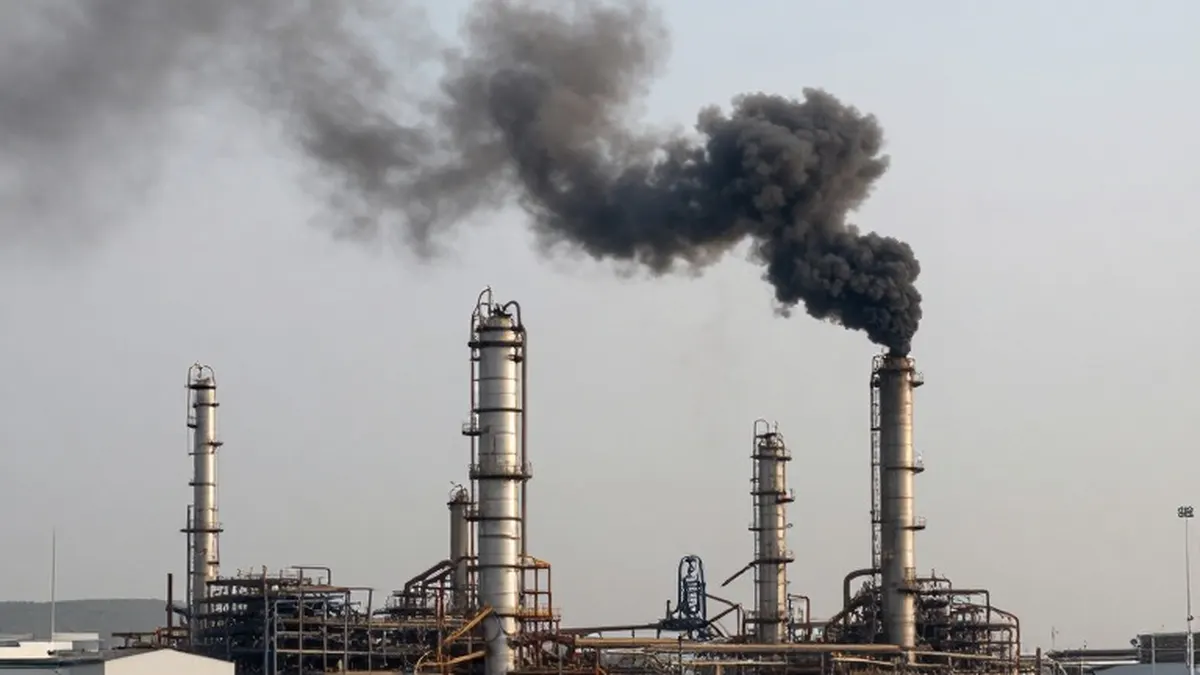
Yemen's Iran-aligned Houthi forces announced on Wednesday that they had launched an attack on the Ras Tanura oil refinery in Saudi Arabia. This facility is the largest in the kingdom and is situated near a critical export terminal for Saudi crude oil. Houthi military spokesman Yahya Saree stated that the strike resulted in fires at the refinery.
The Houthi militia, which currently controls significant portions of western Yemen including the capital Sanaa, has intensified its campaign against Saudi targets. Since the frozen civil war in Yemen rekindled in July as a spillover from the war between the United States and Iran, the group has targeted Saudi airports, oil infrastructure, and office buildings.
These attacks have had tangible economic and logistical impacts. They have previously caused temporary disruptions to operations by Aramco, the state oil giant, and led to the cancellation of most international flights to Riyadh. Furthermore, the conflict has forced Saudi Arabia to postpone or cancel major international events, such as the AFC Asian Cup soccer tournament and the flagship FII investment conference.
Earlier on Wednesday, the Saudi-led coalition reported that air defense systems intercepted and destroyed four drones over Ras Tanura in the Eastern Province. The coalition did not initially confirm that the refinery itself had been hit. However, satellite imagery from NASA, which was reviewed by Reuters, showed large plumes of thick black smoke rising from the refinery. The smoke covered an estimated area of 600 square kilometers.
As of Wednesday, neither the Saudi government communications office nor Aramco had immediately responded to requests for comment regarding the damage. Ras Tanura, which has a refining capacity of 550,000 barrels per day, has been a target in this conflict as well as in the broader Iran war. It is part of a coastal complex that served as the main export terminal until the U.S.-Iran conflict increased the importance of the Yanbu terminal on the west coast.
In addition to the refinery strike, Saree claimed that the Houthis also attacked the financial district in Riyadh. Saudi civil defense authorities confirmed that 11 people were wounded on Tuesday in a strike on a tower in the capital. This building is the tallest in the city and houses the headquarters of the Public Investment Fund, the kingdom's sovereign wealth fund.
The Tuesday incident marked the second strike on this specific tower in less than a week. The first attack, which occurred on Thursday, damaged the building but resulted in no injuries. On Tuesday, Saudi civil defense shared an image of the landmark tower showing damage approximately halfway up the facade, which was similar to the impact from the previous week's attack.
The Houthis have targeted Saudi energy facilities and airports in recent weeks, stating that their goal is to pressure the kingdom into lifting its blockade on Yemen. In a separate incident, the group blamed Saudi Arabia for a strike on Tuesday that killed eight members of the same family, including women and children. The Associated Press was unable to independently verify this claim. The Houthi-run Health Ministry said the attack took place in Lahj province, an area where displaced families have fled since fighting resumed.