Rohingya Refugees in Bangladesh Pin Hopes on Landmark ICJ Genocide Verdict
As the International Court of Justice prepares to rule on whether Myanmar committed genocide against the Rohingya, families in the camps of Cox's Bazar say recognition is only a first step toward going home.
By Khalid Khalil ·
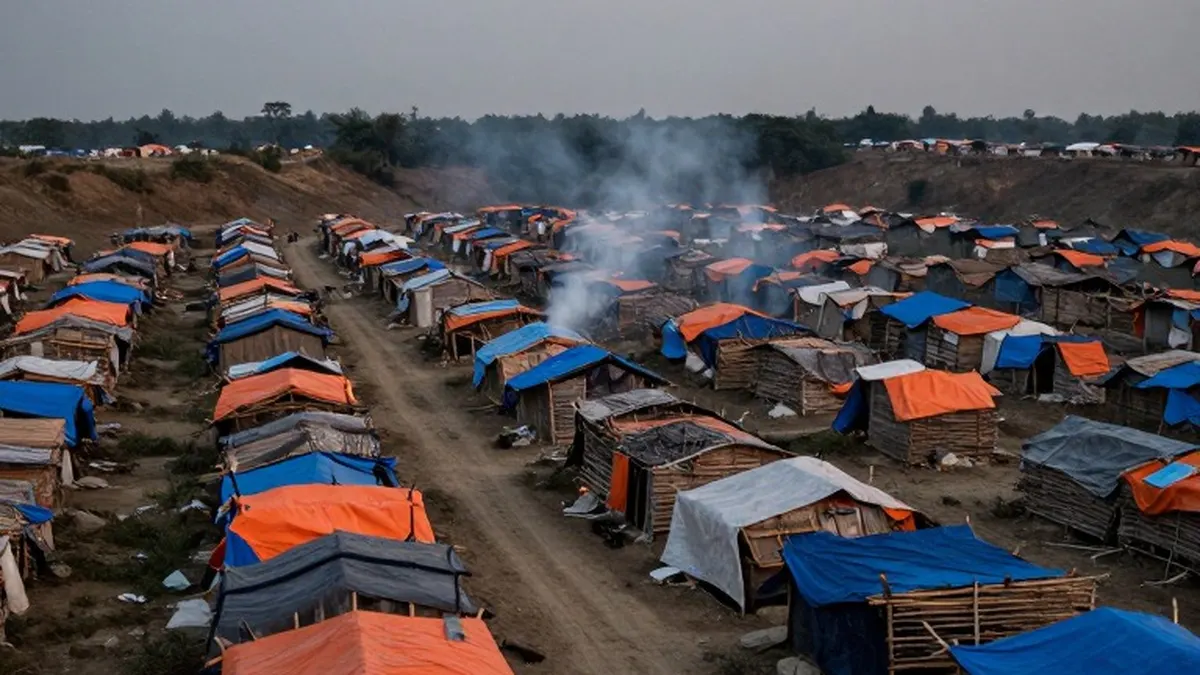
Nearly nine years after fleeing Myanmar's Rakhine State, Dil Hossain and his wife Alinnesa remain in a refugee camp in Cox's Bazar, Bangladesh, waiting for the United Nations' highest court to recognise the atrocities that drove them from their home. The couple escaped during the military's 2017 crackdown on the Rohingya, carrying their newborn daughter Ishara as they ran. Dil's elderly parents could not escape and were killed, along with several other relatives.
"We ran for our lives through mud, hills and water, with the baby tied to us," Alinnesa recalled. Ishara has spent almost her entire life in exile, far from the village where she was born, while her parents depend on humanitarian aid that has declined sharply in recent years.
On Thursday, the International Court of Justice is due to deliver its judgement in a landmark genocide case brought by The Gambia against Myanmar. The Gambia filed the case on November 11, 2019, alleging that Myanmar violated the 1948 Genocide Convention through acts committed by its military and other security forces. The allegations concern the so-called clearance operations that began in 2016 and escalated in August 2017, which The Gambia says involved genocidal acts intended to destroy the Rohingya in whole or in part.
"The court will find the truth. We suffered, so we know," Dil said, expressing confidence that the judges would recognise what happened. More than 1.2 million Rohingya refugees remain in Bangladesh, most of them in the camps of Cox's Bazar, and many hope a ruling in their favour will bring recognition of their suffering and strengthen their claim to return home.
Years of displacement have exacted a heavy toll. Nurul Amin, 25, who works with humanitarian groups in the camps, said his family once had houses, gardens and farmland and could grow their own food. "It is 24 hours of depression. It feels as though we have lost our world, as though the world has abandoned us," he said of life in exile. Mohammad Rehan, now 18, was a child when the crackdown began. "The most horrific thing I saw was houses being burned. It made me really afraid," he said, adding that those scenes left him traumatised. He hopes the court will recognise the community's suffering and right to equal treatment.
For Rohingya leaders, the case is about more than a legal finding. Mohammad Zubair, chairman of the Arakan Rohingya Society for Peace and Human Rights, said Myanmar refuses even to recognise the Rohingya as a community. "They called us Bengali and committed genocide on us," he said. "The refugee life is worse than jail. There is no hope, and this is unbearable.. We want to go back." Nay San Lwin, cofounder of the Free Rohingya Coalition, said meaningful justice would require recognition of Rohingya identity, restoration of rights, guarantees of citizenship and a safe return to original villages. "Our commitment to justice does not depend on a single verdict," he said.
A ruling against Myanmar would carry weight far beyond this case, as the ICJ has never found a state responsible for genocide. Michael Kugelman of the Atlantic Council said such a verdict would have major implications for international law and would likely increase pressure on Bangladesh to provide more support and protections for the refugees. Nasir Uddin, a professor of anthropology at the University of Chittagong, said a favourable judgement would give the community's political demands a stronger legal foundation. "There is a difference between making a political speech and having a legal judgement supporting your claims," he said, while cautioning that the legal threshold for proving genocide is high and that Myanmar has argued its 2017 operations were counterinsurgency measures.
Even a landmark victory in court would not guarantee the refugees a path home. Myanmar remains engulfed in civil war, with the same military still in power, and the Arakan Army rebel group now controls nearly all of Rakhine State, including northern areas from which many Rohingya fled. Thomas Kean of the International Crisis Group said relations between the Arakan Army and Rohingya communities have been badly damaged by the conflict, including 2024 fighting in which Rohingya armed groups fought alongside the military and the Arakan Army was accused of abuses against Rohingya civilians. "Lack of trust between the two sides is a major barrier to repatriation, and it could take years of patient work to improve the relationship," Kean said, adding that an end to the fighting would be only the first step.
Myanmar's authorities have said they are willing to allow the Rohingya to return when security conditions permit and have indicated a willingness to grant citizenship, provided the refugees do not insist on being recognised as Rohingya. Kean warned that a genocide finding could instead make Naypyidaw more recalcitrant and trigger a broader backlash within Myanmar. Nasir Uddin said the judgement could generate legal recognition and international pressure but would not itself bring the refugees home. "These things take time. Nothing will change overnight," he said. For Dil and Alinnesa, the question is whether their daughter will ever grow up in the country where she was born. "We have lost our lives, our properties and our people," Alinnesa said. "We want to return to our homes and live our lives in peace."