Tallest Sri Lankan Elephant Dies From Gunshot
The 45-year-old male's death underscores persistent tensions between expanding farmland and the island's dense elephant population.
By Khalid Khalil ·
Ordinary residents in northwest Sri Lanka lost a local landmark on October 16 when Kavantissa, the island's tallest living male wild elephant, died from a gunshot wound to the leg. The animal, estimated at 45 years old, stood approximately 3.3 meters high and weighed about 5,500 kilograms. His death follows a week in which villagers observed him limping near Galgamuwa, leading veterinarians to treat the injury before he succumbed to his condition.
Kavantissa inhabited the agricultural regions around Galgamuwa, where his size made him a notable figure among local communities. The incident is part of a recurring pattern of conflict between the species and the rural population. Sri Lanka reports the highest number of annual elephant deaths globally, alongside the second highest number of human fatalities from violent encounters. Official data indicates that an average of 370 elephants and 125 people have died in these incidents each year since 2019.
The island supports roughly 10% of the world's Asian elephants within just 2% of their natural range. This density creates pressure on available land. The Sri Lankan elephant is an endangered subspecies protected by law, yet animals are frequently killed by shooting, poisoning, train collisions, or explosives concealed in food. The Department of Wildlife Conservation estimated the wild population at 7,451 in 2024, with 70% living outside protected zones. Each elephant consumes about 150 kilograms of vegetation daily, a requirement that often drives them into crop fields.
Economic factors drive much of the conflict. The rural population grew from 8.25 million in 1960 to 17.8 million in 2020, intensifying the need to clear forest land for agriculture. Ravi Corea, president of the Sri Lanka Wildlife Conservation Society, noted that habitat loss and fragmented corridors force elephants into farmland. He explained that crop losses directly threaten the primary income of rural families, a dynamic that distinguishes the situation from wildlife conflicts in wealthier nations. Corea stated that while a 2020 national action plan exists, it requires a comprehensive strategy with enforceable habitat protection to lower the rising casualty numbers.
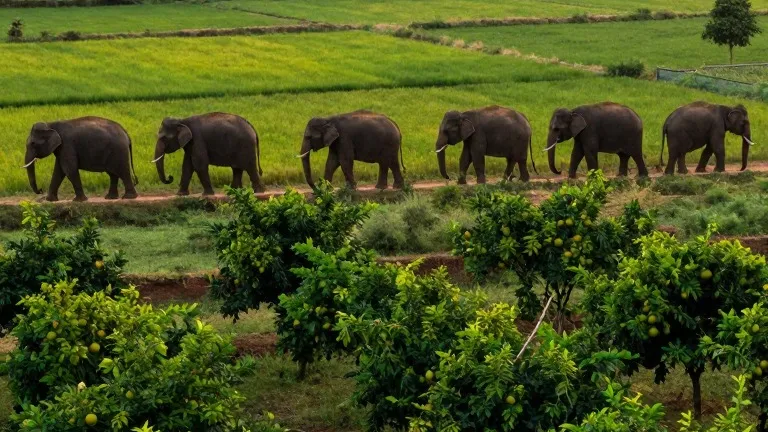
Local initiatives are testing solutions to this economic friction. In the Wasgamuwa region, Project Orange Elephant encourages farmers to plant citrus trees that elephants tend to avoid. This shift reduces crop raids while generating additional revenue for growers. Electric fencing also serves to protect settlements and agricultural plots. The EleFriendly bus service transports schoolchildren through elephant corridors, a route where previous confrontations had limited attendance. The program has reduced dangerous encounters along its original path by more than 90%.
Kamal Shashendra, an environmental ethics researcher based in Sri Lanka, argued that effective solutions must balance human safety, livelihoods, and elephant conservation. He emphasized the need for scientifically informed land-use planning, protected corridors, and community-based fencing. Shashendra also called for effective early-warning systems and fair compensation for families affected by crop damage.
The Department of Wildlife Conservation continues to monitor the population and habitat conditions. The next phase of the national action plan focuses on integrating these local strategies into a broader framework. Community programs in regions like Wasgamuwa remain active, with ongoing efforts to expand citrus cultivation and electric fencing to additional agricultural zones.
Source: Deutsche Welle
More Business · World news · Bad Business · Report a business