Storm Prediction: AI Outperforms Physics
Google DeepMind's model accurately predicted the path of Hurricane Isaias, marking a rapid shift in how meteorologists approach Atlantic forecasting.
By Lorenzo Evans ·
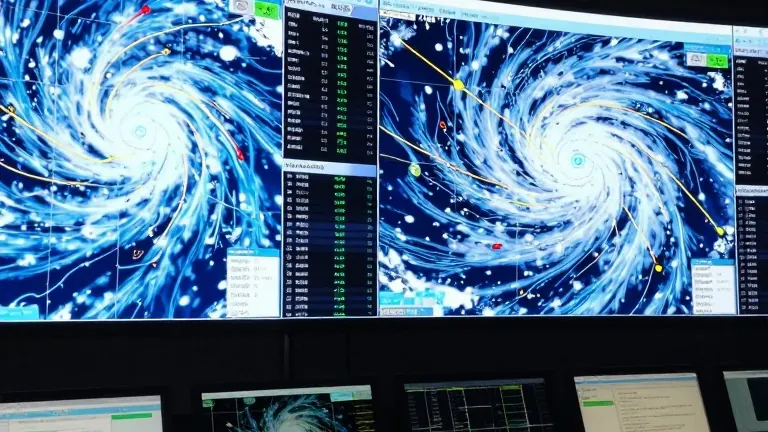
In early October, Hurricane Isaias made landfall near Destin, Florida, as a Category 2 storm. The event marked a turning point for the Atlantic season, where artificial intelligence first demonstrated a clear advantage over traditional physics-based models in tracking storm trajectories. Conventional forecasting systems initially projected the hurricane would move further west, targeting southeastern Louisiana. However, an AI model developed by Google DeepMind correctly identified the western Florida Panhandle as the point of impact immediately after the storm formed. Michael Lowry, a Miami-based meteorologist who has advised both the Federal Emergency Management Agency and the National Hurricane Center, identified the DeepMind system as the current benchmark for accuracy. He described it as the best-performing computer model the field has ever seen. The National Hurricane Center began integrating this specific AI tool into its official forecasts last year. By the end of the 2025 season, researchers noted it had become a top performer for predicting both path and intensity. This rapid adoption contrasts with historical trends, where new forecasting models typically require years of refinement before becoming reliable. Brian McNoldy, a hurricane researcher at the University of Miami, noted that the model achieved top status immediately after its introduction. Traditional models rely on real-time atmospheric data, including temperature, humidity, and pressure, processed through complex physical equations. AI models operate differently, relying on historical patterns from thousands of past storms rather than governing atmospheric physics. Lowry explained that these systems do not understand the atmosphere beyond the current data snapshot, functioning instead as pattern-recognition engines. Many of the developers working on these systems are software engineers building neural networks, rather than meteorologists. This approach creates a "black box" effect where forecasters accept the output without fully understanding the internal logic. McNoldy admitted that this lack of transparency makes the process uncomfortable for scientists who prefer to know why a prediction is correct. Despite these concerns, only two AI systems have proven consistently accurate so far: the Google DeepMind model and one from the U.K.-based European Centre for Medium-Range Weather Forecasts. At the National Hurricane Center, director Michael Brennan explained that forecasters use a blend of multiple models to account for the unique challenges of each storm. Human experts remain essential for interpreting these data streams and providing consistent guidance to the public every six hours during active events. Brennan emphasized that the human role is to translate model outputs into clear hazard information for residents. The DeepMind model still has areas for improvement, as it did not match the blended forecast in determining the intensity of Isaias. The center provides regular feedback to Google to address these gaps. Brennan noted that intensity forecasting errors are now about half of what they were during Hurricane Katrina. Lowry highlighted the speed of AI development, noting that improvements taking a decade in traditional models can happen in months with neural networks. He stated that he does not view AI as a threat to human meteorologists but as a significant benefit to the profession.
image_prompt
a photorealistic view of a weather forecasting control room with large digital screens displaying hurricane path data and atmospheric maps, dim ambient lighting with blue and white screen glow, no people, no text, no logos, focused on the complex grid of data and storm trajectory lines.
image_prompt
Source: NPR