New Zealanders Await November 27 Deadline for Election Winner
A 5.6 million-person electorate faces three weeks of uncertainty after neither the National nor Labour parties secured a decisive mandate, with final special votes to be counted by November 27.
By Evelyn Adeyemi ·
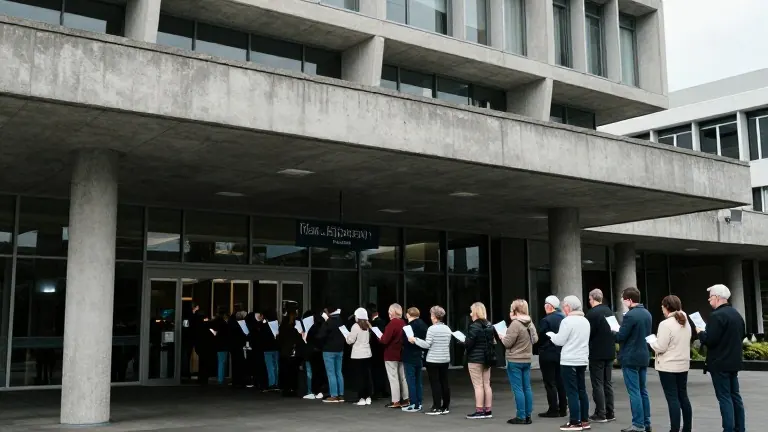
New Zealand voters will not know who will form the next government until November 27.
The election held on Saturday produced no clear winner, forcing a delay while officials count approximately 400,000 special votes, including ballots from citizens living abroad. This process is expected to take three weeks. Until the final tallies are released, political parties will not begin negotiations to form a coalition.
The result marks a sharp decline in support for the two dominant political forces. Prime Minister Christopher Luxon’s National Party and Opposition Leader Chris Hipkins’s Labour Party both received roughly 29% of the party vote. National secured 42 seats, while Labour won 36. The narrow margin has shifted power to minor parties that can influence policy through coalition agreements. A new entrant, the Opportunity party led by Qiulae Wong, won seven seats. Wong, a business consultant and political newcomer, stated her party is unaligned and can work with either side.
Luxon, who will lead a caretaker government during the wait, told reporters on Sunday that he had not claimed victory yet. He attributed voter dissatisfaction to global economic shocks affecting New Zealand’s trade-based economy. Hipkins, whose party fell short of a majority, appeared to face a difficult path to power. The left bloc currently holds 57 seats, while the right bloc holds 67. A majority requires 66 seats in the 131-member Parliament. Historically, special votes have added seats for left-wing parties, which could close the gap or even reverse the current lead.
Luxon urged the public to take a break from politics during the waiting period. He noted that National had won the most seats of any single group and maintained that a viable path to power existed. However, the election results have weakened his position. Several senior National ministers, including the finance and defense ministers, the speaker of parliament, and the attorney general, will leave politics. Luxon now must negotiate with libertarian ACT, which won 13 seats, and populist New Zealand First, which won 12 seats. Both parties have increased their support and are expected to demand deeper policy concessions.
The election system in New Zealand requires voters to cast two ballots, one for a party and one for a local representative. The country has a single house of Parliament and holds general elections every three years. The final seat allocation depends on the count of special votes, which could determine whether the right or the left secures the governing majority. If neither side can form a government, a fresh vote may be required.