
Matan Kahana elected head of Israel's parliament
The new speaker is an ally of Gadi Eisenkot, who has a five-week deadline to form a coalition government and reverse key policies of the outgoing administration.
By Evelyn Adeyemi ·
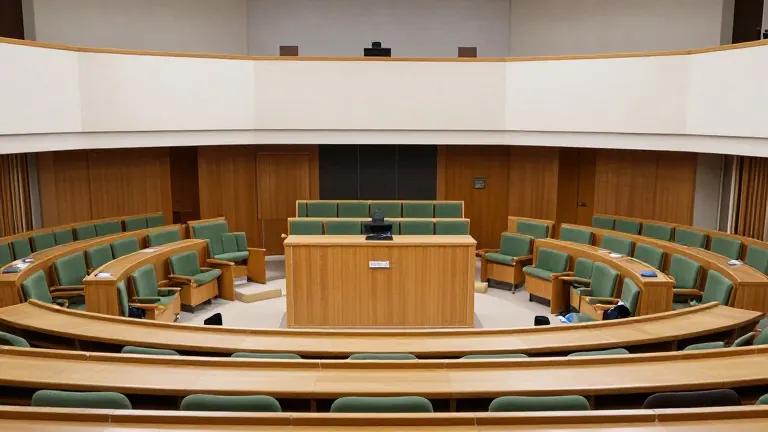
Matan Kahana won 66 votes out of 120 in the Israeli Knesset on Tuesday, securing the speakership in a move that shifts legislative control away from Prime Minister Benjamin Netanyahu. The rival candidate backed by Netanyahu's bloc, Ofir Katz, received 52 votes following a debate that lasted approximately seven hours. This result gives the opposition a procedural advantage as the country prepares for a change in government.
Kahana is an ally of Gadi Eisenkot, the leader of the party tasked with forming the next coalition. Eisenkot was assigned this duty by the Israeli president following parliamentary elections held on October 27, 2026. In those elections, Netanyahu and his allies lost their majority in the Knesset. Eisenkot now has five weeks to secure enough partners to form a government. If he fails, the president may return the task to Netanyahu, which would likely give the Likud party control of key parliamentary committees.
The new speaker replaced Amir Ohana, an ally of Netanyahu, in the role. Kahana's appointment provides the opposition with a strategic tool to accelerate or delay legislative processes. Assaf Shapira of the Israel Democracy Institute in Jerusalem noted that the president of the Knesset can significantly speed up or slow down the legislative calendar. This procedural control is critical given the limited time Eisenkot has to enact his platform before the deadline expires.
Kahana spoke to the chamber immediately after winning the vote. He emphasized a conciliatory tone, stating that it is possible to hold opposing views while still respecting state institutions and those who think differently. He described the Knesset as the home of all Israeli citizens and said he intended to serve as the president of all. Eisenkot called the election a valuable democratic step that reflects the absolute majority in favor of change.
The opposition bloc, along with Arab-led parties, has already begun pushing its agenda. Last week, lawmakers introduced several bills. These proposals include setting term limits for the prime minister, forming a government commission to investigate the Hamas-led attacks of October 7, 2023, and reversing laws that limited the power of the judiciary. Shapira noted that repealing controversial laws regarding judicial appointments and the role of the Attorney General would be easier than creating new bodies, as it does not require establishing new institutions.
The debate in the chamber also served as a reminder of the trauma from October 7. Talik Gvili, a Likud member whose son was a police officer killed by Palestinian militants that day, interrupted Ahmad Tibi, a prominent member of the Joint Arab List. Gvili shouted, "Who killed my son?" Tibi, speaking from the podium, responded by asking why Gvili was blaming him and suggested that the question should be directed to the prime minister. Tibi stated that Hamas committed the killings and that the prime minister bore responsibility.
Roy Folkman, a member of Eisenkot's Yashar party, currently leads the temporary commission that determines much of the Knesset's work until a new government is formed. This group is under pressure to move quickly on legislative priorities. If Eisenkot fails to form a coalition, the momentum for change could fade. Shapira warned that there is a real risk that some legislation will be delayed if the Likud party regains control of the committee structure.
The complex procedures of the chamber add another layer of difficulty. A bill must be presented in the plenum, considered in committee, and voted on multiple times before it is approved. This intricate process could make it challenging to pass initiatives before time runs out. Eisenkot and his allies plan to prioritize reversing laws that gave the government a larger role in appointing judges and reduced the power of the independent Attorney General, a position many consider essential to the system of checks and balances.