Gulf Conflict: Iran Strikes Bahrain Again
A U.S. fighter jet hit a missile site on Qeshm Island after Iranian drones targeted a radar installation in the kingdom.
By Lorenzo Evans ·
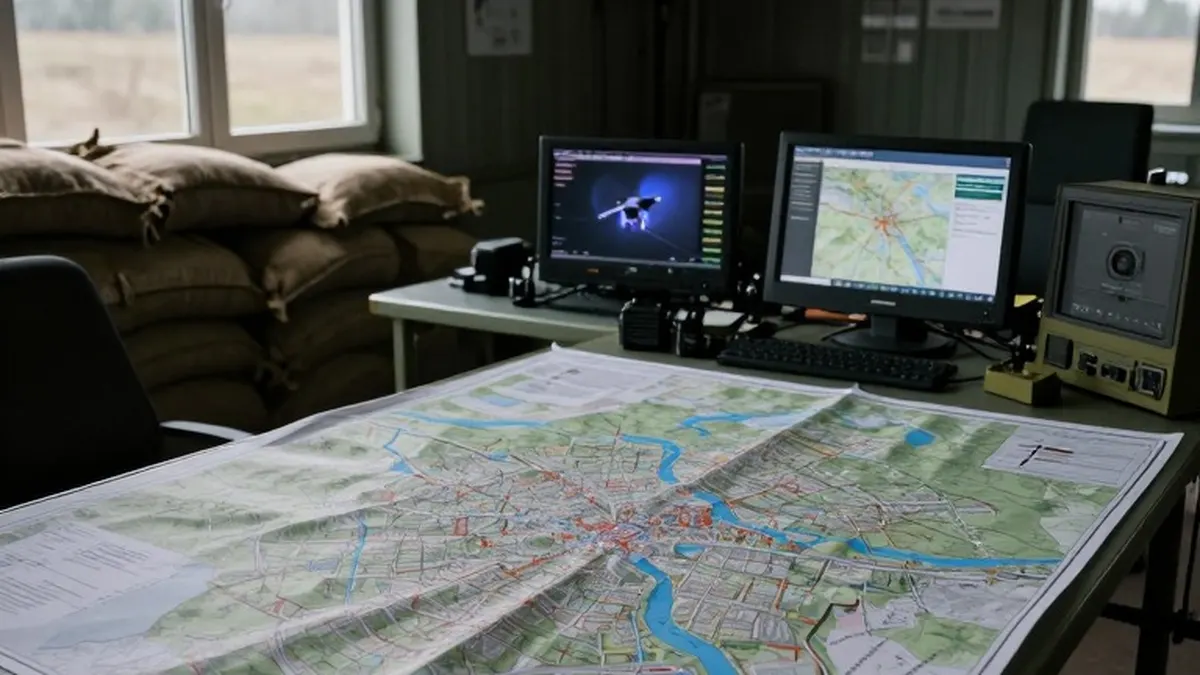
Iran fired drones at a U.S. radar site in Bahrain on Tuesday, marking the third attack on American military targets in the Persian Gulf kingdom in five days. The strikes interrupted a two-month pause in fighting and drew immediate condemnation from regional neighbors. The U.S. military responded by targeting Iranian assets along a critical shipping route.
Bahrain announced that its air defense systems intercepted the incoming aerial attacks. The U.S. military stated that the strike caused no damage to equipment and no injuries to American personnel. Hours later, a U.S. fighter jet struck a missile launch site on Qeshm Island belonging to the Iranian Revolutionary Guard.
A U.S. official speaking on condition of anonymity said precision munitions were used in the Qeshm Island strike. The official stated the U.S. was responding to aggression directed at its personnel. Ahmad Nafisi, a local official, confirmed the strike did not affect residential areas, commercial zones, or infrastructure.
The conflict has entered its eighth month, following a U.S. and Israeli attack on Iran on February 28. A naval blockade enforced by the U.S. in and around the Strait of Hormuz has curtailed the flow of Iranian crude to global markets. This economic pressure is intensifying as peace negotiations stall despite mediation efforts.
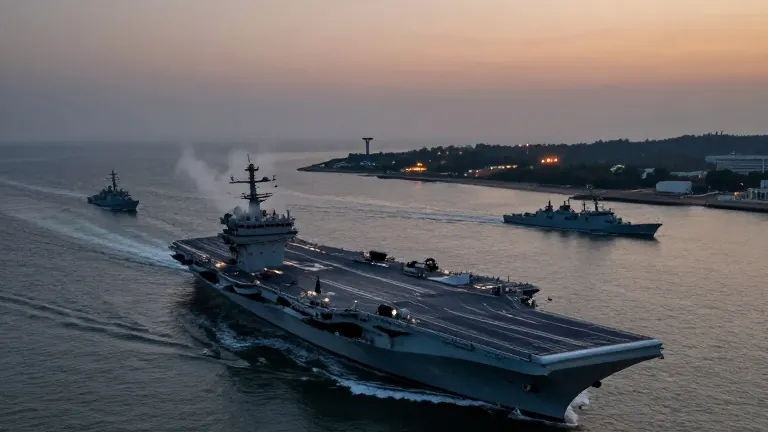
President Donald Trump has described new strikes as highly unlikely while ordering a third aircraft carrier and additional troops to the Middle East. The arrival of the USS Theodore Roosevelt joins the USS George H.W. Bush and the USS George Washington in the region. These combined naval assets now exceed the force deployed at the start of the war, according to an analysis by Israel's Institute for National Security Studies.
Tehran-based security analyst Mostafa Najafi told the Associated Press that Iran may be shifting strategy after months of waiting for attacks. Hamidreza Azizi of the International Crisis Group wrote that the risk of renewed war now depends on whether Tehran decides the costs of restraint outweigh the risks of escalation. Iranian leaders view the current situation as a state of no war, no peace.
Egypt, Qatar, Saudi Arabia, and the United Arab Emirates condemned the Tuesday attack as a violation of Bahrain's sovereignty. Majed Al Ansari, a Foreign Ministry spokesman in Doha, warned that escalating fighting poses an extremely grave danger to diplomatic prospects. Sascha Bruchmann, a defense analyst with the International Institute for Strategic Studies, noted that Tehran is growing impatient but cautioned against overestimating the impact of the recent strikes.
Iranian officials have vowed to end the current stalemate and remain open to a negotiated deal. Mahdi Mohammadi, an adviser to Iran's parliamentary chief, posted on social media on Monday that leaders see U.S. economic pressure as an attempt to create a domestic security crisis. The Revolutionary Guard Corps stated in a statement that continued aggression against Iran's airspace and the use of regional bases will not go unanswered.