Iraq's Kurdish region faces prospect of two rival administrations as party rift deepens
A dispute between the Kurdistan Democratic Party and the Patriotic Union of Kurdistan over forming a new government has raised fears that rival administrations could emerge in Erbil and Sulaimaniyah.
By Khalid Khalil ·
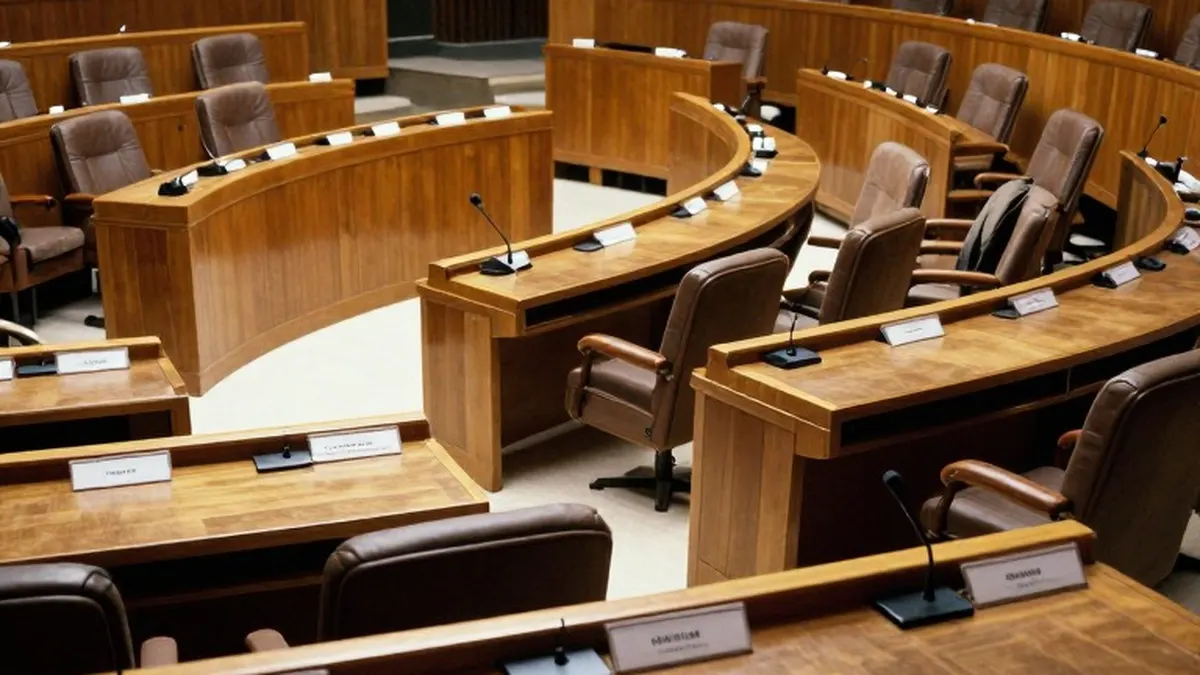
Disagreements between the Kurdistan Democratic Party (KDP) and the Patriotic Union of Kurdistan (PUK) over the formation of a new government have raised the threat of two rival administrations emerging in the Kurdish region of northern Iraq, analysts say.
Tensions between the two dominant forces in the semiautonomous Kurdistan Regional Government, which has traditionally run on a power-sharing basis, escalated after a parliamentary session was held last week in Erbil without the PUK's participation. PUK leader Bafel Talabani responded by pulling his party out of the government, and warnings are growing that a rival administration could be established in the party's Sulaimaniyah base.
Independent Kurdish politician Yasin Aziz said the latest developments have deepened the historical divisions between the two parties. "I believe the spectre of two administrations in Kurdistan is now very close, and the outlines of such a scenario are becoming clear," Aziz told Al Jazeera, describing events as painful and rapid. He said the differences between the parties have led to "a breakdown in relations" and that activating parliament without the PUK deepened the divide.
Iraq's Kurds have largely governed themselves since the first Gulf War in 1990 and 1991 and the establishment of a US-led no-fly zone in northern Iraq. The constitution enacted after the 2003 US-led invasion recognised the Kurdish region as a federal entity with its own legislative, executive and judicial powers. There is also precedent for dual rule: when conflict erupted between the KDP and PUK in the 1990s, the parties formed separate local governments in Erbil and Sulaimaniyah.
In the region's sixth parliamentary elections on October 20, 2024, the KDP, led by Massoud Barzani and based in Erbil and Dohuk, won 39 seats against the PUK's 23, a gap of 16 seats. Even so, the KDP needed an agreement with the PUK and other parties, including the New Generation Movement, which took 15 seats, to form a government. With the PUK refusing to cooperate, the KDP reactivated the regional parliament on Wednesday after a two-year wait, convening without its rivals.
Aziz argued the current crisis is more serious and deeply rooted than past disputes. "Given the political stubbornness of both parties, I do not expect an agreement or understanding to be reached soon," he said, adding that the side willing to make greater concessions would show greater concern for the region. He placed responsibility squarely on the leaderships of both main parties, saying their failure to recognise the risks of continuing disputes had brought the region to this point.
Subhi Mandalawi, a KDP member, blamed the impasse on the PUK's refusal to form a government, saying the party had counted on the KDP being unable to secure the legal quorum to convene parliament. He noted that a session was also held without the PUK in 2018, after which it joined the government and parliament. "Continuing to obstruct legislative institutions two years after the elections is unacceptable and harms the Kurdistan region domestically, regionally and internationally," he said, calling threats to divide the region hasty and unrealistic, though he stressed there is little risk of renewed fighting. "We are brothers, and there can be no fighting among us."
Senior PUK official Mahmood Khoshnaw said convening parliament without his party departed from the principle of partnership and would bring consequences. "If a prime minister is appointed in Erbil, we will take the same step in Sulaimaniyah. Whatever the KDP does, we will do the same in Sulaimaniyah," he warned, adding that the region is heading towards chaos unless the crisis is addressed rationally.
Questions remain over whether Sulaimaniyah could legally break away. Ramadan Albadran, an independent political analyst and constitutional affairs expert, said the dispute is a deep political crisis rather than a constitutional issue, with the potential to create security repercussions. He noted the Iraqi constitution provides no mechanism for dividing the region into zones of influence. "If the PUK moves to separate Sulaimaniyah from the Kurdistan region, that would not be a legal or constitutional act," Albadran said, adding that such a step without a mandate from the elected regional government would be closer to an act of rebellion.