Breaking: Anthropic IPO: The High Cost of AI Dominance
With a projected valuation of trillions, Anthropic faces scrutiny over its massive losses, aggressive user suspensions, and the steep price of the graphics hardware that powers its models.
By Evelyn Adeyemi ·
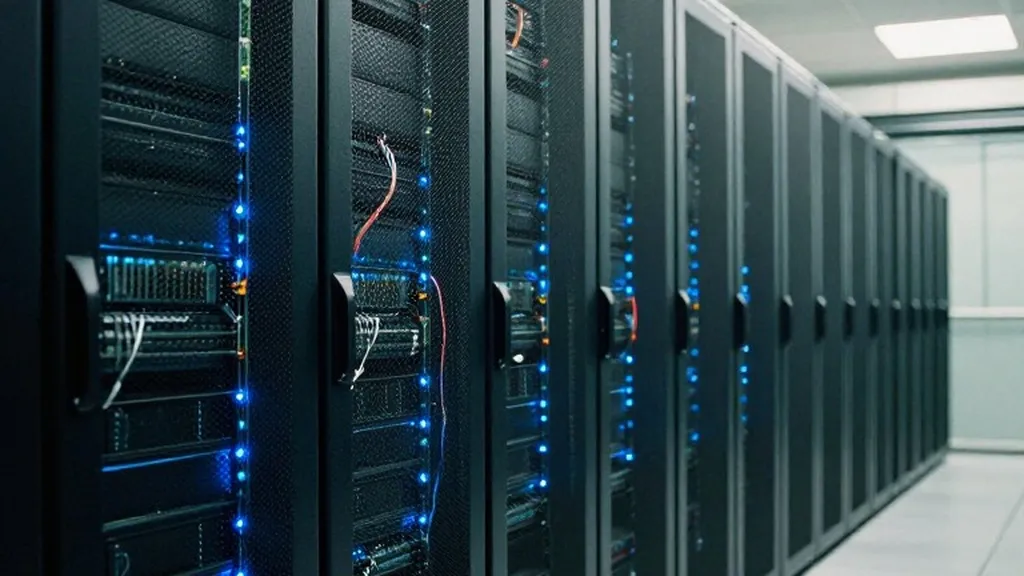
Anthropic, the company behind the popular Claude artificial intelligence models, is preparing for an initial public offering, a process where a private company sells shares of its stock to the public for the first time. This move allows the firm to raise capital from investors and trade on major stock exchanges. The company projects a valuation between 2.5 trillion dollars and 3 trillion dollars, a staggering sum that highlights the immense scale of the current artificial intelligence boom. For readers outside the United States, this figure represents a value roughly equal to the gross domestic product of several major nations. The primary question surrounding this offering is how a company can command such a high valuation while carrying significant financial burdens.
The core of the financial debate lies in the gap between Anthropic's projected worth and its current performance. The company is running a deficit of about 500 billion dollars while generating less than 20 billion dollars in annual revenue. This disparity has raised eyebrows among analysts and investors who are trying to understand the long term sustainability of the business model. Anthropic carries compute commitments to other companies, including Amazon and Google, totaling up to 900 billion dollars. These obligations reflect the massive infrastructure costs required to train and run large language models, which are central to the company's product offerings.
At the heart of this infrastructure is the GPU, or graphics processing unit, which serves as the engine for running these complex algorithms. Nvidia, a major American technology company, is the dominant supplier of these chips. The economics of these cards are becoming a focal point for industry observers. A single Nvidia RTX Pro 6000 graphics card retails at 20,000 dollars, a price tag that does not include the necessary servers, switches, central processing units, or the electricity required to keep them running. This high retail cost is a significant barrier for smaller organizations looking to host their own models.
However, the picture changes when looking at wholesale prices. Buying these cards directly from Nvidia at a wholesale price of 3,000 to 4,000 dollars alters the payback period for heavy users. A heavy user on the maximum plan pays 200 dollars a month for access to Claude Code. Under this scenario, the GPU alone would take about 10 months of a heavy user's payments to pay back its cost. For light users, who pay about 20 dollars a month on average, the math is similar. A single card can serve 15 to 20 light users running light compute tasks, meaning the collective monthly revenue from these users also covers the hardware cost in roughly 10 months.
The efficiency of these cards varies significantly based on user behavior. A single RTX Pro 6000 can hold about 15 to 20 light users running at about 60 to 70 tokens per second. Alternatively, it can support 1 to 2 heavy coding users running at about 40 to 50 tokens per second, assuming constant use around the clock. Most light users, however, do not use the chat for more than a few hours a day. This intermittent usage allows the bandwidth to stretch up to 10 times, but the initial acquisition cost and breakeven point remain substantial for any operator.
Nvidia is acutely aware of this compute bottleneck and has leveraged its position to drive demand while managing supply. The company prioritizes giving its supply to large players like Anthropic, Grok, and OpenAI, leaving the consumer market to fit the bill. This strategy has solidified Nvidia's control over the hardware landscape. In a related move, Nvidia agreed to acquire Hugging Face, a platform where most open AI models are distributed, for 12.9 billion dollars. Hugging Face makes about 150 to 200 million dollars a year in its peak years, making the acquisition price about 70 times its revenue.
The stated reason for the acquisition was CUDA, the software that runs these models, but the deeper motive was control over the distribution of models, especially in the open source market. This is critical because the open source sector is being flooded by advanced Chinese models, such as Kimi from Moonshot AI, DeepSeek, and Qwen from Alibaba. These companies are willing to give models to the public to increase innovation. Kimi K3, for instance, started to outperform the Opus 5 models from Anthropic and was made available to the public.
Following the acquisition, advanced models were deleted from the Hugging Face distribution platform. Any model over a quant 4, which indicated advanced capabilities capable of beating Claude's models, was removed. The 4 bit, 6 bit, 8 bit, and 16 bit full sized models were banned from the platform. Developers rallied to stop this censorship and opened Pirate Face, a new place for uploading and downloading models, though not before large models were scrubbed from the network. This move underscores the fight for control over who gets access to the best artificial intelligence tools.
Anthropic has also faced scrutiny regarding its handling of user accounts. In recent months, the company has been suspending users with reasons such as abuse, potential fraud, and usage violations. The appeal process is often criticized as being useless because it is fully run by bots, and accounts are not reactivated once suspended. Critics argue that once Anthropic goes public, these suspensions will multiply significantly because the company will have deep pockets and access to unlimited funds. This shift could mean that the end user becomes less important to the corporate strategy.