10,000 Satellites: How SpaceX's Orbit Dominance Is Reshaping Global Security
Ukraine's recent loss of Starlink service has exposed the critical vulnerabilities arising from SpaceX's near-total control of global launch capabilities and satellite communications.
By Naledi Dlamini ·
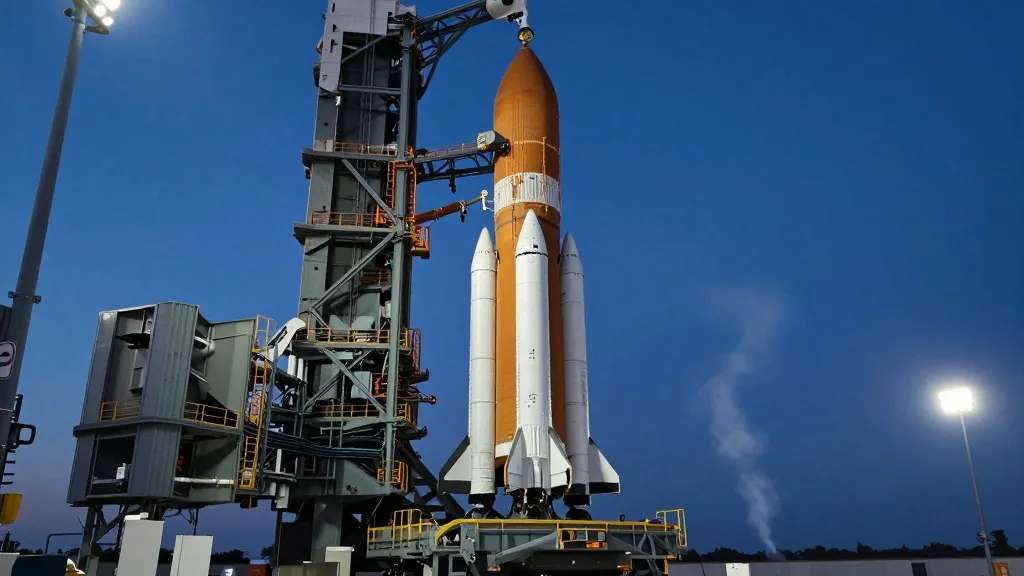
SpaceX effectively controls the gateway to space, a reality that became painfully clear this week when Ukraine lost access to Starshield, the military variant of the Starlink internet service. The throttling of the network prevented high-speed military interceptors from connecting, which in turn allowed Russian drones to target the country's energy grid with less resistance. This disruption resulted in two deaths and at least 17 injuries, highlighting the tangible human cost of technological dependence. The incident has ignited a fierce debate about the concentration of power in the hands of a single private entity and its unelected executive.
The path to this crisis was neither linear nor transparent. In 2022, Ukraine first experienced limited coverage during a planned counterattack in Crimea. Tensions escalated recently when Starshield terminals were restricted based on speed, a move that caught the Ukrainian military off guard. President Volodymyr Zelenskyy characterized the sudden cutoff as a signal from the United States, pointing to the growing friction between himself and President Donald Trump. Public criticism quickly targeted both Trump for perceived abandonment and Elon Musk for enabling that shift.
Explanations for the decision have shifted rapidly in the days since. Musk initially stated that SpaceX had no direct control, attributing the choice to the US military. The White House denied involvement. Subsequent reports indicated that Musk proposed the slowdown to Trump, who agreed, before later accounts suggested Musk ordered the restrictions independently. Access has since been restored, but the confusion over who holds the ultimate authority remains unresolved.
Experts argue that this episode reveals a structural imbalance in the space industry. Wendy Whitman Cobb of the School of Advanced Air and Space Studies at Maxwell Air Force Base notes that SpaceX holds a de facto monopoly on launch capabilities. While competitors like United Launch Alliance, Blue Origin, and Rocket Lab exist, none match SpaceX in frequency, scale, or cost efficiency. Oğuz Karasu of the Oxford Space Initiative describes this as a practical monopoly. Although launch represents only about 8 percent of the industry, the rest of the sector cannot function without it.
The scale of SpaceX's dominance is staggering, with more than 10,000 Starlink satellites currently orbiting the Earth. These were deployed using Falcon 9 rockets, which have kept launch costs low. Andrew Reddie of the University of California, Berkeley, suggests the situation is close to an antitrust issue. Since SpaceX primarily launches its own constellations, it has little financial incentive to launch competing networks. While the company has launched some Amazon Kuiper satellites, experts report that Falcon 9 prices for low Earth orbit are rising, and Starlink service costs have increased since its 2020 beta launch.
The stakes extend beyond military strategy into daily civilian life. Whitman Cobb points out that a GPS outage could disrupt fuel pumps, ATMs, financial transactions, and even ambulance dispatch systems. Karasu warns that granting one individual such control is detrimental to society's future. The reliance on a single provider creates a fragile infrastructure that is vulnerable to political or corporate decisions made far from the ground.
Government agencies are also feeling the pressure. Reports indicate that SpaceX is retiring the Falcon 9 rocket and will accept no new missions after 2028. This leaves the US Space Force scrambling for alternative launch options for military satellites and raises concerns about NASA's future access to the Crew Dragon capsule. A technical issue in February briefly grounded the rocket, causing worry about the Crew-12 mission. NASA continues to support Boeing's Starliner and contract with other firms, but the market remains thin.
The central security concern is that a non-state actor is making decisions with the weight of a government, directly affecting national defense capabilities. Michele Scataglini of the Oxford Space Initiative calls this a global wake-up call, warning that one firm could eventually decide which countries, particularly in the Global South, have access to space. Reddie emphasizes that this is a fundamental shift in how orbital access is managed. Whitman Cobb remains cautiously optimistic that the incident will raise awareness, though she acknowledges that it took human casualties for the problem to be fully recognized.
The future of space access now hangs on the question of competition. Scataglini argues that without more players in the market, it is not truly a market at all. The interplay between corporate strategy and national security has never been more visible. As nations rely more heavily on satellite constellations for everything from communication to navigation, the power dynamics of low Earth orbit are becoming a central issue in international relations. The last few days have served as a stark reminder that the sky is no longer just a frontier, but a critical piece of infrastructure controlled by a single company.
Source: The Verge