White House Affirms Steady US Stance on Israeli Military Support
A senior official clarified that the US position on aid to Israel remains stable despite earlier comments regarding the potential end of funding.
By Lorenzo Evans ·
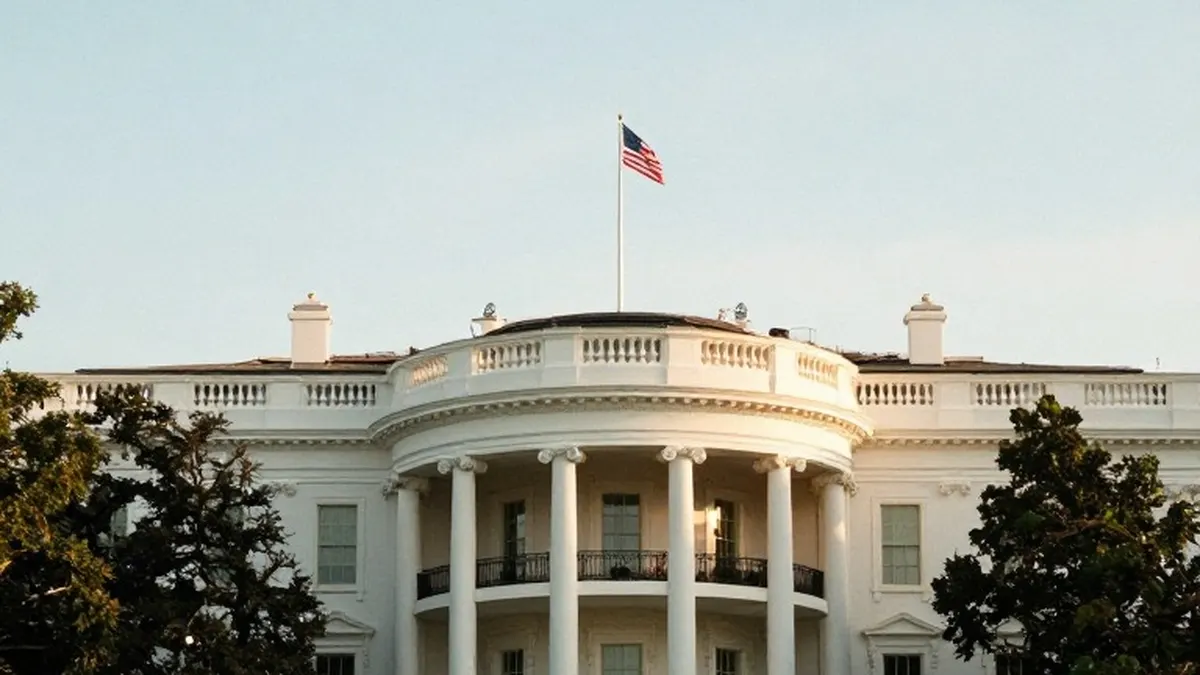
Washington, D.C., Nov. 25, 2026. A senior White House official stated that President Donald Trump's stance toward Israel has not shifted, even as questions persist regarding the future of American military assistance. This clarification was provided to The Jerusalem Post on Tuesday to address recent uncertainty surrounding the continuation of aid packages.
The comments followed remarks made by US Ambassador to Israel Mike Huckabee at a conference hosted by the Institute for National Security Studies. Huckabee expressed uncertainty about whether military aid would cease abruptly at the end of the year, a timeline previously announced by the President. He noted that the current memorandum of understanding was intended to remain active for two additional years.
Huckabee further explained that funds already allocated for Israeli defense needs were expected to continue flowing unless Congress took specific action to stop them. The ambassador emphasized that Israel utilizes this support to purchase equipment and software, which also contributes to American employment in the defense sector.
During the briefing, the senior White House official praised the relationship between the two nations. The official described President Trump as the best friend Israel has had in its history and characterized Israel as an extraordinary partner in the effort to combat the Iranian regime. However, the official did not directly confirm whether the President had formally instructed the administration to halt the transfer of new military aid funds.
Context for the discussion dates back to November 3, the day of the US midterm elections. On that date, President Trump stated that while the US was still providing aid to Israel, the assistance would conclude by the end of the year. He claimed to have reached an agreement on this matter with Prime Minister Benjamin Netanyahu, noting that the Prime Minister had proposed the move.
The existing framework is a ten-year memorandum of understanding signed in 2016 under the Obama administration. This agreement runs through fiscal year 2028 and provides for a total of $38 billion in military assistance. The annual allocation includes $3.3 billion in Foreign Military Financing and $500 million dedicated to joint missile defense programs.
Despite the President's announcement, the legal structure of the aid remains significant. Funding under the agreement is subject to congressional appropriations. This means that an executive agreement between the two leaders would not automatically cancel funds that Congress has already approved for the current period.
Following the President's announcement, the Prime Minister's Office framed the decision as a transition from traditional military assistance to a broader strategic partnership. Netanyahu had previously expressed a desire to gradually reduce Israel's dependence on American military aid, citing the need for greater independence in domestic defense production.
Israeli defense officials have stated that the country is prepared for the potential termination of US military assistance. They pointed out that draft US budget legislation for 2027 still includes funding for Israel under the existing agreement, although the legislative process has not yet been finalized.
Officials from both nations are currently discussing a future framework for defense cooperation. This new model would focus on joint research and military procurement rather than relying on traditional financial assistance, marking a shift in the long-term defense relationship.