ANC suffers historic defeat in South African local elections
The African National Congress recorded its worst local election result since 1994, facing a sharp decline in support and pressure to form coalitions.
By Evelyn Adeyemi ·
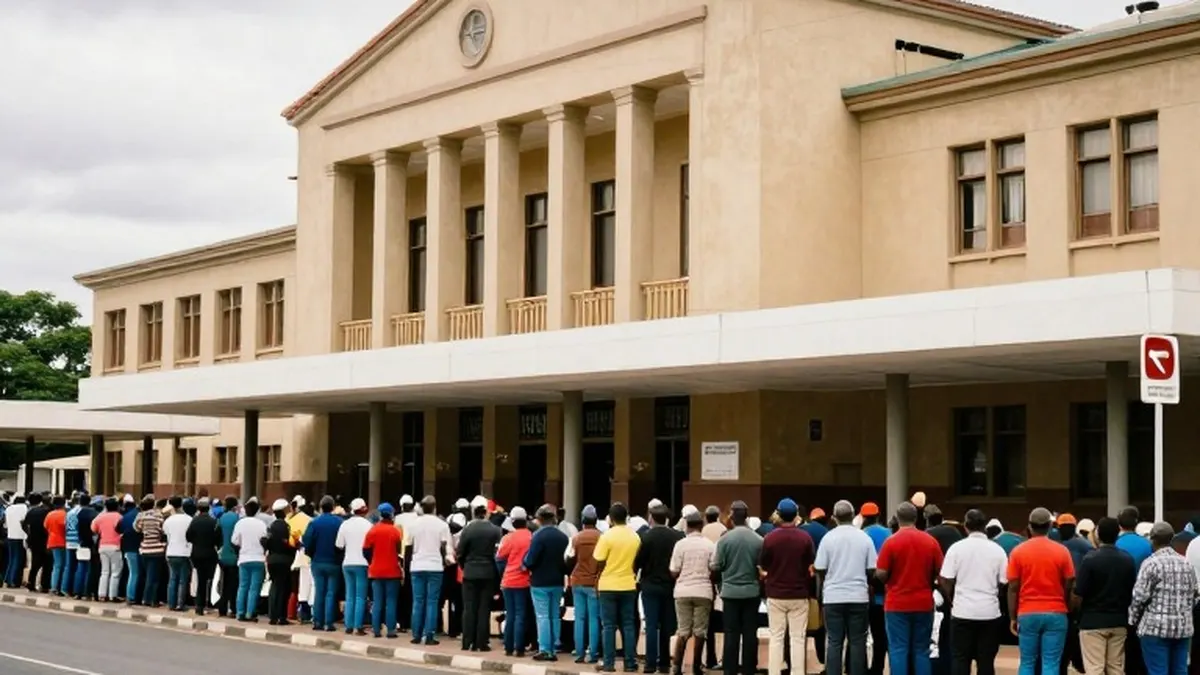
The African National Congress has recorded its lowest ever result in South African local elections, marking a significant setback for the party that led the country out of apartheid. Although the ANC remains the largest political party in the nation, the outcome of the vote held on Wednesday confirms a continuing downward trend driven by voter frustration over corruption and inadequate public services.
The elections were designed to select councillors for South Africa's eight largest cities, as well as its 44 district and 205 local municipalities. Fikile Mbalula, the Secretary-General of the ANC, characterized the results as catastrophic. President Cyril Ramaphosa, who also holds the position of party president, urged political opponents to approach coalition negotiations with humility, emphasizing that the interests of the public should take precedence over internal political disputes.
The ANC secured 31 percent of the total vote, a sharp decrease from the 46 percent it received in the 2021 local election. This figure is also less than half of the party's share in 2006, which stood at 66 percent. Its primary rival, the Democratic Alliance, won approximately 25 percent of the vote. The DA highlighted that, based on its internal modeling, it had secured the support of more than one million Black South Africans for the first time, a development the party views as a step toward shedding its historical reputation as a party representing white interests.
In key urban centers, the ANC lost its status as the largest party to the DA. These losses included the economic hub of Johannesburg, the capital city of Pretoria, and the Ekurhuleni municipality located east of Johannesburg. The DA also maintained its control over Cape Town, the country's second-largest city. This follows the 2024 national election, where the ANC lost its parliamentary majority for the first time, ending three decades of unbroken dominance and leading to the formation of a coalition government.
Because no single party achieved a majority in many municipalities, the ANC and DA must now negotiate with smaller parties to form local governments. The parties have a 14-day window to conclude these negotiations before city councils are officially constituted. An alliance between the ANC and the DA would mirror their current arrangement in national government, although the two parties hold opposing ideological views on addressing the economic and social inequalities left by the apartheid era.
Voters appeared to punish President Ramaphosa personally, partly due to his involvement in the Farmgate corruption scandal. In 2020, burglars stole 580,000 dollars in cash hidden in furniture at his private ranch, leading to accusations that he attempted to keep the theft private to avoid scrutiny over the origin of the funds. Ralph Mathekga, a South African author and political commentator, stated that the election sent a strong message that the collapse of service delivery and corruption had reached an intolerable level.
Mathekga noted that voters no longer view the ANC as the solution to the country's problems but rather as the chief culprit. He described the vote as a referendum on the party's ability to govern effectively. Sipho Seepe, a political analyst, added that the result was a personal rebuke of Ramaphosa, who had positioned himself as a business-oriented leader but faced persistent criticism for underperformance.
The DA indicated it would prefer to form coalitions with parties committed to clean governance, accountability, and the rule of law, potentially steering clear of an agreement with the ANC. Ramaphosa is expected to step down as party leader before the 2027 leadership contest and the next general election in 2029. The outcome of this local vote suggests that South Africa is transitioning from one-party dominance to a system of political plurality, where coalitions are likely to become the norm.
While this shift may introduce some political instability, analysts believe it will pressure parties to prioritize performance and accountability. Sandile Mnguni, a political science lecturer at the University of KwaZulu-Natal, argued that the decline in support serves as a warning that the ANC can no longer rely on its historical liberation credentials. He suggested that South Africa is ready to trade a degree of political stability for greater accountability, provided that parties demonstrate maturity and place governance above narrow partisan interests.