Pink noise identified as key to successful human conversation
New research from Dartmouth College links the acoustic pattern known as pink noise to higher levels of enjoyment and connection in human conversations.
By Evelyn Adeyemi ·
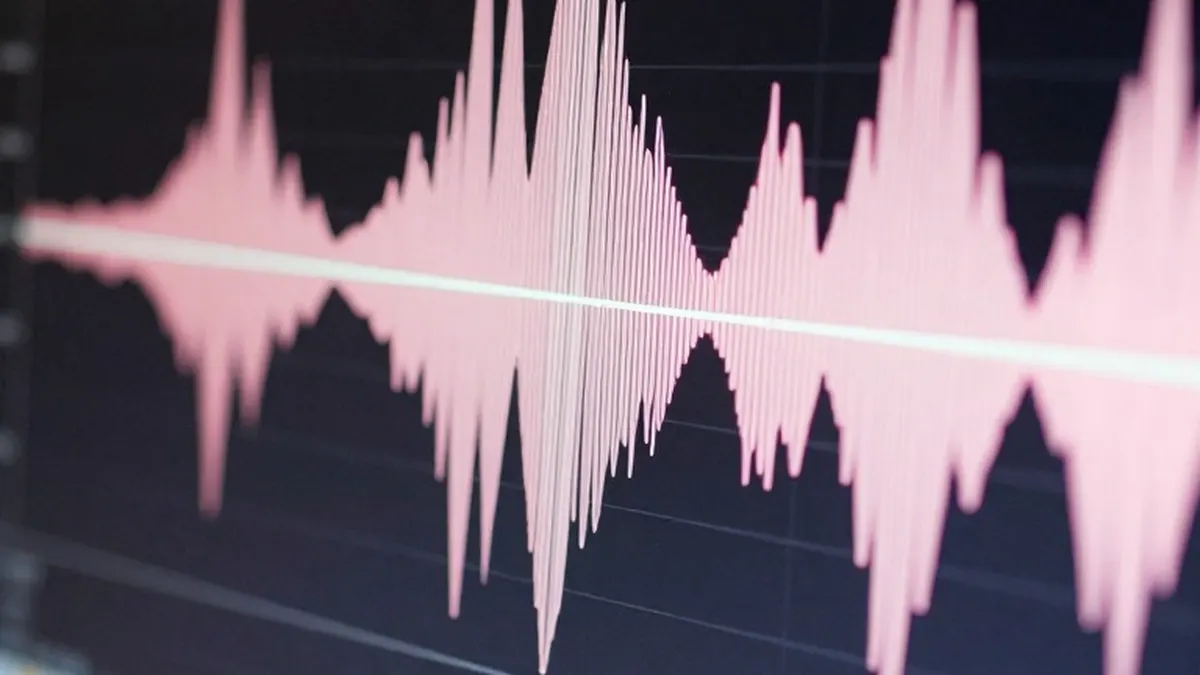
Researchers at Dartmouth College in New Hampshire have identified a specific acoustic pattern that predicts whether a conversation will be mutually satisfying. The study, which draws on concepts from physics, suggests that the most engaging exchanges exhibit a quality known as pink noise. This finding offers a new framework for understanding the dynamics of social interaction beyond simple advice on tone or pacing.
Kathryn O’Nell, the first author of the study, explained that in physics, pink noise exists on the edge of chaos. It allows a system to remain stable without becoming static. Applied to dialogue, this means participants can stay on a topic long enough to build understanding but shift away before the exchange becomes stale. This balance prevents conversations from feeling either chaotic or repetitive.
The team analyzed more than 1,000 conversations between strangers, asking participants to evaluate their experiences afterward. The data showed that chats with higher levels of pink noise were rated as more enjoyable. Participants in these exchanges also reported a stronger sense of connection and a greater desire to continue talking. These results suggest that the structural flow of speech is a significant factor in perceived quality.
To test if this pattern held true for people who already know each other, the researchers examined conversations between friends discussing formative life experiences. The analysis confirmed that higher pink noise levels again correlated with greater enjoyment. The study then applied the model to speed-dating scenarios, finding that the degree of pink noise in a chat could predict which couples would choose to meet for a second date.
The findings were published in Science Advances. The authors acknowledged the difficulty of defining what makes a conversation good, noting in their paper that it is like pornography: difficult to define, but recognizable when observed. They argued that the common metaphor of being in sync is incomplete because perfect synchronization can lead to dullness if speakers merely repeat each other.
Emily Finn, a neuroscientist and senior author on the paper, noted that being in sync can sometimes result in a boring loop where participants circle a single subject. To measure these subtle shifts, the team used an AI model called MPNet to process the conversations. The software scored each turn of the dialogue against 768 different criteria, including meaning, tone, and context, allowing for a detailed quantification of how the conversation evolved over time.
The study distinguishes between three types of conversational noise. White noise occurs when speakers fail to follow the thread, resulting in disjointed or monologic exchanges. Red noise appears when participants mirror each other too closely, creating a rigid rut. Pink noise represents a middle ground where speakers synchronize to explore ideas, then diverge to introduce new concepts before converging again.
While individual style plays a role in how much pink noise a person generates, O’Nell believes the skill can be developed. The team analyzed podcasts hosted by two individuals and found that the level of pink noise in their discussions increased over the first 50 episodes. This suggests that experienced communicators may naturally refine their ability to balance stability and flexibility with practice.
Elizabeth Stokoe, a conversation analyst at the London School of Economics, praised the research for moving beyond the assumption that more similarity is always better. However, she cautioned that focusing solely on whether a conversation is enjoyable might overlook its deeper significance. She cited a study of a phone call between a father and his daughter with learning disabilities, where a long, poignant goodbye was not necessarily enjoyable but was deeply meaningful.
The research highlights that the mechanics of speech have measurable effects on social bonding and satisfaction. By identifying pink noise as a marker of quality, the study provides a scientific basis for what many people intuitively recognize as a good chat. It suggests that the ability to navigate between agreement and novelty is a trainable aspect of human communication.