Ukrainian Drones Damage Russian Warship in Libya
Two sea drones struck the corvette Merkury at Benghazi Naval Base Sunday, starting a fire and prompting a joint investigation with Moscow.
By Lorenzo Evans ·
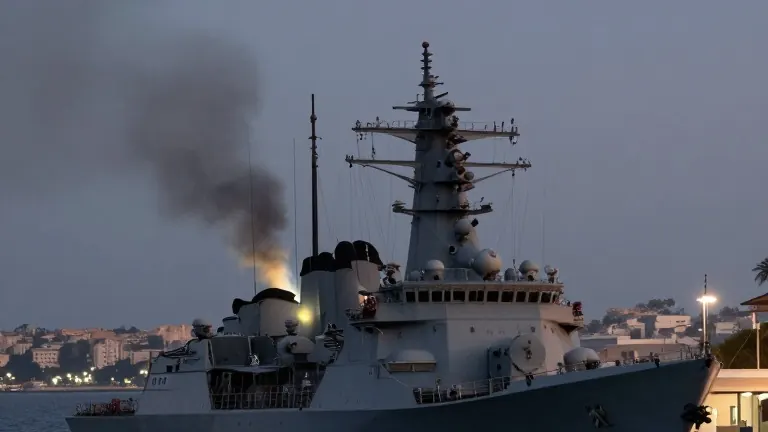
A Russian navy corvette named the Merkury sustained severe damage Sunday after being struck by Ukrainian sea drones at the Benghazi Naval Base in eastern Libya. Two Libyan military officials confirmed that the attack ignited a fire at the facility, marking the latest incident in the North African country linked to the war between Russia and Ukraine. The vessel had been docked at the base for refueling and supplies under a cooperation agreement between Russia and the eastern-based government.
The officials, who are affiliated with the self-styled Libyan National Army controlling eastern and southern Libya, described the sequence of events. They stated that several drones were launched from a base run by Ukrainian forces in western Libya. During the engagement, local forces intercepted and destroyed at least four drones. Two of the remaining drones successfully hit the warship, causing the explosion and subsequent fire. The officials spoke on condition of anonymity because they were not authorized to speak with reporters.
The eastern government issued a statement confirming that the fire at the base was later extinguished. It announced the launch of a joint investigation with Russia to determine the circumstances of the attack, identify its source, and pinpoint the party behind it. The statement noted that the strike caused an explosion and fire but did not provide specific details regarding the vessel's cargo or the extent of the structural damage beyond the severe impact on the Merkury.
Libya has remained politically divided since the 2011 uprising that toppled Moammar Gadhafi. The country is currently split between a United Nations-supported government in Tripoli and a rival administration in the east. This division has made the oil-rich nation a focal point for the long-running rivalry between Russia and Western powers. The western government expressed concern about its ports and civilian facilities being drawn into external conflicts. It reaffirmed its rejection of Libya becoming an arena for international disputes or a theater for external powers to settle scores.
Local media reported that a separate sea drone struck a commercial vessel off the port of Benghazi on Sunday evening. The Almasar satellite television channel stated that naval and air forces destroyed at least 12 other sea drones near the Mediterranean city. Neither Russia nor Ukraine immediately commented on the attack, and no group claimed responsibility. Ukrainian forces, consisting mostly of drone experts, have operated from an air base in the coastal city of Misrata and other facilities in Tripoli and Zawiya. In March, these forces struck a Russian tanker in the Mediterranean in a suspected sea drone attack near Maltese waters.
The recent strike underscores the expanding reach of the conflict into North Africa. The involvement of Ukrainian forces in western Libya and Russian assets in the east creates a complex dynamic where local infrastructure becomes a target in a distant war. The joint investigation aims to clarify the chain of command and the specific origins of the drones. The fire at the Benghazi base has been contained, and the Merkury remains docked as assessments continue. The western government's statement serves as a diplomatic response to the escalating tension, emphasizing the desire to keep the conflict external to Libyan soil.