Ukraine's Capital: Kyiv Faces Record Casualties and Infrastructure Strains
As Russian bombardment intensifies, Ukraine's capital sees a surge in casualties and daily disruptions, forcing residents to adapt to a new reality of urban warfare.
By Lorenzo Evans ·
Ukraine's capital has evolved into a primary battlefield, with recent military operations shifting the center of gravity toward the city's core. This development marks a significant change from the relative calm that characterized daily life in Kyiv for much of the conflict. The escalation now places the metropolis in a category similar to other zones near the active front lines, altering the strategic landscape of the war.
The human cost of this shift is becoming starkly apparent through the data released by the city's military administration. In the first eight months of 2026, 140 residents were killed within the capital. This figure already surpasses the total death toll of 172 recorded for the entirety of 2025. If the current pace of casualties continues, this year is poised to become the deadliest for Kyiv since the full-scale invasion commenced in 2022.
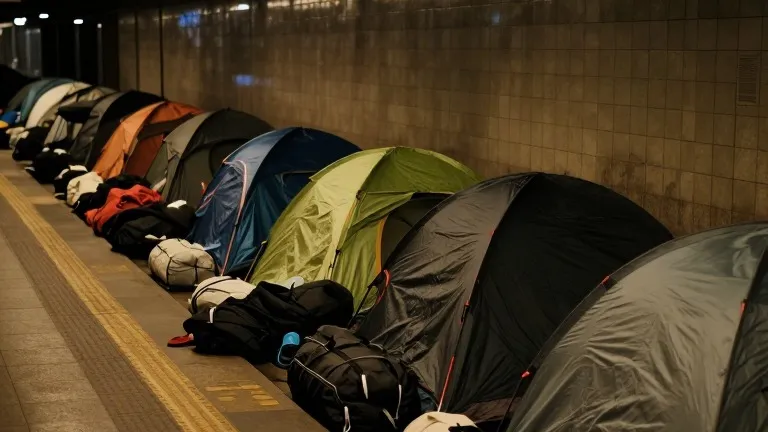
Housing and shelter capacity are currently the primary challenges facing the city's four million inhabitants. With a shortage of dedicated shelters, many residents have turned to subway stations for refuge. Since approximately 10 p.m. each night, these underground spaces transform into temporary living quarters. Families lay out mattresses and erect small tents, creating a makeshift community where children sleep alongside adults and pets settle against the cold walls.
The personal impact of the strikes is evident in the stories of those living in the affected districts. Halyna, a resident of the Lukyanivka district, a target of repeated attacks over the four years and eight months of the war, now takes her five-year-old son to the nearest station every evening. She noted that they remain alive through luck, a sentiment shared by many who have lost loved ones to the ongoing bombardment.
Recent incidents have highlighted the vulnerability of young people and educational institutions. In September, a drone strike on an apartment building in the central Pechersk district killed 14-year-old Daniel Umanskyj while he was doing homework. A neighbor, Vlad, was in the hallway with his daughter at the time and attributed their survival to being delayed that day. He described the attackers as indifferent to who they strike, a view reflected in the flowers now placed in memory of the boy.
Schools have also come under fire, as seen in early October when a drone hit a building in southwestern Kyiv. Despite the strike, Principal Valentyna Chorna kept classes running in person because the school's large shelter could accommodate more than 500 students. However, attendance is now contingent on shelter availability and the duration of air raid alerts, with some parents facing the difficult choice between going to work and keeping their children safe at home.
The economic and logistical impact is also growing. Strikes on warehouse facilities have led to supermarket shortages not seen since the early months of the war. Additionally, emergency power outages returned in late September, and a recent attack temporarily paralyzed the subway system. With critical energy infrastructure under pressure, the city faces uncertainty regarding its ability to provide reliable heat, electricity, and water during the upcoming winter.
Despite these pressures, public sentiment remains resilient. A report from the Kyiv International Institute of Sociology indicated that 72% of residents said in September they were prepared to endure the war as long as necessary. To maintain a sense of normalcy, authorities have adjusted civil defense measures. The curfew now runs from 1 a.m. to 5 a.m., and some facilities may operate during lower-level alerts, while immediate sheltering is required during the highest threat levels.
The situation in Kyiv illustrates the broader trend of urban warfare in the region. As the capital faces increased military pressure, the interplay between civilian life and strategic targets has become more complex. The ability of the city to sustain its population and services will be a key factor in the ongoing conflict, with the coming winter serving as a significant test for both infrastructure and morale.
Source: Deutsche Welle