Moscow Airports Halt Operations Daily
Ukrainian drone attacks have grounded flights at four major Russian hubs almost every day in October, forcing closures that last up to nine hours.
By Khalid Khalil ·
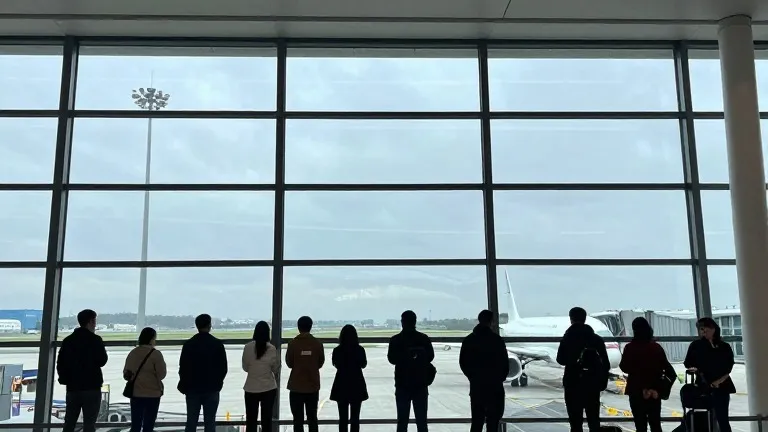
Four major airports in the Moscow region have suspended operations almost every day in October, a disruption that marks the most intense phase of a campaign to ground Russian aviation. Domodedovo, Sheremetyevo, Zhukovsky, and Vnukovo have faced daily interruptions, with some closures stretching to nine hours according to data from the independent outlet Agentstvo.
The operational halt is not the result of a single event but a recurring pattern triggered by Ukrainian drone incursions. The frequency of these incidents has accelerated this month, turning routine air travel into a logistical challenge for airlines and passengers alike. The closures force planes to divert, delay, or turn back, creating a ripple effect across the region's transport network.
President Volodymyr Zelenskyy set the strategic tone for this pressure in early September. He announced that Ukraine intended to cut off the airspace around Moscow and other key Russian destinations. Addressing the industry directly, he warned that Russian airspace would become completely unsafe. The following day, Ukraine sent a formal warning to the International Civil Aviation Organization, signaling a coordinated effort to isolate Russian air corridors.
The immediate cause of the groundings is a safety procedure managed by Rosaviatsiya, Russia's aviation authority. Known as the carpet protocol, this rule closes airspace over a specific region if an aircraft violates borders, weapons are used, or unidentified objects appear. Oleksandr Laneckij, chief executive of Friendly Avia Support, explained that every drone presents a military threat under this framework. He compared the situation to the Houthi disruptions in Saudi airspace, noting that Ukraine’s capabilities far exceed those of the Yemeni group.
Military analyst Jan Matvejev argues that disrupting traffic is straightforward for Ukraine. He stated that triggering the protocol requires only simple drones without warheads or long range. Ukraine’s arms industry produces hundreds of combat-ready long-range drones daily, providing a steady supply for these operations. Writing for The Atlantic in October, Simon Shuster noted that these efforts are just getting started, suggesting the campaign will intensify.
The effectiveness of Russian air defenses remains a point of contention. Matvejev observed that if it were possible to shoot down the drones, Russia would have done so by now. He suggested that the deployment of more air-defense troops is limited by availability rather than strategy. This gap in defensive coverage complicates the safety of the airspace for civilian traffic.
Experts warn that the current protocols increase the risk for civilian flights. Laneckij noted that Russia might lower the threshold for declaring the carpet protocol, raising the danger of deadly incidents. He referenced the December 2024 crash of an Azerbaijan Airlines flight, which killed 38 people after being hit by a Russian air-defense missile fired to counter drones. Matvejev added that little has changed in the protocol since that disaster. While shooting down a low-flying drone with a machine gun poses low risk, the use of missiles introduces potential defects that could send a projectile toward a nearby airliner.
The physical danger extends beyond missiles. Matvejev pointed out that a drone does not need explosives to cause harm, as a collision with an airplane can be severe. He described the drones flying from Ukraine to Moscow as fairly large, weighing dozens of kilograms. Other Russian airports have also felt the impact. Ukrainian forces attacked Pskov airport in the summer of 2023, and drone debris fell on Sochi airport earlier this month. In response, Russia has struck Ukrainian airports, with Zelenskyy confirming hits on Kyiv’s airport and Boryspil in September.
The economic implications for foreign carriers are significant. Laneckij stated that the decision for airlines to keep flying to Russia depends on three factors: the military threat, passenger demand, and insurance costs. If insurers rate the risk as very high, premiums could rise sharply, driving up ticket prices. The aviation market in Russia has already shrunk due to the exit of many airlines, increasing demand for the remaining foreign seats. The ultimate decision for these carriers will hinge on the price they must pay for the danger faced.
Source: Deutsche Welle