Supreme Court Hears Case to Lift Palestine Action Terror Designation
Legal teams argue the group's tactics align with historical protest traditions as dozens of activists are arrested outside the court.
By Khalid Khalil ·
The Supreme Court of the United Kingdom began a two-day hearing on November 3, 2026, to consider an appeal against the government's decision to designate Palestine Action as a terrorist organisation. This legal battle represents the final stage of the group's attempt to overturn its ban after progressing through several lower courts. The case follows a successful proscription by the government under anti-terrorism laws, which the group is now seeking to reverse at the highest judicial level.
Raza Husain KC, the barrister representing co-founder Huda Ammori, opened the proceedings by arguing that the group's actions rarely met the strict legal definition of terrorism. He stated that less than one percent of the organisation's protests qualified under the current laws. Husain emphasised that the focus should be on the substance of the group's actions rather than the label applied to them, asserting that Palestine Action has never advocated for violence directed at individuals.
The legal team drew comparisons between Palestine Action and historical movements such as the Suffragettes. Husain noted that while the Suffragettes were not entirely peaceful, they are now widely venerated and considered proven right by history. He pointed out that these earlier groups used tactics similar to, or even more extreme than, those employed by Palestine Action, including arson and bomb attacks, yet they were never proscribed as terrorists.
Husain further argued that other movements, including anti-war groups, environmentalists, and animal rights protesters, have used comparable tactics without facing the same legal designation. He described the uncontroverted evidence as showing a clear precedent where direct action was accepted as part of the democratic tradition. This argument aims to establish that the current ban is inconsistent with how the UK has historically handled protest movements.
Beyond the legal definitions, the defence highlighted the impact of the ban on fundamental rights. The team argued that the proscription has created a chilling effect on British society, particularly regarding the freedom of speech and the right to protest. Husain referred to the Filton incident as a watershed moment, noting that activists were arrested and treated as terrorists, which came as a significant shock to the movement and its supporters.
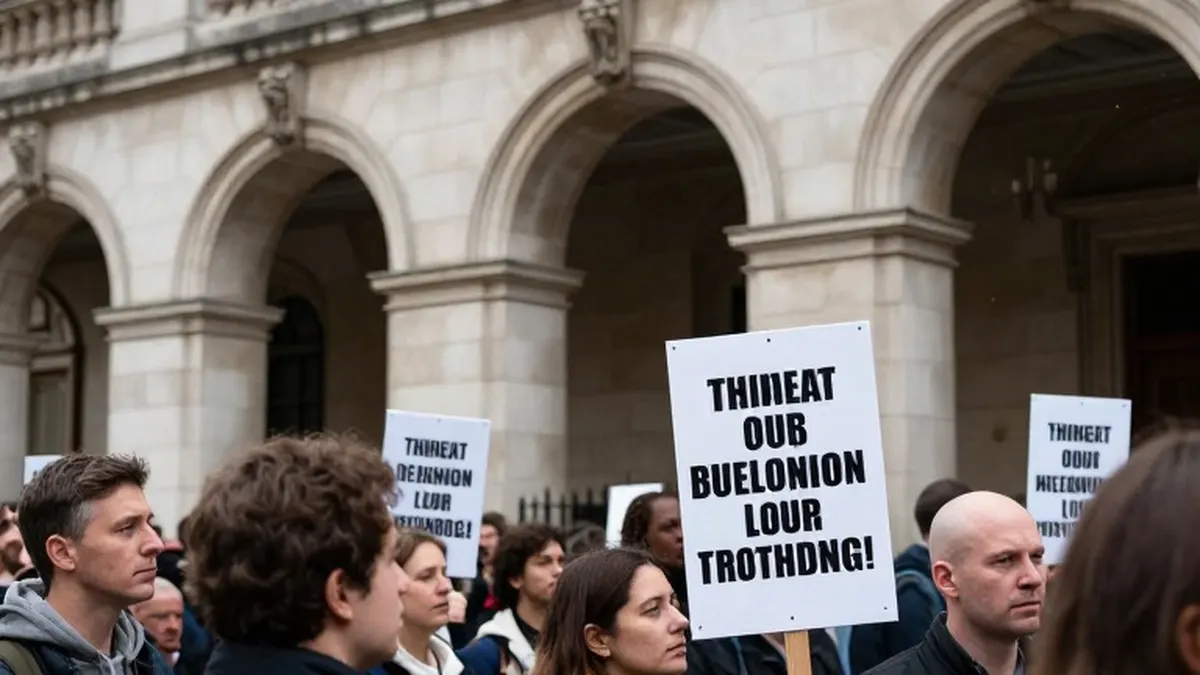
Outside the Supreme Court building, a lively scene unfolded as dozens of activists gathered to show their support. Many risked arrest by holding up signs that quoted posts from Sarah Helm, a former journalist and the wife of national security adviser Jonathan Powell. Helm had caused a public uproar by criticising the ban on Palestine Action, particularly after books by Irish author Sally Rooney were withdrawn from UK sale due to her support for the group.
Last month, Helm posted a message stating, God help us authors who support Palestine and Palestine Action. The protesters outside the court customised this message by swapping the word authors for descriptors that reflected their own personal identities or professions. Signs read phrases such as God help us Jews, God help us physiotherapists, and God help us normal people, illustrating the broad range of support for the campaign.
Police arrested 25 individuals for holding these placards during the demonstration. Among those taken into custody was actor Alfie Enoch, known for his role in the Harry Potter film series, as well as Robert Del Naja, a musician from the band Massive Attack. The arrests underscored the intensity of the public interest in the case and the willingness of supporters to use direct action to draw attention to the legal proceedings inside.
The outcome of this hearing will determine whether Palestine Action remains a designated terrorist organisation in the UK. The court will consider the arguments regarding the group's tactics, their historical context, and the broader implications for civil liberties. As the final appeal, this decision carries significant weight for the future of direct-action campaigning in the country.
The case has attracted widespread attention from both legal experts and the general public. It highlights ongoing debates about the balance between national security measures and the right to peaceful protest. The presence of high-profile figures and the volume of arrests outside the court suggest that the ruling will have far-reaching social and political implications for the UK.
Source: Middle East Eye