US Army destroys degraded lead azide stockpile in Iowa
The U.S. Army successfully detonated a degraded five-ton stockpile of lead azide in Iowa, with officials declaring the operation a success despite earlier concerns about toxic dust and public backlash.
By Evelyn Adeyemi ·
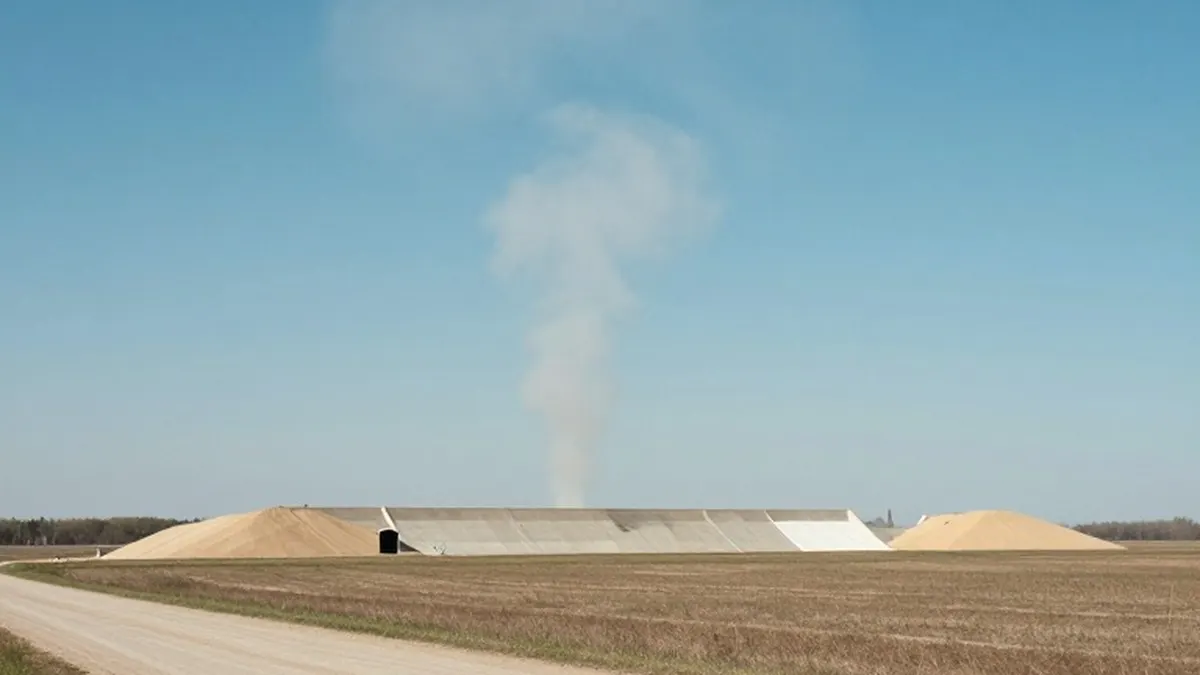
The U.S. Army successfully detonated the nation's entire remaining stockpile of lead azide in southeastern Iowa on Wednesday. Officials stated that the five tons of chemical material had degraded and posed a risk of exploding uncontrollably as winter temperatures began to cool. The controlled blast took place at the Iowa Army Ammunition Plant in Middletown.
Maj.-Gen. Eric Shirley, who led the military operation, declared the effort a success at a press conference held two hours after the explosion. He confirmed that all of the lead azide was destroyed. Air monitors operated by the U.S. Environmental Protection Agency reported no detectable lead in the air surrounding the facility immediately following the detonation.
The exact timing of the blast was announced only days in advance, which raised concerns among environmentalists and local residents. Many worried about the potential health and ecological impacts of toxic dust containing lead. Lead is a heavy metal that is considered unsafe at any level, with particular danger to children and pregnant women.
Bystanders gathered less than a mile from the site to observe the event. Following two loud booms around 9 a.m. local time, white plumes rose into the air before quickly dissipating. Tim Brandt, a resident of Burlington, noted that the blast was much quieter than expected. He told The Associated Press that it felt like the government had created unnecessary fear.
Weather conditions played a significant role in the operation. Winds were expected to carry any potential plume southwest toward Missouri, away from the nearby city of Burlington, which has a population of just under 25,000. The detonation had been delayed three times to allow for better safety measures and favorable wind conditions. The original date was last Friday, but court documents indicated the changes were made amid public backlash.
To mitigate risks, the Army constructed additional blast barriers around the two bunkers containing the 68 barrels of lead azide. The materials were enclosed by concrete and sand barriers that stood two stories high. Ballistic gels and foams were positioned to absorb lead dust, and the military planned to use more than 100,000 gallons of water to dampen the plume. President Donald Trump posted on social media that early reports indicated the Army's mitigation efforts had exceeded expectations.
Local preparations included cancelling classes at schools that were not already closed for the Thanksgiving holiday. A nearby gas station posted a note stating it would reopen once conditions were deemed safe. Some residents took precautions by sealing their windows and doors. Government officials had encouraged residents within an eight-kilometer radius to evacuate to avoid inhaling lead dust.
Colin Wellenkamp, executive director of the Mississippi River Cities and Towns Initiative, stated that the Army's measures appeared effective in limiting lead dispersal. He noted that water treatment facilities along the Mississippi and Missouri rivers would begin periodic testing within hours to check for any spikes in contamination.
The stockpile had been consolidated at the Iowa location in 2009 from various bases across the country. During an inspection in March, staff discovered that the chemicals had partially crystallized. This change made the material sensitive to friction and cold temperatures, increasing the risk of spontaneous detonation. Experts determined that a controlled blast was safer than alternative methods such as thermal treatment or chemical neutralization.
Environmental groups had previously filed a lawsuit to stop the plan, but a federal appeals court ruled on Monday that the EPA had adequately incorporated safeguards. Lucy Giehl, a resident of West Burlington, expressed mixed feelings about the event. She acknowledged that the issue needed to be addressed but suggested that more planning might have prevented the situation from reaching this point.