Trump orders delay of Iowa explosives blast pending court and governor approval
The US President has instructed the military to pause a planned detonation of hazardous lead azide in Iowa while awaiting legal clearance and agreement from the incoming state governor.
By Khalid Khalil ·
United States President Donald Trump has directed the military to postpone a scheduled controlled detonation in the state of Iowa. The operation, which involves more than four tonnes of explosives, will be delayed until a federal appeals court and the state’s incoming governor provide their approval. This decision follows a series of delays and a recent legal challenge initiated by environmental groups.
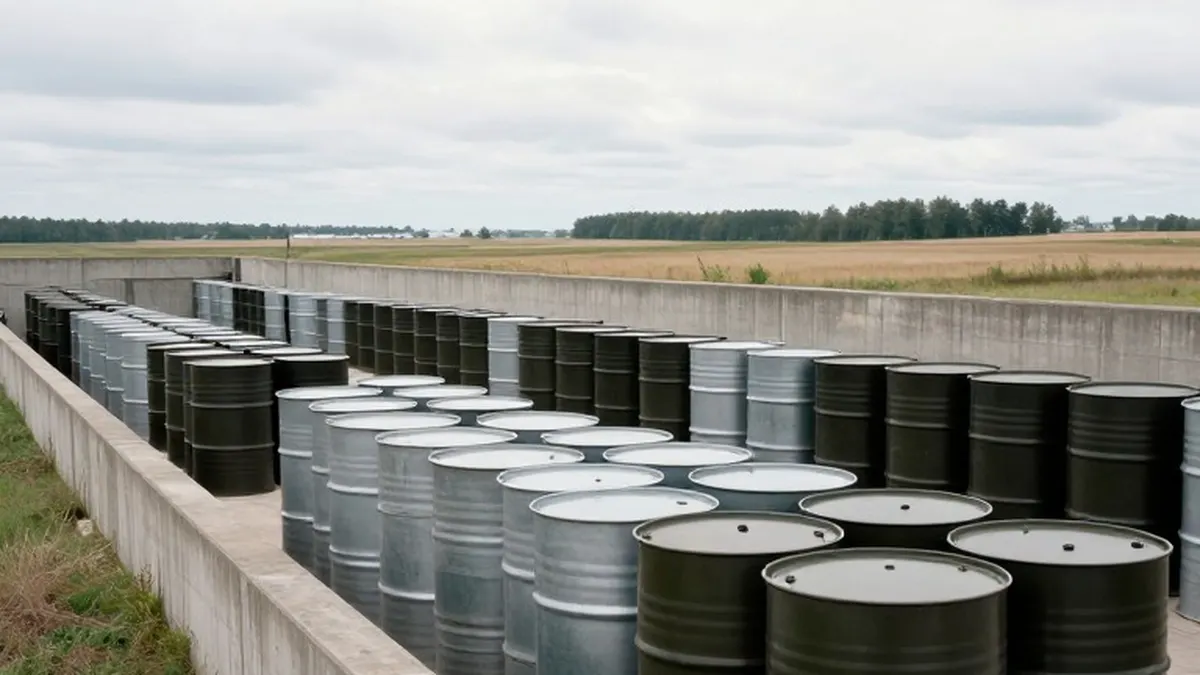
The materials targeted for destruction are approximately 9,700 pounds of degraded lead azide. These substances are stored in 68 drums at the Iowa Army Ammunition Plant near the city of Middletown. Environmental advocates have raised significant concerns regarding the safety and legality of the planned blasts, leading to the current standstill.
In a post on his Truth Social platform on Monday, the President explained his reasoning for the pause. He stated that while he believes the proper course of action is to eliminate the long-term problem, he has ordered the military to wait. Specifically, he is waiting for the Eighth Circuit Court of Appeals to agree that the operation can proceed. He also made the decision fully subject to the agreement of the incoming Governor Elect, Rob Sand.
The legal conflict began when the Sierra Club and the Iowa Environmental Council filed a petition for review and an emergency motion on Thursday. These groups sought to halt the detonation, which had originally been set for Friday before being moved to Monday. Their primary objection was to an emergency permit granted by the Environmental Protection Agency on November 13. The permit allowed the military to proceed under the Resource Conservation and Recovery Act.
The plaintiffs argued that nearby residents received only one week’s notice of the operation. They further claimed that the blasts could disperse lead dust up to 160 kilometers, or 100 miles, from the site. Additionally, they contended that the EPA failed to adequately assess safer methods for disposing of the hazardous material. In response to the lawsuit, the US Court of Appeals for the Eighth Circuit temporarily froze the EPA’s emergency permit while it reviewed the case.
Despite the court freeze, the Justice Department filed a statement on November 21. The department maintained that the army could still proceed with the two controlled blasts under an emergency exemption. This legal maneuvering has added another layer of complexity to the situation, prompting the President’s decision to delay the operation until all parties are aligned.
Trump placed historical blame for the situation on the Obama administration, which he said improperly stored the munitions in 2009. Military officials have noted that the barrels were kept in a mixture of water and ethanol at the Iowa facility for over two decades. A court declaration cited an Army munitions expert who found that the liquid in the drums had evaporated. This evaporation caused needle-shaped crystals to form as recently as March, increasing the instability of the material.
The President warned that blocking the destruction of this unstable explosive could lead to dire consequences. He suggested that incoming Democratic Senator Rob Sand would be responsible if the material were to spontaneously detonate. Sand, who has previously criticized the lack of communication and clarity surrounding the blast, has warned that the explosion could send a toxic plume of lead dust across communities in southeastern Iowa and neighboring Illinois. Lead is a dense metal associated with severe health risks, including birth defects.
Sand’s office did not respond to questions regarding the new delay. Trump emphasized that current weather conditions are optimal for a controlled blast. He framed any further delay as a choice made by the courts and Iowa’s incoming leadership, stating that if they do not agree to proceed, the administration will be forced to hold the incoming Governor responsible for any death or destruction caused by the hazardous materials.
The situation remains fluid as the federal appeals court continues its review. The outcome of this legal battle will determine when, or if, the detonation takes place. Both the federal government and state officials are now closely monitoring the developments to ensure a safe resolution to the storage of the degraded lead azide.