South Africa votes on local councils as water failures top concerns
Voters in major cities face a choice between abstention and casting ballots, with the ANC facing a potential drop in support to 30%.
By Lorenzo Evans ·
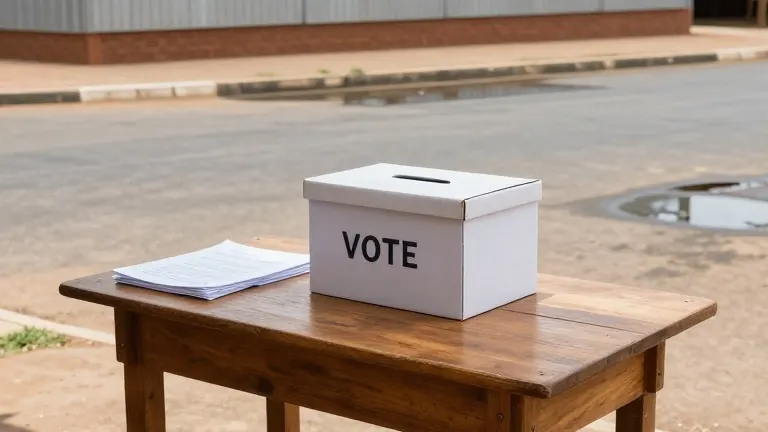
South African voters cast ballots on Wednesday to select local governments, a vote that tests the strength of the ruling African National Congress (ANC) and its coalition partners. The election occurs while many residents express deep frustration over basic services, specifically the quality of water and sanitation.
In Tembisa, a township near Johannesburg, residents showed divided opinions on the value of voting. Vatiswa Zoya said she would abstain because she is still hungry. Lindokuhle Mbandazayo, a 22-year-old voter, plans to cast a ballot. She cited power outages and sewage in the streets as reasons to vote, noting that voters expect councilors to fix these local problems.
Water quality has become a central campaign issue. Ferrial Adam, executive director of the NGO WaterCAN, called the situation a definite water crisis. She stated that half of the country's drinking water systems are not fit for consumption. Additionally, nearly 70% of wastewater treatment works are in a critical state. A recent treatment failure in Tshwane left more than 400 residents sick.
Political analyst Sanusha Naidu of the Institute for Global Dialogue said candidates often promise to fix water infrastructure without detailed budget plans. She described these promises as transactional. This gap between rhetoric and planning adds to voter frustration. The ANC is facing a decline in support after winning 53.91% of the vote in 2016. By 2021, that share dropped to 45.59%, leaving the party with majorities in only 122 of 213 municipalities. Ipsos predicts the ANC's support could fall to 30% this time.
Naidu noted that the ANC struggles to connect with Millennial and Gen Z voters. These younger voters want new faces and different approaches. Mbandazayo, voting for the second time, said she is considering voting for a different party because the incumbent has not delivered results. Migration is also a key issue. Aldu Cornelissen of Murmur Intelligence said Action SA is likely to benefit from anti-immigration sentiment. He estimated this issue could swing 6% to 8% of the vote.
In Johannesburg alone, 136,760 candidates from 75 parties are contesting seats. Misinformation is influencing the race. The Independent Electoral Commission has investigated over 700 complaints of disinformation. These include false claims that the ANC plans to mobilize asylum seekers to vote. William Bird of Moxii Africa said disinformation targets hot-button issues like rigging, though there is no evidence the election is rigged.
Turnout is a critical variable. Participation dropped from 57.95% in 2016 to 45.87% in 2021. Naidu stressed that half of council seats are determined by the party vote. This makes voter turnout essential for determining the final makeup of each municipality and the formation of new coalitions.