Osh redevelopment revives painful memories as homes fall and heritage faces pressure
A major modernisation programme in Kyrgyzstan’s second-largest city has displaced residents and raised concerns over compensation and a UNESCO-listed sacred mountain.
By Lorenzo Evans ·
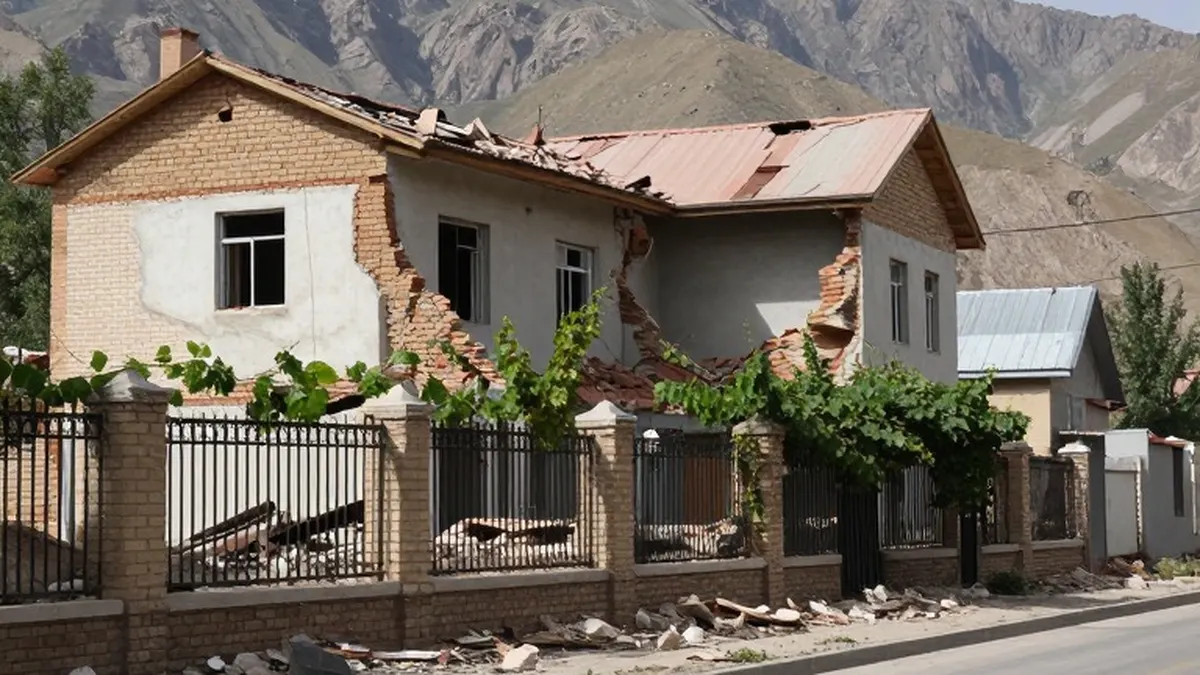
A sweeping redevelopment programme in Osh, Kyrgyzstan, promises new housing, schools, IT hubs and transport infrastructure, but the demolition of several hundred homes has left residents anxious about their future. The changes are also raising questions about protection for Sulaiman-Too, the city’s sacred mountain and a UNESCO World Heritage site.
Osh has about 470,000 residents, roughly 40 percent of them ethnic Uzbeks, and lies just 5km from Uzbekistan. Among those affected is Mogamed Kambarow, an 84-year-old Uzbek whose home was partly demolished in March to widen Alisher Navoi Street. He remains in the surviving rooms without compensation. Kambarow said an 11-year-old girl was injured by falling bricks during the demolitions and taken to hospital.
For residents who experienced earlier upheavals, the destruction brings back painful memories. Intercommunal violence in 2010 killed more than 400 people and destroyed thousands of homes, with ethnic Uzbeks accounting for most victims. Fighting between Kyrgyz and Uzbeks in 1990, amid land disputes and demands for greater Uzbek autonomy, also killed hundreds.
Gulgaky Mamasalieva, who heads the International Centre Interbilim, an Osh organisation providing legal assistance, said the current demolitions have affected more than 750 households, including many Kyrgyz families. An Interbilim report found that 65 percent of households first discovered their homes were marked for demolition when workers painted the Russian word for it on their walls. Some residents were instructed by letter to leave within three days.
Mamasalieva said compensation should have been agreed with households before demolition, with disputes referred to courts. Instead, residents received guarantees electronically signed by the vice-mayor that did not specify compensation packages. Only households whose homes were completely destroyed were offered flats. More than 100 households moved to Ene-Say, 10km outside Osh, while another 64 families received apartments within the city.
Relocation has brought additional difficulties for some families. A 37-year-old woman in Ene-Say, speaking anonymously, said her family had not received ownership documents, preventing them from registering their address and accessing free healthcare and other services. Some families also reported being asked to pay the difference between the values of their former homes and replacement flats. Interbilim has offered legal support, but nobody has yet agreed to take the authorities to court.
The redevelopment also reaches the surroundings of Sulaiman-Too, which received World Heritage status in 2009. Its protected buffer zone covers 4,788 hectares and includes Navoi Street. Hairullo Ibaydullaev, a deputy director of the museum complex inside the mountain, said developers were pressing to use surrounding land. The mountain attracts about 370,000 visitors annually. A separate, World Bank-funded renovation costing $12m began in October and is expected to last a year.
City officials argue that heritage restrictions complicate Osh’s development, and Kyrgyzstan has requested reconsideration of how the buffer zone is used. Former mayor Jenishbek Toktorboev started apartment buildings exceeding permitted heights near the mountain and unsuccessfully sought to replace a cemetery with a leisure park. President Sadyr Japarov dismissed him in February. His successor, Janar Akaev, proposed a cable car in August and removing the mountain from UNESCO’s list, an idea the culture ministry rejected.
Meanwhile, the government announced last week that a solar-equipped school for 530 children, completed in 10 months, would open in the coming days. Other projects include a waste-to-energy plant and livestock complex. City authorities did not answer Al Jazeera’s questions about opposition to the redevelopment.