Brazil's Isolated Awá: 20 Emerge to Request Food as Loggers Close In
Funai has activated a contingency plan to manage health risks after uncontacted Indigenous people interacted with a village in Maranhão state.
By Lorenzo Evans ·
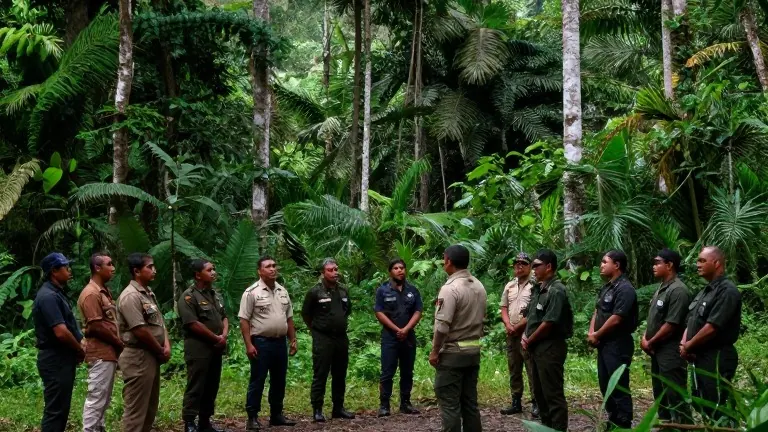
About 20 uncontacted Awá Indigenous people left their forest territory in Brazil’s northeast on Monday to approach a government team and ask for food, a move Survival International described as a historic encounter. The group belongs to the Awá, a Tupi-Guarani people in northwest Maranhão who maintain voluntary isolation, though they are aware of the outside world. This interaction marks a sharp departure from their usual avoidance of outsiders, a pattern that has held for decades.
The encounter occurred in the Araribóia Indigenous Land. Survival International, a UK-based rights group, released images of the meeting on Tuesday. It said the footage was shared at the request of the Guardians of the Amazon, a collective campaigning against illegal loggers and cattle ranchers. The organization suggested the Awá sought food because pressure from outsiders entering their territory has intensified. Reuters reported it could not independently verify the location or date of the footage, noting no older versions appeared online before November 17.
Brazil’s Indigenous affairs agency Funai responded by activating a contingency plan for contact situations. The agency stated its primary focus is minimizing health risks for the Indigenous people, who lack immunity to common diseases. Funai emphasized that the Brazilian state is not seeking contact with the group and that its official policy remains one of non-contact. The agency is currently reviewing videos and social media accounts showing the Awá interacting with a local village.
Caroline Pearce, director of Survival International, stated that the uncontacted Awá face extreme pressure as intruders encroach from all sides of their territory. She described the group as being driven into an ever-smaller island of rainforest, surrounded by destruction. The organization has identified 196 uncontacted Indigenous groups across 10 countries in South America, Asia, and the Pacific. Almost 95% of these groups are located in the Amazon, with 124 specifically in Brazil.
COAPIMA, the Maranhão Indigenous people’s organization, said the encounter highlights the need for careful action by responsible agencies. The group warned that unplanned contact poses risks to isolated populations, mainly through exposure to diseases and other threats to their integrity. The Awá are one of many isolated groups across the Amazon that have come under threat from encroaching illegal miners, loggers, and ranchers in recent decades.