Nvidia’s Microducks Overtake 20,000 Preorders After Viral Keynote Moment
A fleet of small, open-source robots became a holiday sensation after the chip giant’s CEO demonstrated their playful capabilities in Berlin.
By Juan Gonzalez ·
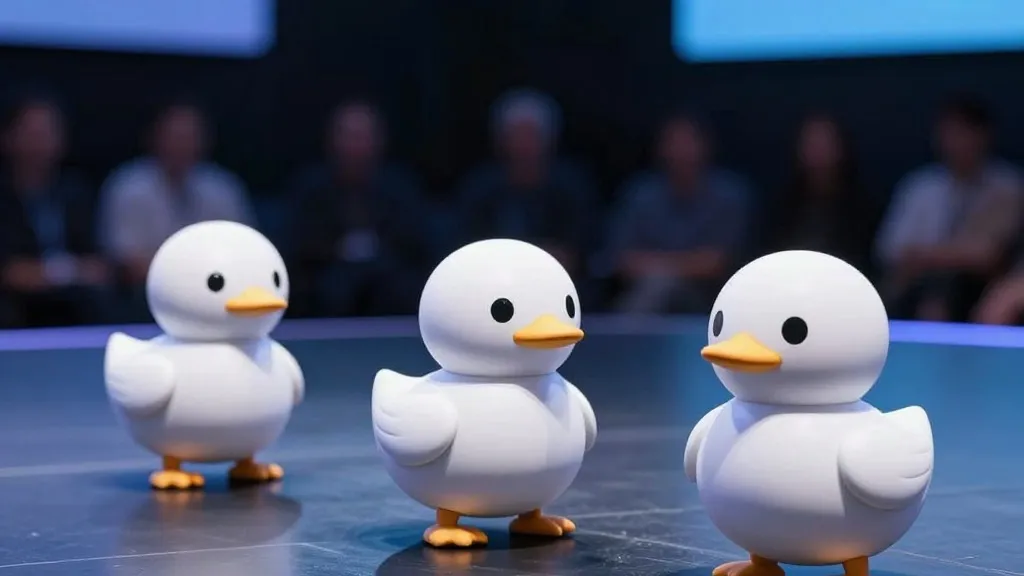
The artificial intelligence industry has recently faced scrutiny over its role in several high-profile cyberattacks, but a lighter moment emerged this week from a major tech conference. During a keynote presentation at GTC Berlin, Nvidia CEO Jensen Huang took the stage with a flock of small, waddling robots known as Microducks. The demonstration quickly captured public attention, turning the devices into a viral sensation and sparking immediate commercial interest.
The robots, which produce sounds reminiscent of the R2-D2 droid from Star Wars, performed a series of programmed behaviors including walking, sitting, and falling over to simulate a nap. They also executed somersaults when triggered by voice commands. This display of playful functionality proved highly engaging for the audience and online viewers, leading to a surge in consumer demand. Hugging Face co-founder Clem Delangue confirmed via social media that preorders for the devices surpassed 20,000 units within just one day of the demonstration.
With production timelines suggesting delivery before the end of the year, the Microducks are poised to become a prominent holiday gift. Delangue suggested that these units could ultimately become the best-selling robots of the year. Notably, the marketing materials and viral clips feature adults interacting with the devices, indicating that the target demographic extends well beyond children. This broad appeal suggests the robots may serve as a novel entertainment option for general consumers rather than just a niche toy.
The Microducks are the product of Pollen Robotics, a company acquired by Hugging Face in 2025. Since Nvidia purchased Hugging Face in September, the robot line now operates under the umbrella of the GPU manufacturer. This is the second robotic product released by the Hugging Face division, following the similarly popular Reachy Mini. The devices are built on open-source hardware, a design choice that encourages community involvement and customization among users.
The underlying technology relies on Nvidia’s software stack for training the robots. During the development process, simulations of the Microducks were taught basic motor skills such as walking, standing, and sitting. These foundational tricks are pre-installed in the units shipped to customers. Pollen Robotics has stated that owners can use the open-source framework to train their specific robots on new maneuvers and share those custom behaviors with the wider community.
This release provides a contrasting narrative to the recent tense discussions surrounding AI security risks. While the industry grapples with the complexities of integrating advanced algorithms into critical infrastructure, the Microducks offer a tangible, accessible entry point for consumers. The rapid uptake of preorders indicates a strong public appetite for interactive, AI-driven hardware that is both functional and entertaining.
Source: TechCrunch